
G20 environment meeting ends without agreement on climate crisis / Photo: © AFP

 Messi on target again but Miami downed by Columbus

 In Washington's political cauldron, a fight over foie gras
 Flavio Bolsonaro: political heir in his father's shadow

 Ravens grab last-second win in Rio as Commanders stop Seahawks

 USA rallies to capture 11th consecutive Presidents Cup

 Phillies clinch, Astros wrap up division on final day of MLB season

 Commanders hand champion Seahawks their first loss

 Dupont scores twice to send Toulouse top of Top 14

 Ireland beat Israel but no handshakes due to war in Gaza

 Tense standoff over flashpoint N.Ireland parade lasts into night

 Stunned McNulty wins 'miracle' road race world title

 Re-released 'Avengers: Endgame' snaps-up N. America box office lead

 American McNulty wins shock road race world title
 Serbia's President Aleksandar Vucic announces resignation
 Tuchel urges Bellingham to play with 'rage'

 Russian strikes on Ukraine kill 8

 Bavuma, Miller hit centuries as South Africa clinch series

 Spain bring in Le Normand for injured Garcia

 UK Labour party meets buoyed by Burnham but seeking concrete plans
 Nor'easter lashes US east with punishing rain and wind

 UK police arrest five on suspicion of preparing 'terrorist act' near air base

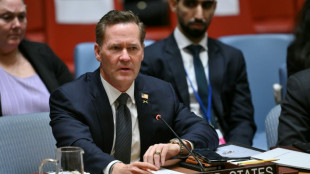 Washington denounces Iran's truce proposal as 'cynical'

 Armani sprinkles glitter on discreet elegance at Milan show

 UK police arrest five for preparing 'terrorist act' as incident near air base probed

 อเล็กซ์ โบดี และศาสตราจารย์ ดร. ดีเทอร์ ลาซิก ลงนามสัญญาสำหรับ ALPHA WHEY และ BODI เครื่องดื่มให้พลังงาน

Environment ministers from G20 nations failed to agree on peaking global emissions by 2025 and other crucial issues to address the global climate crisis at their meeting in India on Friday, France's representative said.
No breakthrough was possible on several key points ahead of this year's COP28 climate talks, with negotiations also failing to reach a consensus on drastically scaling up renewable energy use.
"I am very disappointed," France's ecological transition minister Christophe Bechu told AFP after the meeting.
"We are not able to reach an agreement of increasing drastically renewable energies, we are not able to reach an agreement on phasing out or down fossil fuels, especially coal," he said.
"Records of temperatures, catastrophes, giant fires, and we are not able to reach an agreement on the peaking (of) emissions by 2025."
The discussions with China, Saudi Arabia, and on climate issues with Russia had been "complicated", he added.
The Chennai meeting comes days after energy ministers from the bloc -- which represents more than 80 percent of global GDP and CO2 emissions -- failed to agree on a roadmap to cut fossil fuels from the global energy mix.
That was seen as a blow to mitigation efforts even as climate experts blame record global temperatures for triggering floods, storms and heatwaves.
Some major oil producers -- such as Russia and Saudi Arabia -- were blamed for the lack of progress.
All present at Friday's conference understood "the severity of the crisis" facing the world, Adnan Amin, chief executive of this year's COP28 climate talks, told AFP.
"But I think there's a kind of political understanding that still needs to be achieved," he added.
Amin said it was clear that questions of "national interests" still had to be resolved before firmer commitments could be made on fossil fuels.
"It's very clear that every country in the world will start by looking at its immediate self-interest," he said.
Most delegations were led by their environment and climate change ministers, while the US delegation was headed by Special Presidential Envoy for Climate John Kerry.
Also at the talks was Emirati oil boss Sultan Al Jaber, who will lead the upcoming COP28 talks in the United Arab Emirates starting in late November.
He has been heavily criticised for his apparent conflict of interest as head of the Abu Dhabi National Oil Company because burning fossil fuels is the main driver of global warming.
- Livelihoods destroyed -
With raging wildfires in Greece and a heatwave in Italy, European Union environment commissioner Virginijus Sinkevicius said ahead of the gathering that there was "growing evidence on the ground of devastating climate impact" and "the livelihoods of people are being destroyed".
But progress in global negotiations has been slow, with the G20 polarised by Russia's war in Ukraine and sharp divisions on key issues.
Questions on financing the transition and ameliorating its short-term impacts have long been a point of contention between developing and wealthy nations.
Major developing countries like India argue that legacy emitters need to spend more to underwrite global mitigation efforts in poorer nations.
Big energy-producing nations have resisted stronger commitments on emissions cuts over concerns about the impact of drastic mitigation on their economies.
G.Schulte--BTB



