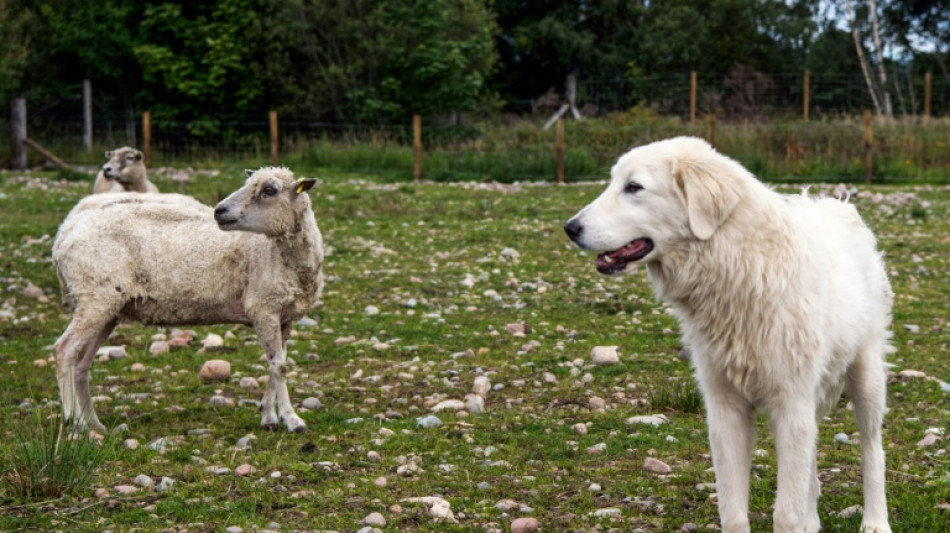
Scots train ancient dog breed to deter eagle attacks / Photo: © AFP

 Oil prices spike after Trump rejects Iran truce offer

 Taylor Swift sets new record at MTV VMAs
 Seoul seeks apology after Ukraine reveals transfer of North Korean POWs

 Messi on target again but Miami downed by Columbus

 In Washington's political cauldron, a fight over foie gras

 Flavio Bolsonaro: political heir in his father's shadow

 Ravens grab last-second win in Rio as Commanders stop Seahawks

 USA rallies to capture 11th consecutive Presidents Cup

 Phillies clinch, Astros wrap up division on final day of MLB season

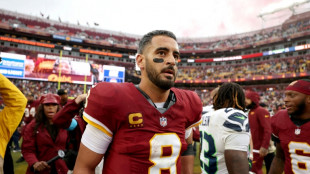 Commanders hand champion Seahawks their first loss

 Dupont scores twice to send Toulouse top of Top 14

 Ireland beat Israel but no handshakes due to war in Gaza

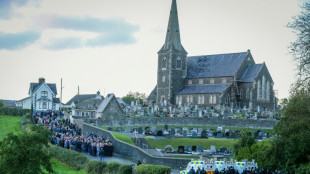 Tense standoff over flashpoint N.Ireland parade lasts into night

 Stunned McNulty wins 'miracle' road race world title
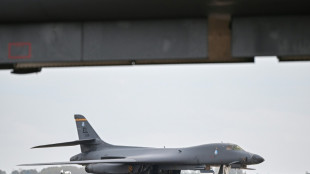
 Re-released 'Avengers: Endgame' snaps-up N. America box office lead

 American McNulty wins shock road race world title

 Serbia's President Aleksandar Vucic announces resignation

 Tuchel urges Bellingham to play with 'rage'

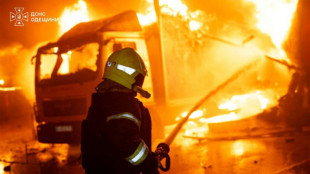 Russian strikes on Ukraine kill 8

 Bavuma, Miller hit centuries as South Africa clinch series

 Spain bring in Le Normand for injured Garcia

 UK Labour party meets buoyed by Burnham but seeking concrete plans

 Nor'easter lashes US east with punishing rain and wind

 UK police arrest five on suspicion of preparing 'terrorist act' near air base
 Washington denounces Iran's truce proposal as 'cynical'

Dotted among a small flock of sheep in a field in the Scottish Highlands, Luigi and Peaches, two young working dogs with thick white coats, are busy being trained to keep watch on the skies above.
The pair, who descend from the Roman-era Maremma breed reared by shepherds to protect their livestock from wolves, are learning to guard against Scotland's resurgent sea eagles, formally known as white-tailed eagles.
Once driven to extinction across the British Isles, they have been successfully reintroduced in recent decades but are increasingly blamed for ravaging lambs left to roam the countryside.
The loss of the valuable livestock is sparking tensions with some farmers, devastated by the financial fallout and demanding the government issue licences to shoot the birds.
The worsening situation prompted Jonny and Daisy Ames to create the dog training programme at their falconry near Aviemore, in the hope it will allow farmers and eagles to better coexist.
"The last thing that we want is to see eagles being shot, for licences to be issued and to end up back at square one," Daisy Ames told AFP.
"There needs to be a solution that works for both sides."
Sea eagles were once a common sight across Scotland but were hunted to extinction throughout the 19th century, with the last bird shot in 1918.
A re-introduction programme in 1975 brought chicks from Norway to the island of Rum, one of Scotland's wildest places.
More were reintroduced in Wester Ross between 1993 and 1998 and on the east coast in 2007 and 2012.
- Drones and cheetahs -
The birds, an endangered species with only around 10,000 pairs across the globe, have since established a breeding population on Scotland's west coast and are now thriving -- but at a cost to some farmers.
Searching for a solution, Jonny Ames tapped into his experiences working with the Cheetah Conservation Project in Namibia, where Maremmas were trained to keep the big cats away from livestock.
To teach his latest canine recruits, he attaches a lure designed to resemble an eagle to a drone and hovers it over the dogs in a sheep field.
"The drone has a big eagle hanging on the bottom of it and it kind of dive bombs the dogs a little bit," he told AFP.
"If you can imagine an eagle in the wild, if it's coming in to a kill and there's a wolf there, it isn't going to land."
He and Daisy also allow a sea eagle kept at the falconry to feed from a carcass in front of the dogs in a controlled environment.
"They can't reach each other but we want to try and show the dogs that the eagle is a predator and if there is one near the lambs then you want to scare it off," Jonny explained.
One of the benefits of the dogs is that they are "completely soft" when it comes to humans, he noted.
"They don't make good guard dogs for people and the worst they are going to do is lick them to death."
- Devastating effect -
Jenny Love, a sheep farmer on Scotland's west coast, said the eagles have had a devastating effect, adding she frequently hears complaints from local farmers.
But she is sympathetic to Britain's biggest bird of prey, with a majestic wingspan stretching over two metres (six feet seven inches).
"Eagles are not the bad guys here," Love told AFP. "There is nothing else for these birds to eat, so they are eating lambs which are easy prey for them.
"But this is taking an enormous toll on farmers. Their livelihood is being taken away from them. The public perception is that farmers are the bad guys."
Farmers are eligible for a maximum annual payout of £5,000 ($6,383) for livestock killed, through the Sea Eagle Management Scheme.
However, the process is costly and arduous and only partially recoups the losses, according to Love, who argues compensation levels should be increased and application requirements simplified.
One farmer had lost £30,000 worth of lambs in a season, she said.
"I've had big tough guys breaking down in tears in front of me because they don't know what to do," she added.
Love is sceptical about the Maremmas, which she argues are trained to work in fields where the sheep are close together.
Thousands of dogs would be needed to guard sheep across the mountains, where nearly all the lambs are lost to the birds, Love lamented.
K.Brown--BTB