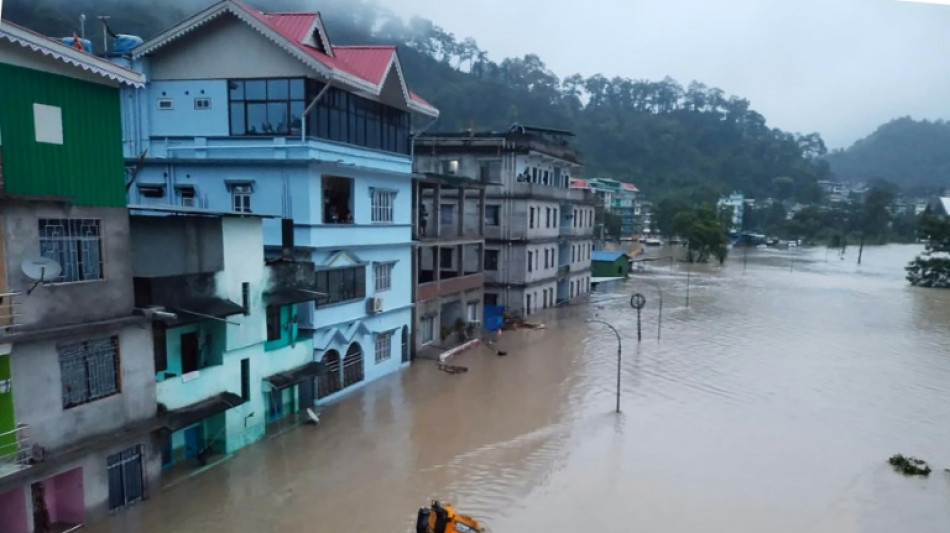
Five killed by India glacial lake burst flood, 23 soldiers missing / Photo: © INDIAN ARMY/AFP

 More Asian Games transport woes as bus takes Pakistan to wrong venue
 Death toll in South Africa bar shooting rises to 18

 Aide to Venezuelan opposition leader returns from exile

 Messi and Alcaraz love it, now padel takes step closer to Olympics

 Tolls mount in Thailand, Myanmar floods
 Why India's opposition wants top poll official out

 PU Prime Strengthens UAE Momentum with Strong Showing at Forex Expo Dubai 2026

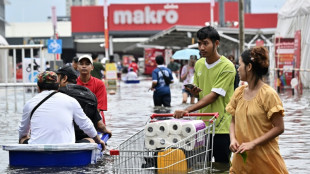 Eight dead in Thailand floods since mid-September

 Oil prices spike after Trump rejects Iran truce offer

 Taylor Swift sets new record at MTV VMAs
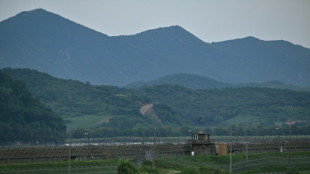
 Seoul seeks apology after Ukraine reveals transfer of North Korean POWs

 Messi on target again but Miami downed by Columbus

 In Washington's political cauldron, a fight over foie gras

 Flavio Bolsonaro: political heir in his father's shadow

 Ravens grab last-second win in Rio as Commanders stop Seahawks

 USA rallies to capture 11th consecutive Presidents Cup

 Phillies clinch, Astros wrap up division on final day of MLB season

 Commanders hand champion Seahawks their first loss

 Dupont scores twice to send Toulouse top of Top 14

 Ireland beat Israel but no handshakes due to war in Gaza

 Tense standoff over flashpoint N.Ireland parade lasts into night

 Stunned McNulty wins 'miracle' road race world title

 Re-released 'Avengers: Endgame' snaps-up N. America box office lead

 American McNulty wins shock road race world title

 Serbia's President Aleksandar Vucic announces resignation

At least five people have been killed and dozens including 23 soldiers are missing in India after intense rains burst a glacial lake and triggered a torrential flash flood, officials said Wednesday.
Violent flooding from glacier lakes dammed by loose rock has become more frequent as global temperatures rise and ice melts, with scientists on Wednesday warning the deadly flood was a taste of further extreme weather events to come.
A video released by an Indian army spokesman showed a thick torrent of raging brown water sweeping down a densely forested valley in mountainous northeast Sikkim state, with roads washed away and power lines ripped down.
"Due to sudden cloud burst over Lhonak Lake in North Sikkim, a flash flood occurred in the Teesta River... 23 personnel have been reported missing and some vehicles are reported submerged under the slush," the army said in a statement. "Search operations are underway."
The Sikkim state government said at least five people had been reported killed, with three bodies recovered.
As well as the 23 soldiers, more than a dozen civilians are missing, it said.
Sikkim is close to India's border with Nepal and China and boasts a sizeable military presence.
India has been wary of China's growing military assertiveness and their 3,500-kilometre (2,200-mile) shared frontier has been a perennial source of tension, with parts of Sikkim claimed by Beijing.
- 'Catastrophic' -
The water surge was caused by a burst of the high-altitude Lhonak Lake -- which sits at the base of a glacier in peaks surrounding the world's third-highest mountain, Kangchenjunga.
A wall of water powered downstream, adding to a river already swollen by monsoon rains, damaging a dam and sweeping houses and bridges in its path and causing "serious destruction", the government said.
Lhonak Lake had shrunk by nearly two-thirds in size overnight, an area roughly equivalent to about 150 football pitches (105 hectares), satellite photographs released by the Indian Space Research Organisation showed.
Sikkim Chief Minister Prem Singh Tamang said emergency services were working to support those impacted by the ferocious floods and urged people to "remain vigilant".
Prime Minister Narendra Modi said he "assured all possible support" for those impacted.
"Intense rain has led to this catastrophic situation in Sikkim where the rain has triggered a glacial lake outburst flood and damaged a dam, and caused loss of life", said Miriam Jackson, a scientist specialising in ice who monitors Himalayan regions.
"We observe that such extreme events increase in frequency as the climate continues to warm and takes us into unknown territory", Jackson added, in a statement from the International Centre for Integrated Mountain Development (ICIMOD) research group.
Himalayan glaciers are melting faster than ever due to climate change, exposing communities to unpredictable and costly disasters, according to the Nepal-based ICIMOD.
Earth's average surface temperature has risen nearly 1.2 degrees Celsius since preindustrial times, but high-mountain regions around the world have warmed at twice that pace, climate scientists say.
The Sikkim region is also hit annually by flash floods during the monsoon rains, which begin in June and normally withdraw from the Indian subcontinent by the end of September. By October, the heaviest of the monsoon rains are usually over.
Melting glaciers add to the volume of water while unregulated construction in flood-prone areas exacerbates the damage.
burs-pjm/dva
A.Gasser--BTB



