Reversing warming may stop Greenland ice sheet collapse: study / Photo: © AFP

 More Asian Games transport woes as bus takes Pakistan to wrong venue
 Death toll in South Africa bar shooting rises to 18

 Aide to Venezuelan opposition leader returns from exile

 Messi and Alcaraz love it, now padel takes step closer to Olympics

 Tolls mount in Thailand, Myanmar floods

 Why India's opposition wants top poll official out

 PU Prime Strengthens UAE Momentum with Strong Showing at Forex Expo Dubai 2026

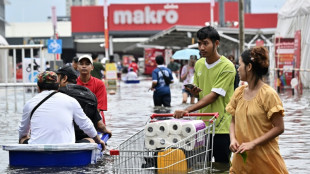 Eight dead in Thailand floods since mid-September

 Oil prices spike after Trump rejects Iran truce offer

 Taylor Swift sets new record at MTV VMAs
 Seoul seeks apology after Ukraine reveals transfer of North Korean POWs

 Messi on target again but Miami downed by Columbus

 In Washington's political cauldron, a fight over foie gras

 Flavio Bolsonaro: political heir in his father's shadow

 Ravens grab last-second win in Rio as Commanders stop Seahawks

 USA rallies to capture 11th consecutive Presidents Cup

 Phillies clinch, Astros wrap up division on final day of MLB season

 Commanders hand champion Seahawks their first loss

 Dupont scores twice to send Toulouse top of Top 14

 Ireland beat Israel but no handshakes due to war in Gaza

 Tense standoff over flashpoint N.Ireland parade lasts into night

 Stunned McNulty wins 'miracle' road race world title

 Re-released 'Avengers: Endgame' snaps-up N. America box office lead

 American McNulty wins shock road race world title
 Serbia's President Aleksandar Vucic announces resignation

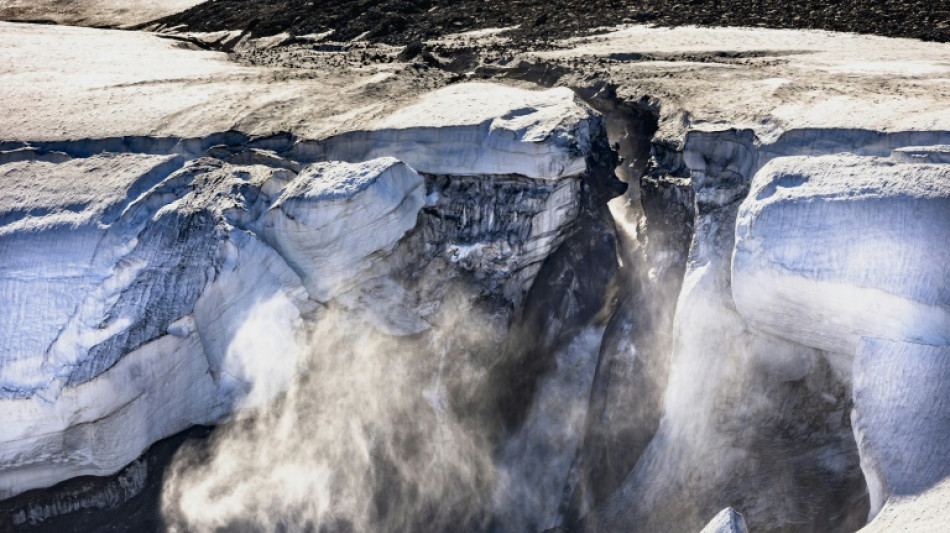
Breaching the global warming limits of the world's climate goals could see the melting of Greenland's ice sheet add more than a metre to rising sea levels, according to new research on Wednesday.
But the study by an international team of researchers found there would still be hope to prevent a collapse of the ice sheet -- if warming is reversed and brought back to the safer level.
The melting of Greenland's vast ice sheet -- the world's second-largest after Antarctica -- is estimated to have contributed more than 20 percent to observed sea level rise since 2002.
Rising sea levels threaten to intensify flooding in coastal and island communities that are home hundreds of millions of people, and could eventually submerge whole island nations and seafront cities.
A study published in the journal Nature on Wednesday used two models to simulate how Greenland's ice sheet would respond to future temperature increases over timescales ranging from hundreds to thousands of years.
Researchers suggested abrupt ice sheet losses would be triggered if global average temperatures reached a range of 1.7C-2.3C above pre-industrial levels.
That would risk a permanent "tipping point" that would see near-complete melting of the Greenland ice sheet over hundreds or thousands of years and could lift oceans by seven metres (23 feet), redrawing the world map.
But if the temperature increases were rolled back to the Paris deal 1.5C limit quickly enough -- by removing planet-heating pollution from the atmosphere using vast reforestation or technologies to capture carbon and permanently store it -- then the worst could be avoided.
"We found that the ice sheet reacts so slowly to human-made warming that reversing the current warming trend by cutting greenhouse gas emissions within centuries may prevent it from tipping," said study co-author Niklas Boers from the Potsdam Institute for Climate Impact Research.
"Yet, also just temporarily overshooting the temperature thresholds can still lead to a peak in sea level rise of more than a metre in our simulations."
- Tipping points breached -
Other tipping points in the Earth system may be breached far sooner, the researchers said, including rainforests and ocean current systems that change in much shorter timeframes.
"The Greenland ice sheet is likely more resistant to short-term warming" than previously thought, said Nils Bochow, a researcher at the Arctic University of Norway and lead author of the study.
But the researchers stressed that returning temperatures to below the "safe" threshold for the Greenland ice sheet would be far harder than keeping them below the limit in the first place.
World leaders will gather in Dubai from November 30 for crunch UN talks on slashing planet-warming greenhouse gas emissions, adapting to and financially bracing for the impacts of climate change.
Technologies to reduce temperatures on such a vast scale may not exist, Bochow told AFP.
"We should try everything today to keep the temperatures in a safe range rather than betting that we can reduce them later," he said.
O.Lorenz--BTB