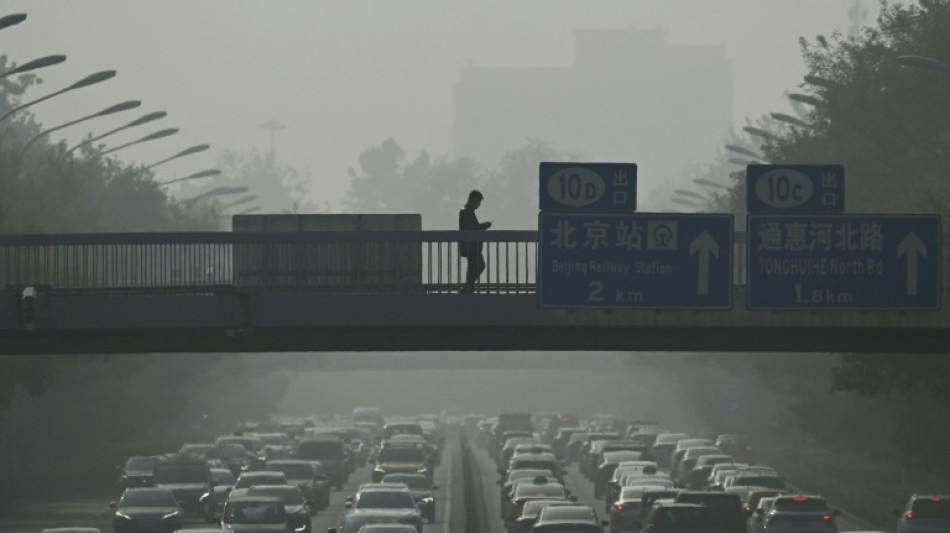
China's smog problem explained / Photo: © AFP

 Pope urges Europe to help combat 'deceit and lies' in international ties

 Injured Buttler to miss England ODI series in Pakistan
 Madrid housing protesters vow to maintain pressure on government
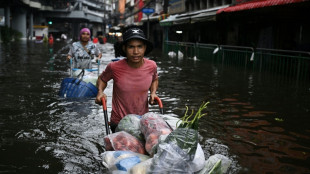 In kayaks or waist-deep in floodwater, shoppers return to Bangkok markets

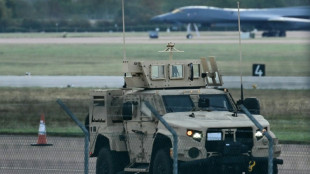 UK police probes Iran link to air base bomb scare: media

 Eala blasts into Asian Games quarters in just 55 minutes

 Taiwan gender-row boxer Lin Yu-ting guarantees Asian Games medal

 Comedian on trial for allegedly insulting Erdogan in standup show
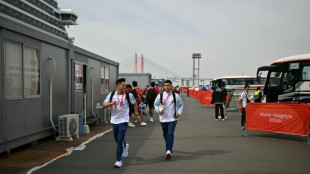
 More Asian Games transport woes as bus takes Pakistan to wrong venue
 Death toll in South Africa bar shooting rises to 18

 Aide to Venezuelan opposition leader returns from exile

 Messi and Alcaraz love it, now padel takes step closer to Olympics

 Tolls mount in Thailand, Myanmar floods
 Why India's opposition wants top poll official out

 PU Prime Strengthens UAE Momentum with Strong Showing at Forex Expo Dubai 2026

 Eight dead in Thailand floods since mid-September
 Oil prices spike after Trump rejects Iran truce offer
 Taylor Swift sets new record at MTV VMAs
 Seoul seeks apology after Ukraine reveals transfer of North Korean POWs

 Messi on target again but Miami downed by Columbus
 In Washington's political cauldron, a fight over foie gras
 Flavio Bolsonaro: political heir in his father's shadow

 Ravens grab last-second win in Rio as Commanders stop Seahawks

 Scheffler makes sportsmanship stand over tee screamer

 Anthropic CEO Amodei to dine with Trump at White House

A thick haze has this week smothered Beijing and surrounding areas, with tens of millions of people in northern China under severe pollution warnings.
Here's what you need to know about the smog in northern China:
- Just how bad is it? -
China's weather office has said "foggy and hazy" conditions are prevalent in the capital Beijing, the megacity of Tianjin, and parts of the provinces of Hebei, Shandong and Hubei, home to more than 100 million people in total.
Many of Beijing's 22 million residents donned face masks on Wednesday morning as they snaked through streets shrouded in a grey haze.
The pollution in some areas has been classified as "severe" and has at times lowered visibility to less than 50 metres (164 feet).
Beijing has experienced five days with "unhealthy" pollution levels in the last week, compared to just three such days in the past three weeks, air quality monitoring firm IQAir's data showed.
IQAir said Beijing was the third most-polluted major city on Earth on Wednesday, just ahead of Bangladesh's capital Dhaka.
Beijing's concentrations of hazardous PM 2.5 particles were more than 20 times higher than World Health Organisation guidelines, the firm said.
PM 2.5 particles, if inhaled, can have serious health risks, linked to premature deaths in people with heart or lung disease, as well as a host of breathing and other health issues, according to the US Environmental Protection Agency.
- Are things getting better? -
A decade ago, Beijing routinely choked in off-the-charts smog that stoked public health anxiety and was dubbed the "airpocalypse" by Western commentators.
China declared "war on pollution" after winning the Winter Olympics bid in 2015, shutting down dozens of coal plants and relocating heavy industries.
That has brought significant improvements, but air quality often remains below World Health Organization standards and severe pollution is common in China's capital.
In March and April, Beijing experienced six days when pollution levels were considered "very unhealthy" -- meaning air quality had reached emergency levels, data from the US embassy showed.
Beijing also experienced five days of "unhealthy" pollution levels around October and November last year.
China is the world's biggest emitter of the greenhouse gases driving climate change, such as carbon dioxide.
A recent jump in approvals for coal-fired power plants has added to concerns that China will backtrack on its goals to peak emissions between 2026 and 2030 and become carbon-neutral by 2060.
- What are the causes? -
The capital's location plays a role. Nestled between deserts to the north and dense industrial clusters to the south and east, the direction of the prevailing wind can often determine whether the city sees blue skies or dense smog.
But the bad air is also man-made: highly-polluting heavy industry, the common use of coal burning for electricity and vehicle emissions, IQAir said.
Beijing's city government has blamed "unfavourable weather conditions" such as high humidity and unseasonably hot temperatures.
It has said that colder weather may help dissipate the pollution.
- What steps have been taken? -
The second-highest air pollution alert is in place in Beijing until the end of Thursday.
The alert orders businesses, builders and transport firms to cut their emissions as a matter of urgency.
Further curbs, such as temporary bans on the use of some high-emissions vehicles, will come into force if the highest alert -- already in force in parts of Hebei province -- is triggered.
Authorities have also urged residents to reduce outdoor activities and strenuous exercise during periods of high pollution.
K.Thomson--BTB


