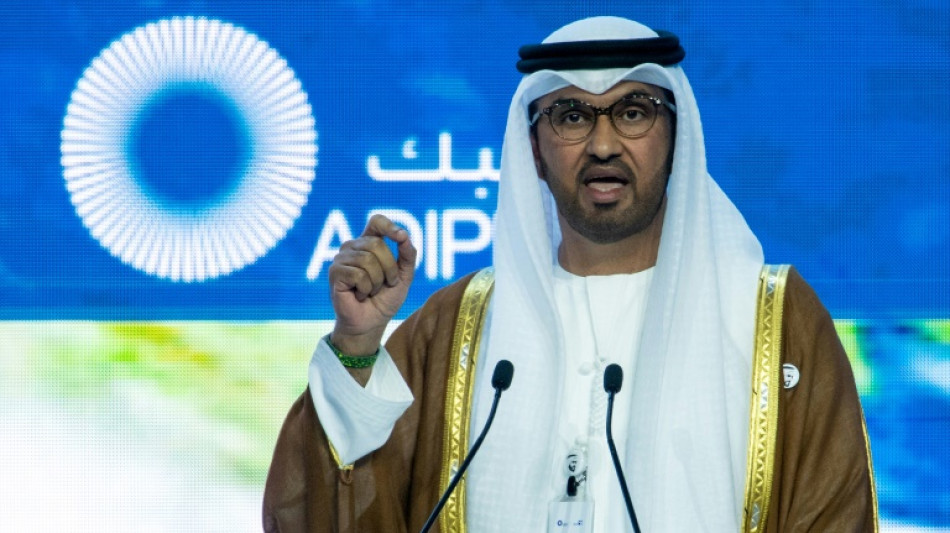
Climate experts warn of fossil fuel tactics at COP28 / Photo: © AFP/File

 Pope urges Europe to help combat 'deceit and lies' in international ties

 Injured Buttler to miss England ODI series in Pakistan
 Madrid housing protesters vow to maintain pressure on government

 In kayaks or waist-deep in floodwater, shoppers return to Bangkok markets

 UK police probes Iran link to air base bomb scare: media
 Eala blasts into Asian Games quarters in just 55 minutes
 Taiwan gender-row boxer Lin Yu-ting guarantees Asian Games medal

 Comedian on trial for allegedly insulting Erdogan in standup show

 More Asian Games transport woes as bus takes Pakistan to wrong venue
 Death toll in South Africa bar shooting rises to 18
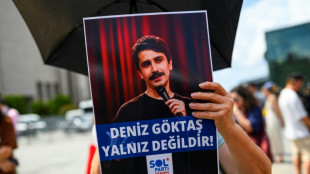
 Aide to Venezuelan opposition leader returns from exile

 Messi and Alcaraz love it, now padel takes step closer to Olympics

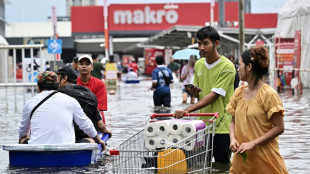 Tolls mount in Thailand, Myanmar floods

 Why India's opposition wants top poll official out

 PU Prime Strengthens UAE Momentum with Strong Showing at Forex Expo Dubai 2026
 Eight dead in Thailand floods since mid-September
 Oil prices spike after Trump rejects Iran truce offer

 Taylor Swift sets new record at MTV VMAs
 Seoul seeks apology after Ukraine reveals transfer of North Korean POWs
 Messi on target again but Miami downed by Columbus

 In Washington's political cauldron, a fight over foie gras
 Flavio Bolsonaro: political heir in his father's shadow

 Ravens grab last-second win in Rio as Commanders stop Seahawks

 Scheffler makes sportsmanship stand over tee screamer

 Anthropic CEO Amodei to dine with Trump at White House

Oil-rich Gulf states have positioned themselves as both champions of climate innovation and guardians of fossil fuel interests -- a balancing act experts warn could derail action at COP28 in Dubai.
This year's United Nations climate summit is being chaired and hosted by the United Arab Emirates, a country dubbed "an oil company with a state attached" by one observer who requested anonymity so they could speak freely about the negotiations.
According to COP28 director general Majid Al Suwadi, "the UAE has been a leader when it comes to climate change".
"We have been doing our part," he said in September.
But one of the "inherent flaws of the COP system" is that national interests -- particularly the host's -- inevitably influence the outcome, said Ahmed El Droubi, international campaigns manager at Climate Action Network.
Indeed, the UAE has appointed Sultan Al Jaber, the head of state-owned oil company ADNOC, as COP president, drawing protests from environmentalists.
At COP27 in Egypt, where oil and gas lobbyists outnumbered most delegations, the final text included a last-minute provision to boost "low-emission energy".
That term includes natural gas, into which Egypt has invested billions of dollars in recent years.
In Dubai, activists expect the fight will be even harder, with the hydrocarbons industry intent on "not just delaying, denying, diverting meaningful climate action, but also greenwashing their polluting work", Farhana Sultana, professor of geography and the environment at Syracuse University, told AFP.
With time running out, the stakes are higher than ever at COP28.
To keep global warming at an average of 1.5C above pre-industrial temperatures, greenhouse gas emissions must drop 43 percent by 2030 from 2019 levels, according to the Intergovernmental Panel on Climate Change, the UN's climate body.
"At the moment, we're not cutting anything, and the situation gets more urgent every year," Karim Elgendy, associate fellow at Chatham House, told AFP.
- Delay the 'inevitable' -
Jaber, who is also the UAE's climate envoy and co-founder of state-owned renewable energy company Masdar, is not the only oil industry veteran on the front lines of the climate fight.
The European Union's COP28 delegation is led by Dutch former foreign minister and ex-Shell employee Wopke Hoekstra, an appointment that has also been controversial.
According to Droubi, despite Jaber's clear "conflict of interest" as ADNOC chief, he "has actually said the most progressive thing of any COP president: that phasing down fossil fuels is inevitable".
But "inevitable", Elgendy says, "is a very calculated word".
In the name of energy market stability, fossil fuel giants including the UAE, Saudi Arabia and the United States have argued for continued new investments in hydrocarbons before an eventual transition.
In October, Jaber said "we cannot unplug the energy system of today before we build the new system of tomorrow", and encouraged activists to separate "reality from fantasies".
But "no one is saying turn it off immediately", Elgendy said.
"What they're saying is don't dig any more wells, don't expand capacity."
To stick to the 1.5C threshold, the International Energy Agency has called for an end to new investments in coal, oil and natural gas.
Saudi Arabia, the world's biggest oil exporter, has slammed the IEA as a "political" body, and the industry is proceeding with vast expansion globally.
According to Elgendy, more attention should be given to the solutions that matter, including cutting oil and gas subsidies -- which according to the International Monetary Fund were $7 trillion in 2022, or seven percent of global GDP.
- De-link and keep drilling -
The UAE has long been diversifying its economy, and says 70 percent of its GDP comes from non-oil sectors. It has pledged tens of billions of dollars in renewable energy investments.
"But for them, that means expanding into renewables, not actually limiting fossil fuels," according to Droubi.
At COP28, many countries, and the EU, will argue for an unprecedented commitment to move away from "unabated" fossil fuels.
Droubi said what the UAE is pushing, and what activists "are pushing back on, is de-linking the phase-in of renewables from the phase-out of fossil fuels".
On one hand, Gulf states say there will always be the need for some oil. And because theirs is the world's "cheapest and cleanest", they should be "the last producers standing", Elgendy said.
On the other hand, they have adopted what he calls an "unorthodox" climate approach where the key is not to cut carbon -- as scientists insist is necessary -- but to "manage carbon; we'll reuse it and recycle it and ultimately we'll sequester it underground".
- Running out of time -
Instead of cutting fossil fuels outright, oil giants have touted several once-marginal technologies as promising solutions to cut emissions.
They include carbon capture and storage (CCS), direct air capture and carbon credit trading -- all carbon management mechanisms that amount to "false climate solutions", according to Sultana.
CCS prevents CO2 from entering the atmosphere by siphoning exhaust from power plants, while direct air capture pulls CO2 from thin air.
Both technologies have been demonstrated to work, but remain far from maturity and commercial scalability.
Carbon credit trading schemes -- which underpin much of the world's "net zero" ambitions -- have long been dogged by charges of deception, poor transparency, dodgy accounting practices and in-built conflicts of interest.
According to Elgendy, these solutions "need several years to be viable, and we simply don't have that time".
In September, UN chief Antonio Guterres warned: "We must make up time lost to foot-dragging, arm-twisting and the naked greed of entrenched interests raking in billions from fossil fuels."
C.Meier--BTB


