Climate funding fall shows action 'stalling' as needs grows: UN / Photo: © AFP/File

 Pope urges Europe to help combat 'deceit and lies' in international ties
 Injured Buttler to miss England ODI series in Pakistan
 Madrid housing protesters vow to maintain pressure on government
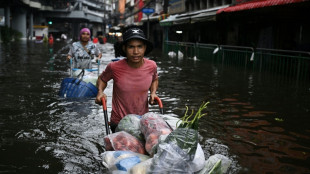 In kayaks or waist-deep in floodwater, shoppers return to Bangkok markets

 UK police probes Iran link to air base bomb scare: media
 Eala blasts into Asian Games quarters in just 55 minutes
 Taiwan gender-row boxer Lin Yu-ting guarantees Asian Games medal
 Comedian on trial for allegedly insulting Erdogan in standup show

 More Asian Games transport woes as bus takes Pakistan to wrong venue
 Death toll in South Africa bar shooting rises to 18
 Aide to Venezuelan opposition leader returns from exile

 Messi and Alcaraz love it, now padel takes step closer to Olympics

 Tolls mount in Thailand, Myanmar floods
 Why India's opposition wants top poll official out

 PU Prime Strengthens UAE Momentum with Strong Showing at Forex Expo Dubai 2026

 Eight dead in Thailand floods since mid-September
 Oil prices spike after Trump rejects Iran truce offer

 Taylor Swift sets new record at MTV VMAs
 Seoul seeks apology after Ukraine reveals transfer of North Korean POWs
 Messi on target again but Miami downed by Columbus

 In Washington's political cauldron, a fight over foie gras
 Flavio Bolsonaro: political heir in his father's shadow

 Ravens grab last-second win in Rio as Commanders stop Seahawks

 Scheffler makes sportsmanship stand over tee screamer

 Anthropic CEO Amodei to dine with Trump at White House

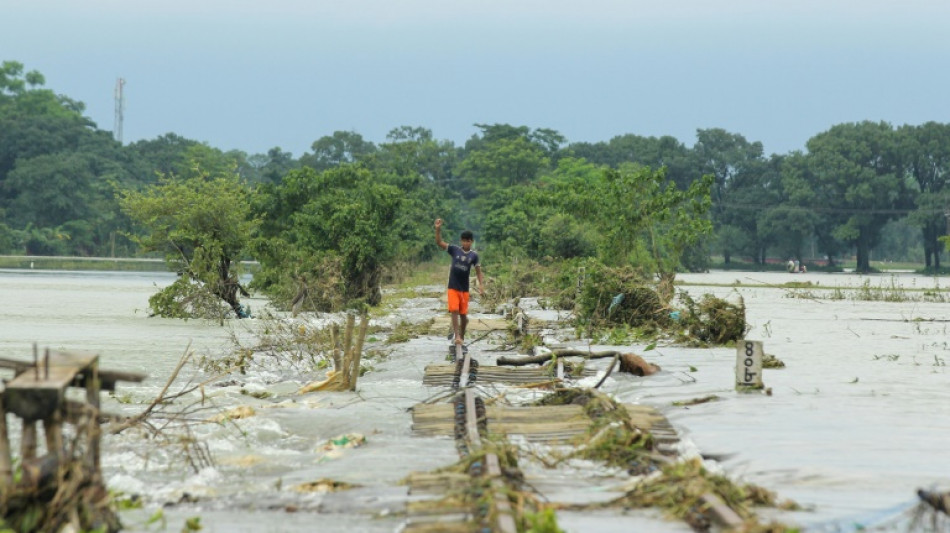
International funding for climate resilience in developing countries slumped in 2021 despite increasingly ferocious impacts, the United Nations said Thursday, as Secretary-General Antonio Guterres warned action was "stalling" even as the need to protect people increases.
Many developing economies least to blame for the greenhouse gases that stoke global warming are among the most exposed to the costly and destructive effects of worsening weather extremes and rising seas.
But in its latest annual assessment of climate preparedness funding, the UN Environment Programme (UNEP) found that public finance to developing countries fell 15 percent to around $21 billion in 2021 -- the most recent year for which figures are available.
Meanwhile, the overall annual funding that developing countries need to adapt to climate impacts this decade is projected to have increased to as much as $387 billion, UNEP said.
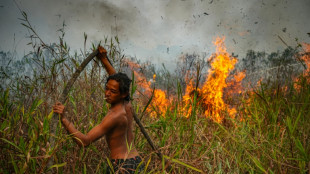
"Storms, fires, floods, drought and extreme temperatures are becoming more frequent and more ferocious, and they're on course to get far worse," Guterres said in a statement, adding that the need to protect people and nature was "more pressing than ever".
"Yet, as needs rise, action is stalling," he said.
World leaders meeting at this year's climate talks in the United Arab Emirates will face a tough reckoning over financial solidarity between rich polluters and vulnerable nations, as a failure to cut planet-heating emissions threatens the Paris deal's global warming limits.
"The world must urgently cut greenhouse gas emissions and increase adaptation efforts to protect vulnerable populations," said Inger Andersen, Executive Director of UNEP, in the foreword to the Adaptation Gap report.
"Neither is happening."
- Damage control -
As the world warms, climate change impacts increase and so too do the costs of preparing for them.
Richer countries promised in 2009 to provide $100 billion a year to finance both adaptation and emissions cuts in developing countries by 2020.
But it only reached $83 billion that year, according to the most recent figures available from the Organisation for Economic Co-operation and Development.
Failure to meet the target on time has damaged trust in international climate negotiations.
"Developing countries stand ready, awaiting the necessary funds to safeguard their people against imminent climate disasters," said Harjeet Singh, head of global political strategy at campaign consortium Climate Action Network International.
"Without timely adaptation, we are setting the stage for unimaginable loss of lives and livelihoods caused by relentless floods, raging wildfires, and surging seas."
UNEP said its analysis found that public financing for adaptation dropped to $21.3 billion in 2021, from $25.2 billion in 2020.
It said the fall set a "worrying precedent", particularly because it came in a year that saw wealthy nations pledge at UN climate talks in Glasgow to double annual adaptation funding by 2025, from 2019 levels, to $40 billion.
Report co-author Paul Watkiss said it was too soon to discern a trend, although international circumstances remain "challenging", going from the Covid-19 pandemic in 2021, to Russia's invasion of Ukraine the following year.
After a major update to its methods, UNEP said it now expects developing countries to need more funds to prepare for climate impacts, giving a range of between $215 billion to $387 billion per year this decade.
That is based on the difference between the costs of adaptation calculated using computer models and financing needs implied by countries' published national climate plans, if they have them.
UNEP said this amounts to roughly one percent of gross domestic product in developing countries on average, but in the least developed countries and vulnerable small islands it is around 2 percent of GDP.
Even if wealthy governments meet their promise of doubling adaptation finance by 2025, the gap between available funding and needs would still be vast, UNEP said, proposing a range of additional sources of money.
These include international and private sector finance, and reforms proposed by developing countries of the World Bank and International Monetary Fund to align with climate priorities.
Adaptation is a good investment, the report stressed, citing research that every billion spent on adaptation against coastal flooding leads to a $14 billion reduction in economic damages.
The failure to cut emissions is already causing intensifying climate impacts, slamming communities and causing growing losses and damages.
This led to an agreement at last year's climate talks in Egypt for a new fund to help vulnerable nations.
Guterres said one stream of funding for this should come from a windfall tax on the fossil fuel industry.
"Fossil fuel barons and their enablers have helped create this mess; they must support those suffering as a result," he said.
F.Pavlenko--BTB


