Australia declares 'mass bleaching' at Great Barrier Reef / Photo: ©

 Man City chairman defiant over reported Premier League charges

 Germany ready to 'walk through fire' for Klopp, says Tah

 At least 16 killed in Russian and Ukrainian strikes

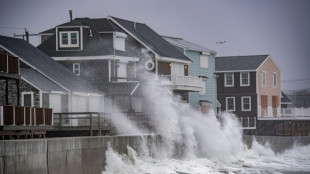 Powerful storm pummels US Northeast

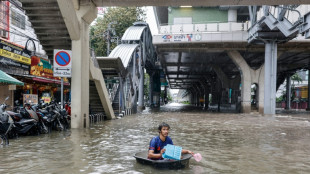 Bangkok declares disaster after homes flooded, roads submerged by heavy rain

 Norris calls for errant Colapinto to be banned for causing Baku crash

 Russell finds himself again and prepares to heap pressure on Antonelli

 South Korea hold nerve to win Asian Games basketball gold

 Russell holds off Verstappen to claim imperious victory in Baku

 Russell holds off Verstappen to win Azerbaijan Grand Prix

 India's Kohli says 2027 ODI World Cup will be his last

 Huge crowds cheer Pope Leo along Champs-Elysees ahead of Paris mass

 Putellas wants to bring 'winning culture and mentality' to London City

 Rare Italian opera returns to Moscow after nearly 120-year hiatus

 Pope to celebrate giant Paris mass after 'peace' appeal

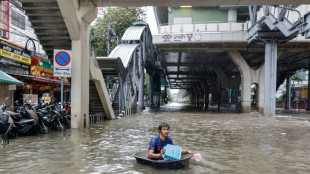 Homes flooded, roads submerged: Bangkok declares disaster over heavy rains

 Ahead of Paris mass, pope urges life together in 'dignity and peace'

 Austria 'ghetto' language classes leave children to repeat school
 S.African women runners arm themselves after string of killings

 'I felt embarrassed': Japan eSports whizz-kid, 11, wins Games gold

 Indonesia fires threatens critically-endangered orangutan: IUCN

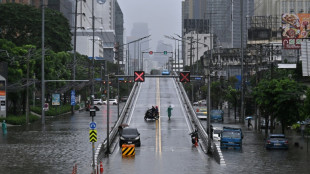 Bangkok declares flood disaster across city

 'World records not enough': North Korea weightlifters target Olympic gold rush

 Iran proposes Hormuz plan, Trump reportedly refuses
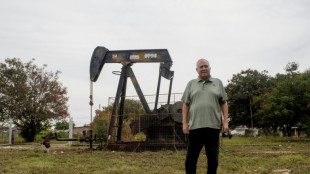
 El Nino rewrites the menu in the world's top restaurants

Australia's spectacular Great Barrier Reef is suffering "mass bleaching" as corals lose their colour under the stress of warmer seas, authorities said Friday, in a blow widely blamed on climate change.
The world's largest coral reef system, stretching for more than 2,300 kilometres (1,400 miles) along the northeast coast of Australia, is showing the effects of the heat, said the Reef Authority.
Aerial surveys showed coral bleaching at multiple reefs across a large area of the system, "confirming a mass bleaching event, the fourth since 2016," it said in a report.
The Great Barrier Reef, home to some 1,500 species of fish and 4,000 types of mollusc, was suffering despite the cooling effect of the La Nina weather phenomenon, which is currently influencing Australia's climate, the authority said.
The area, which comprises about 2,500 individual reefs and more than 900 islands, suffers from bleaching when corals expel algae living in their tissues, draining them of their vibrant colours.
Though bleached corals are under stress, they can still recover if conditions become more moderate, the Reef Authority said.
"Weather patterns over the next couple of weeks continue to remain critical in determining the overall extent and severity of coral bleaching across the Marine Park," it said.
The mass bleaching report emerged four days after the United Nations began a monitoring mission to assess whether the World Heritage site is being protected from climate change.
- 'Ghostly white coral' -
UNESCO's mission is to assess whether the Australian government is doing enough to address threats to the Great Barrier Reef -- including climate change -- before the World Heritage Committee considers listing it as "in danger" in June.
“The beloved, vibrant colours of the Great Barrier Reef are being replaced by ghostly white coral, said Greenpeace Australia climate impact activist Martin Zavan.
He pressed the government to show the damaged areas to the UN mission now inspecting the reef rather than the picturesque areas that have been untouched.
"If the government is genuine about letting the UN mission form a comprehensive picture of the state of the Reef, then it must take the mission to the northern and central Reef," Zavan said.
"Here, corals are being cooked by temperatures up to four degrees above average, which is particularly alarming during a La Nina year when ocean temperatures are cooler."
The World Heritage Committee's decision to not list the Great Barrier Reef as being in danger last July surprised many, given UNESCO had recommended the listing weeks earlier.
When the UN previously threatened to downgrade the reef's World Heritage listing in 2015, Australia created a "Reef 2050" plan and poured billions of dollars into protection.
Amanda McKenzie, chief executive of Australian climate action body the Climate Council, said the world's oceans reached record high temperatures last year.
"Unfortunately, as more severe bleaching is reported across our beloved Great Barrier Reef, we can see these devastating events are becoming more common under the continuing high rate of greenhouse gas emissions," she said.
“To give our Reef a fighting chance, we must deal with the number one problem: climate change. No amount of funding will stop these bleaching events unless we drive down our emissions this decade.
M.Odermatt--BTB