
Nations urged to take 'great leaps' at UN climate talks / Photo: © AFP/File

 SpaceX puts Starship megarocket in orbit for first time
 Iran denies link to suspected bomb plot at UK airbase used by US
 Ex-boss Mancini says City charges 'not my concern'
 Berlin Marathon winner Assefa finished race with torn Achilles
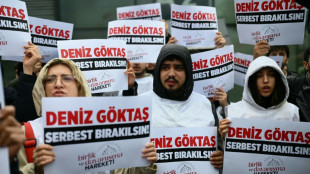 Comedian convicted for Erdogan 'insult' but freed pending appeal
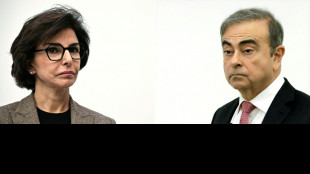 French prosecutors seek two-year sentence for ex-minister Dati in graft case
 Eala makes fast start as weather and transport woes hit Asian Games
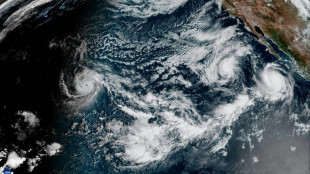 Hurricane Polo approaches Mexico, threatens severe damage
 Energy markets rally after Trump rejects Iran truce offer
 Japanese convenience store enlists Lady Gaga to bolster recruitment
 Seoul summons Ukraine envoy in row over North Korean POWs

 Ireland 'raised awareness worldwide' in Israel game: Hallgrimsson
 Colombian police capture wife, daughter of Ecuador drug lord
 More Asian Games woes as bus takes Pakistan team to wrong venue
 Radio frequencies vital to Earth observation must be protected: UN
 Comedian on trial for insulting Erdogan in standup show
 Women's Fashion Week kicks off in Paris

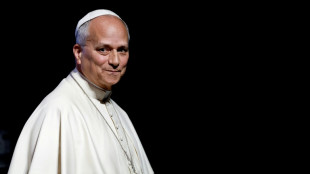
 Pope arrives in French border city to speak on united Europe
 The wildfires choking Indonesia, sparking regional haze
 PU Prime Deepens Argentina Presence Through FX Expo Buenos Aires 2026

 Nothing to seal here: NZ police help stranded pup home
 White House releases list of products US, China could tax less
 'Pseudo-journalism': Partisan 'news' sites target US midterms
 'Currently impossible': North Korea defections in freefall
 Erasmus sizes up 'improved' Wallabies ahead of 2027 World Cup
The UN climate conference opens in Dubai on Thursday with nations under pressure to increase the urgency of action on global warming and wean off fossil fuels, amid intense scrutiny of oil-rich hosts UAE.
The two-week-long climate negotiations being held this year in the glitzy Gulf city come at a pivotal moment, with emissions still rising and this year likely to be the hottest in human history.
Britain's King Charles III, world leaders, activists and lobbyists are among more than 97,000 people expected to attend what is being billed as the largest climate gathering of its kind.
The UN and hosts the United Arab Emirates say these talks, known as COP28, will be the most important since Paris in 2015, when nations agreed to limit global warming to well below 2C since the preindustrial era, and preferably to a safer limit of 1.5C.
Scientists say the world is not on track to achieve these targets, and nations must make faster and deeper cuts to emissions to avert the most disastrous impacts of climate change.
"Right now, we're taking baby steps where we should be taking great leaps and great strides to get us to where we need to be," said UN climate chief Simon Stiell on Wednesday.
A central focus will be a stocktake of the world's limited progress on curbing global warming, which requires an official response at these talks.
On Friday and Saturday, about 140 heads of state and government -- Pope Francis had to cancel last minute due to the flu -- are expected to articulate their ambition after a year of devastating floods, wildfires and storms across the globe.
- Host troubles -
The UAE sees itself as a bridge between rich developed nations most responsible for historic emissions and the rest of the world, which has contributed less to global warming but suffers its worst consequences.
But the decision for it to host has attracted a firestorm of criticism, particularly after the appointment of Sultan Al Jaber -- the head of UAE oil giant ADNOC -- to steer the talks as COP president.
The 50-year-old Emirati, who also chairs a clean energy company, has defended his record and resisted pressure from European and US lawmakers to stand aside.
Fears of a conflict of interest were given fresh life on the eve of COP28 when Jaber was accused of using the presidency to pursue fossil fuel deals in meetings with governments -- accusations he strenuously denied.
"It's an attempt to undermine the work of the COP28 presidency," he said of the accusations detailed in documents leaked to the BBC and the Centre for Climate Reporting.
- Background tensions -
Nations will navigate a range of thorny issues between November 30 and December 12 -- including the disputed future of fossil fuels and a long-running feud over climate finance for poorer countries.
Geopolitical tensions and building trust could be a huge challenge, experts say.
Israeli President Isaac Herzog and Palestinian Authority leader Mahmoud Abbas may cross paths on Friday, as they are scheduled to speak within minutes of each other.
Neither US President Joe Biden nor Chinese President Xi Jinping -- heads of the world's two biggest polluters -- are attending, though Washington and Beijing did strike a rare common note on climate this month that spurred optimism going into COP.
Sonia Dunlop, CEO of the Global Solar Council, said Wednesday it was hoped that more than 100 countries would agree to triple renewable energy by 2030 -- a flagship proposal being put forward by the COP hosts.
Rallying a common position on phasing out all fossil fuels -- a demand of climate-vulnerable island nations, and one supported by scientists and the International Energy Agency -- will be more challenging.
Any decisions at COP are made by consensus, meaning nearly 200 nations -- whether dependent on oil, sinking beneath rising seas or locked in geopolitical rivalry -- must traverse these fault lines to reach any agreement.
"In the end, the proof is in the pudding," said US climate envoy John Kerry on Wednesday.
T.Bondarenko--BTB


