Burning question: what can we expect in a 1.5C world? / Photo: © AFP/File

 Rose, Scott among 2027 World Golf Hall of Fame finalists

 Brunson says NBA champion Knicks can't get satisfaction

 France puts out largest wildfire since 1949

 Real Madrid's Perez summoned over Barcelona referee payments comments

 Oil takes off again, Wall Street dips after Trump rejects Iran truce offer
 AlgoQuant Asset Management Selects Liquid Mercury to Enhance Digital Asset Trading Infrastructure
 UK to reopen refugee resettlement scheme to push 'safe' migration

 Pope urges Europe to help combat 'lies and deceit' in world affairs
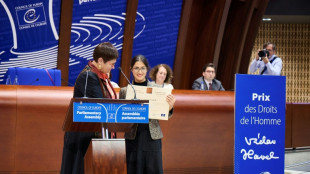 Iranian lawyer Nasrin Sotoudeh wins Council of Europe's rights prize

 French far-right's Bardella denies alleged 2013 antisemitic comments

 Oil up, Wall Street dips after Trump rejects Iran truce offer

 Gakpo withdraws from Netherlands squad

 SpaceX puts Starship megarocket in orbit for first time
 Iran denies link to suspected bomb plot at UK airbase used by US
 Ex-boss Mancini says City charges 'not my concern'
 Berlin Marathon winner Assefa finished race with torn Achilles
 Comedian convicted for Erdogan 'insult' but freed pending appeal

 French prosecutors seek two-year sentence for ex-minister Dati in graft case

 Eala makes fast start as weather and transport woes hit Asian Games

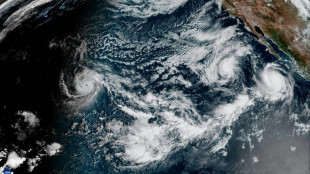 Hurricane Polo approaches Mexico, threatens severe damage
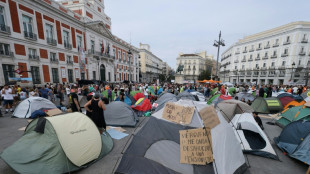
 Energy markets rally after Trump rejects Iran truce offer
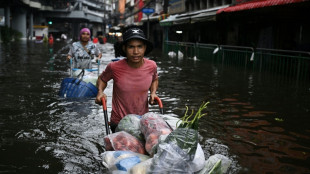
 Japanese convenience store enlists Lady Gaga to bolster recruitment

 Seoul summons Ukraine envoy in row over North Korean POWs

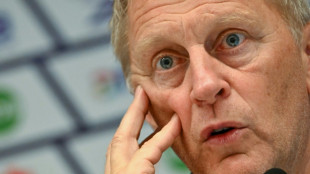 Ireland 'raised awareness worldwide' in Israel game: Hallgrimsson

 Colombian police capture wife, daughter of Ecuador drug lord

Massive wildfires exposing millions to toxic smoke, drought shrivelling crops and key waterways, destructive storms supercharged by record ocean temperatures -- in the last year the world has had a taste of what to expect with warming of 1.5C.
For the first time on record, Earth has endured 12 consecutive months of temperatures 1.5 degrees Celsius hotter than the pre-industrial era, Europe's climate monitor said Thursday.
That does not signal a breach of the more ambitious limit agreed by countries in the 2015 Paris Agreement -- because that is measured as an average over two decades.
Temperatures since the middle of last year have been ramped up by the naturally-occurring El Nino warming event, which is likely to recede in the coming months.
But underlying planetary heating has cranked up the global thermometer, driven largely by the burning of fossil fuels as well as deforestation and agriculture.
"Although this news does not mean the Paris limit is exceeded, it is undeniably bad news," said Joeri Rogelj, director of research at the Grantham Institute, Imperial College London.
"Unless global emissions are urgently brought down to zero, the world will soon fly past the safety limits set out in the Paris climate agreement."
- Limits of endurance -
That 1.5C milestone is no longer in the distant future, with the UN's IPCC climate science panel warning that a breach is likely sometime between 2030 and 2035.
What would a 1.5C world mean for humans and the natural world they rely on to survive?
Scientists estimate current global temperatures are around 1.2C hotter overall than the pre-industrial benchmark, averaged across the period 1850 to 1900.
Severe climate impacts are already visible around the world and would be amplified once the 1.5C threshold is reached.
Some parts of the world, like the Arctic and high mountain areas, are warming far faster than others.
In other regions, even small temperature increases can expose vulnerable communities to dangerous threats, including heat that tests the very limit of human endurance.
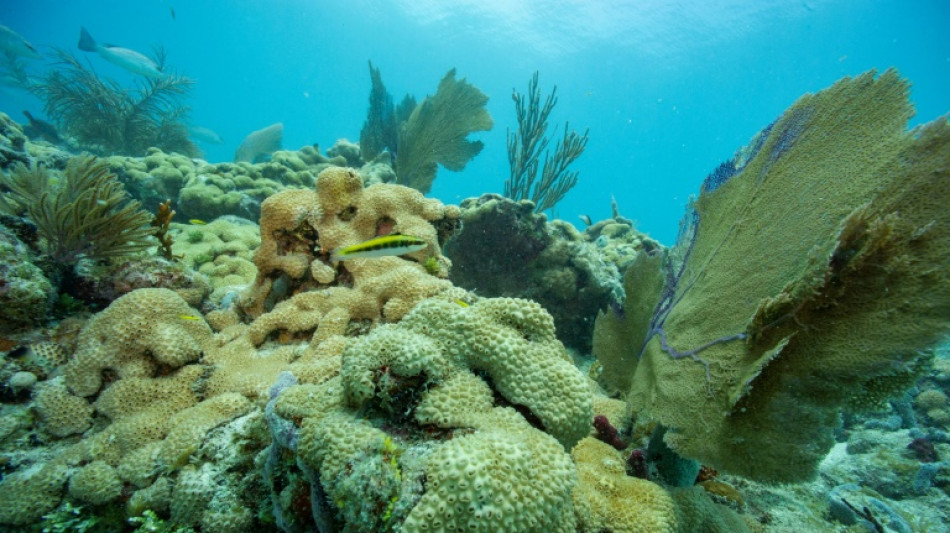
Coral reefs -- ecosystems that provide habitat for an immense array of marine life and protect coastlines -- are projected to decline 70 to 90 percent in a world that has warmed 1.5C.
The loss of biodiversity globally will be among the most pronounced impacts of a 1.5C warmer climate, according to the IPCC.
- Over the line -
Climate experts are also concerned that accelerating permafrost thaw will release carbon dioxide and methane into the atmosphere, creating a vicious cycle of warming.
The IPCC currently classifies the risk of permafrost melt in some regions as "moderate", but it would become "high" in a 1.5C or even warmer climate.
Some impacts of warming are already irreversible, and will continue to worsen, like sea level rise, driven by melting ice sheets and glaciers.
Higher ocean levels are already threatening the future of low-lying islands, while in the longer term metres of sea level rise will likely swamp many of the world's major coastal cities.
Even if the 1.5C limit is breached, reducing greenhouse gas emissions remains crucial to stay "well below" 2C of warming, the maximum warming limit set by the Paris Agreement.
That is because "every increment of global warming will intensify multiple and concurrent hazards," the IPCC warns.
Halting deforestation and the rampant destruction of ecosystems are also crucial to maintain nature's ability to drawn down carbon from the atmosphere.
Oceans absorb 90 percent of the excess heat produced by the carbon pollution from human activity since the dawn of the industrial age.
J.Fankhauser--BTB


