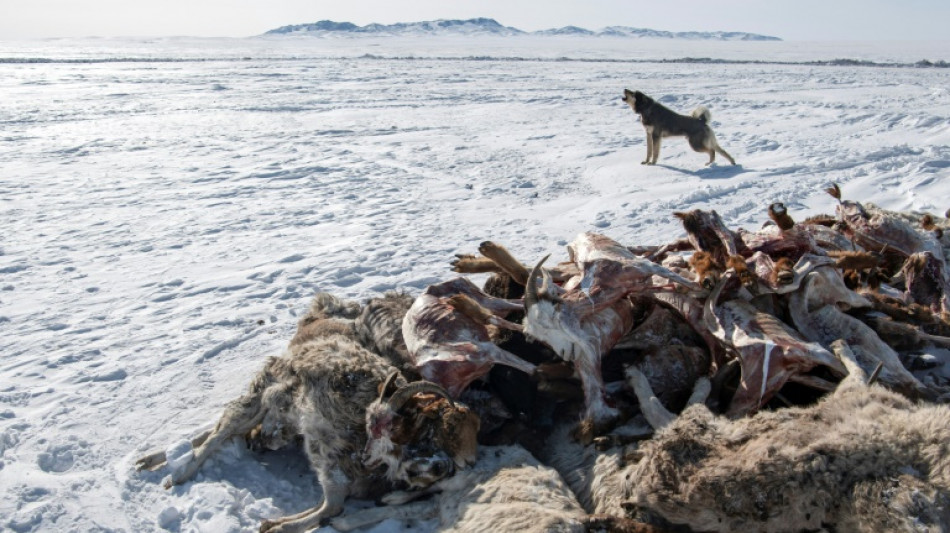
2 million animals dead as extreme winter weather hits Mongolia / Photo: © AFP

 Justice Alito steps aside from major US climate case

 Willis happy with England exile after retains Top 14 player award

 Spain housing protests keep heat on government as PM seeks new law

 Wissa spoils Zimbabwe homecoming as DR Congo win AFCON qualifier

 UK police release on bail five men held over airbase incident

 Ex-All Black Plummer 'sure' New Zealand will find Super Rugby solution

 Shein sees 1% revenue growth in first half of 2026
 Netherlands regrets Israel retaliation in settlements row

 Moscow seizes Russian assets of German food retailer Metro

 Bulgarian spirits inflamed by new rakia rules

 Documentary turns camera on architect Peter Zumthor

 UK police say releasing on bail five men held over airbase incident

 Trump admin finalizes reversal of US fuel economy standards

 US says no China arms sale plans after envoy cites Trump offer

 Dozens kidnapped in two weekend attacks in northern Nigeria

 Next stop the world: Pathirage wins Asian Games javelin gold

 Aster Launches Perpetual Grid Trading 2.0 with Up to 140,000 $ASTER Liquidity Mining Campaign

 Seoul says North Korean mines 'highly suspected' as cause of DMZ blast

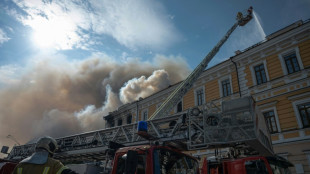 Russia pummels Kyiv in latest deadly daytime attack

 Wartime Ukraine works to keep its railways on track

 Boy among 3 dead in migrant Channel crossing accident: French authorities

 SGFX Creates a Standout Brand Experience at Forex Expo Dubai 2026

 Pope urges Europe to help combat 'deceit and lies' in international ties

 Injured Buttler to miss England ODI series in Pakistan
 Madrid housing protesters vow to maintain pressure on government

More than two million animals have died in Mongolia so far this winter, a government official said Monday, as the country endures extreme cold and snow.
The landlocked country is no stranger to severe weather from December to March, when temperatures plummet as low as minus 50 degrees Celsius (minus 58 Fahrenheit) in some areas.
But this winter has been more severe than usual, with lower than normal temperatures and very heavy snowfall, the United Nations said in a recent report.
As of Monday, 2.1 million head of livestock had died from starvation and exhaustion, Gantulga Batsaikhan of the country's agriculture ministry said.
Mongolia had 64.7 million such animals, including sheep, goats, horses and cows, at the end of 2023, official statistics show.
The extreme weather is known as "dzud" and typically results in the deaths of huge numbers of livestock.
The United Nations said climate change is increasing the frequency and intensity of dzuds.
Mongolia has experienced six dzuds in the past decade, including the winter of 2022-23 when 4.4 million head of livestock perished.
This year's dzud has been exacerbated by a summer drought that prevented animals from building up enough fatty stores to survive the harsh winter.
- 'Praying for warmer weather' -
Seventy percent of Mongolia is experiencing "dzud or near dzud" conditions, the UN said.
That compares with 17 percent of the country at the same time in 2023.
"The winter started with heavy snow but suddenly air temperatures rose, and the snow melted," herder Tuvshinbayar Byambaa told AFP.
"Then the temperatures dropped again, turning the melting snow into ice."
That ice makes it hard for the livestock to break through to the grass below, he said, preventing them from grazing and forcing many herders to borrow money for feed.
"The weather changes are so sudden these days," Tuvshinbayar said.
The deadliest dzud on record was the winter of 2010-11, when more than 10 million animals died -- almost a quarter of the country's total livestock at the time.
Snowfall this year -- the heaviest since 1975 -- has compounded herders' woes, trapping them in colder areas and making them unable to buy food and hay for their animals from the nearby towns.
Mongolia is one of the most sparsely populated countries in the world and about one-third of its population of 3.3 million people is nomadic.
The government has promised to help, launching a campaign to deliver hay fodder to herders in a bid to prevent further losses of crucial commodities like meat and cashmere, one of the country's top exports.
But for now, Tuvshinbayar and his fellow herders can only pray for warmer weather.
"It is becoming too hard to be a herder -- we suffer drought and flood in summer and dzud in winter," he told AFP.
"I'll start losing my animals if the snow does not melt in the coming months," he added.
"All herders are praying for warmer weather to melt this ice, so our animals can reach the grass."
P.Anderson--BTB


