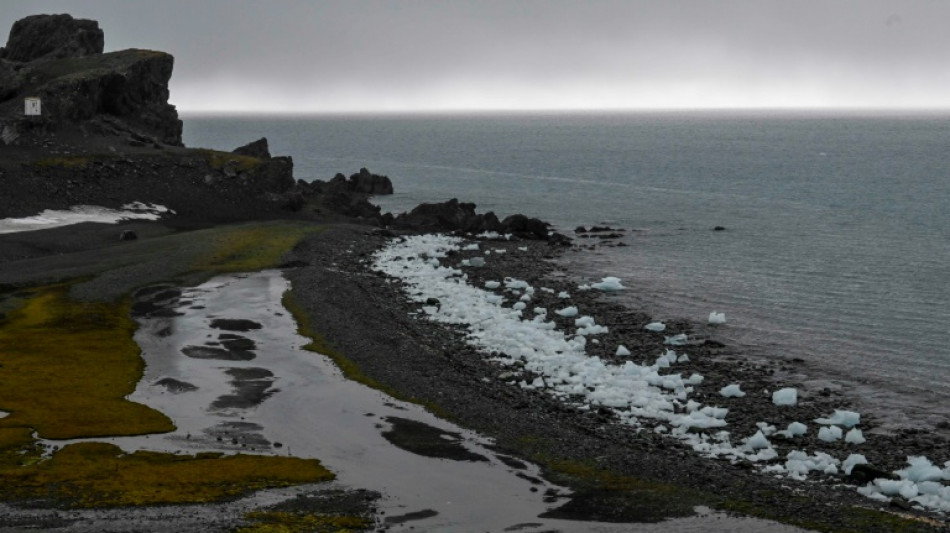
'Very worried': Scientists fret as Antarctic sea ice dwindles / Photo: © AFP/File

 Justice Alito steps aside from major US climate case

 Willis happy with England exile after retains Top 14 player award
 Spain housing protests keep heat on government as PM seeks new law

 Wissa spoils Zimbabwe homecoming as DR Congo win AFCON qualifier

 UK police release on bail five men held over airbase incident

 Ex-All Black Plummer 'sure' New Zealand will find Super Rugby solution

 Shein sees 1% revenue growth in first half of 2026
 Netherlands regrets Israel retaliation in settlements row

 Moscow seizes Russian assets of German food retailer Metro

 Bulgarian spirits inflamed by new rakia rules

 Documentary turns camera on architect Peter Zumthor

 UK police say releasing on bail five men held over airbase incident

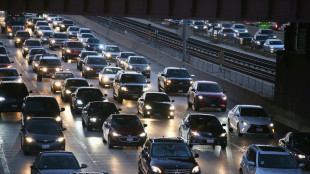 Trump admin finalizes reversal of US fuel economy standards
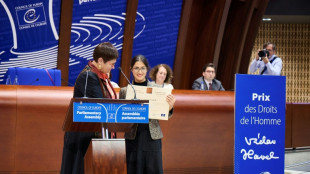
 US says no China arms sale plans after envoy cites Trump offer

 Dozens kidnapped in two weekend attacks in northern Nigeria

 Next stop the world: Pathirage wins Asian Games javelin gold

 Aster Launches Perpetual Grid Trading 2.0 with Up to 140,000 $ASTER Liquidity Mining Campaign
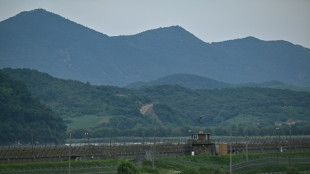 Seoul says North Korean mines 'highly suspected' as cause of DMZ blast

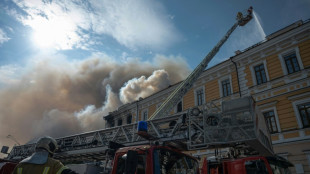 Russia pummels Kyiv in latest deadly daytime attack
 Wartime Ukraine works to keep its railways on track

 Boy among 3 dead in migrant Channel crossing accident: French authorities

 SGFX Creates a Standout Brand Experience at Forex Expo Dubai 2026

 Pope urges Europe to help combat 'deceit and lies' in international ties

 Injured Buttler to miss England ODI series in Pakistan
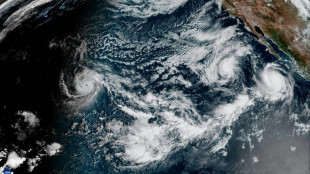
 Madrid housing protesters vow to maintain pressure on government

Sea ice levels in Antarctica have registered historic lows for three consecutive years, portending grave consequences for life on Earth as we know it.
But looking out over the southernmost continent, scientist Miguel Angel de Pablo laments that humanity seems to be oblivious to the warnings.
"We (scientists) are very worried... because we don't see how we can solve it ourselves," the Spanish planetary geologist told AFP on Livingston Island in the South Shetland Antarctic archipelago.
"The more alerts we send out... to make society aware of what is happening, it seems we are not listened to, that we are (perceived as) alarmist" despite the evidence, he said.
The US National Snow & Ice Data Center (NSIDC) reported Wednesday that minimum Antarctic sea ice extent came in at under two million square kilometers (772,000 square miles) for a third consecutive February -- the height of the southern summer thaw season.
Minimum sea ice cover for all three years were the lowest since records began 46 years ago.
Melting sea ice has no immediate impact on ocean levels, as it forms by freezing salt water already in the ocean.
But the white ice reflects more of the sun's rays than darker ocean water, and its loss accentuates global warming while exposing the on-land freshwater ice sheet, which could cause a catastrophic sea level rise if it melts.
"Even though we are far from any inhabited part of the planet, in reality what happens in Antarctica affects everything" in the rest of the world, said De Pablo.
- 'Not easily undone' -
A study last year found that nearly half of Antarctica's ice shelves -- floating sheets attached to the landmass -- have also reduced in volume in the past 25 years, releasing trillions of tons of meltwater into the oceans.
This has implications not only for sea levels but also for ocean salinity and temperature, said De Pablo.
Some scientists say evidence for climate change impact on sea ice melt in Antarctica -- known for significant annual variations in its summer thaws and winter freezes -- is less clear than in the Arctic north pole.
What is not in doubt is that continued global warming caused by human emissions of greenhouse gases will affect these patterns in future.
De Pablo, who has devoted 16 years of his life to studying Antarctic ice, told AFP it may already be too late to stop the trend.
"The problem is that these degradations are not easily undone," he said.
"Even if today we (changed) the rhythms of life that we have in Western societies, tomorrow the glaciers would not cease to degrade nor the frozen soils to be lost," with all that entails.
Scientists estimate global temperatures are already 1.2 degrees Celsius hotter overall than pre-industrial levels. The 2015 Paris Agreement had set out to limit warming to 1.5 C (2.7 Fahrenheit) by curbing planet-warming emissions.
"We have to ask ourselves whether the manner in which we live our daily lives is truly worth it because in the end we will lose our planet," said De Pablo.
"There is no second planet" Earth, he added.
Y.Bouchard--BTB


