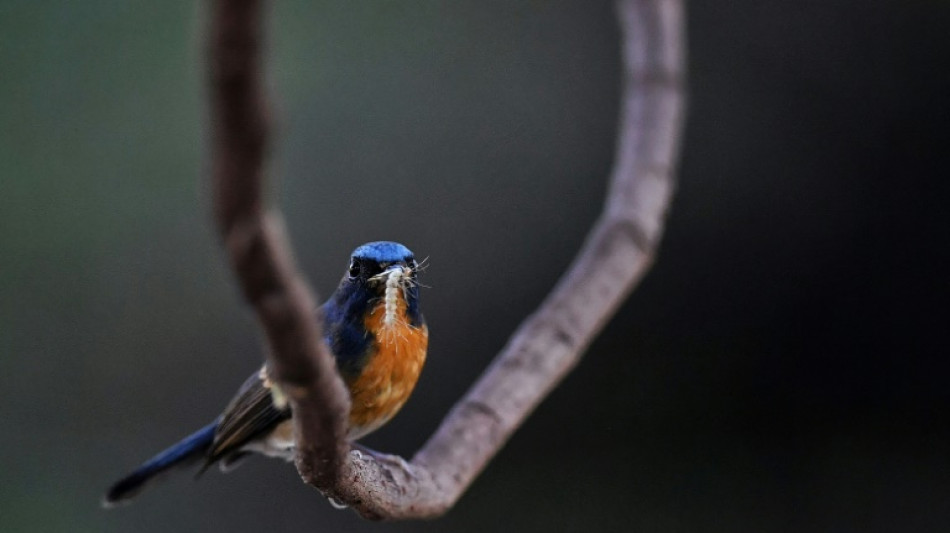
Birds, beetles, bugs could help replace pesticides: study / Photo: © AFP

 Justice Alito steps aside from major US climate case

 Willis happy with England exile after retains Top 14 player award

 Spain housing protests keep heat on government as PM seeks new law

 Wissa spoils Zimbabwe homecoming as DR Congo win AFCON qualifier

 UK police release on bail five men held over airbase incident

 Ex-All Black Plummer 'sure' New Zealand will find Super Rugby solution

 Shein sees 1% revenue growth in first half of 2026

 Netherlands regrets Israel retaliation in settlements row

 Moscow seizes Russian assets of German food retailer Metro

 Bulgarian spirits inflamed by new rakia rules

 Documentary turns camera on architect Peter Zumthor

 UK police say releasing on bail five men held over airbase incident

 Trump admin finalizes reversal of US fuel economy standards

 US says no China arms sale plans after envoy cites Trump offer

 Dozens kidnapped in two weekend attacks in northern Nigeria

 Next stop the world: Pathirage wins Asian Games javelin gold

 Aster Launches Perpetual Grid Trading 2.0 with Up to 140,000 $ASTER Liquidity Mining Campaign

 Seoul says North Korean mines 'highly suspected' as cause of DMZ blast

 Russia pummels Kyiv in latest deadly daytime attack

 Wartime Ukraine works to keep its railways on track

 Boy among 3 dead in migrant Channel crossing accident: French authorities

 SGFX Creates a Standout Brand Experience at Forex Expo Dubai 2026

 Pope urges Europe to help combat 'deceit and lies' in international ties

 Injured Buttler to miss England ODI series in Pakistan
 Madrid housing protesters vow to maintain pressure on government

Natural predators like birds, beetles and bugs might be an effective alternative to pesticides, keeping crop-devouring pests populations down while boosting crop yields, researchers said Wednesday.
Pests are responsible for around 10 percent -- or 21 million tonnes -- of crop losses every year, but controlling them has led to the widespread use of chemical pesticides.
Could birds, spiders and beetles among other invertebrate predators do the job as well?
Researchers in Brazil, the United States and the Czech Republic analysed past research on predator pest control and found that they helped reduce pest populations by more than 70 percent, while increasing crop yields by 25 percent.
"Natural predators are good pest control agents, and their maintenance is fundamental to guaranteeing pest control in a future with imminent climate change," lead author Gabriel Boldorini, a PhD student at the Federal Rural University of Pernambuco in Brazil, told AFP.
Although the researchers did not directly compare the effectiveness of invertebrates versus pesticides, he said, the damage that pesticides cause to ecosystems and biological control was well documented, from biodiversity loss and water and soil pollution to human health risks.
The researchers found that predators were more effective at pest control in regions with greater rain variability -- which is expected to increase because of climate change.
The researchers were also surprised to find that having a single species of natural predator was as effective as having multiple species, Boldorini said.
"Generally speaking, the more species there are, the better ecosystems function. But there are exceptions," he said, adding that a single species could do the job just as well.
Climate change and rising carbon dioxide levels affect both crop yield and pest dynamics by expanding the distribution of pests and increasing their survival rates.
Meanwhile, other studies have shown that invertebrates vital for ecosystem health are suffering a rapid decline globally.
Boldorini said the conservation of invertebrates "guarantees pest control and increased productivity, without damaging ecosystems".
D.Schneider--BTB


