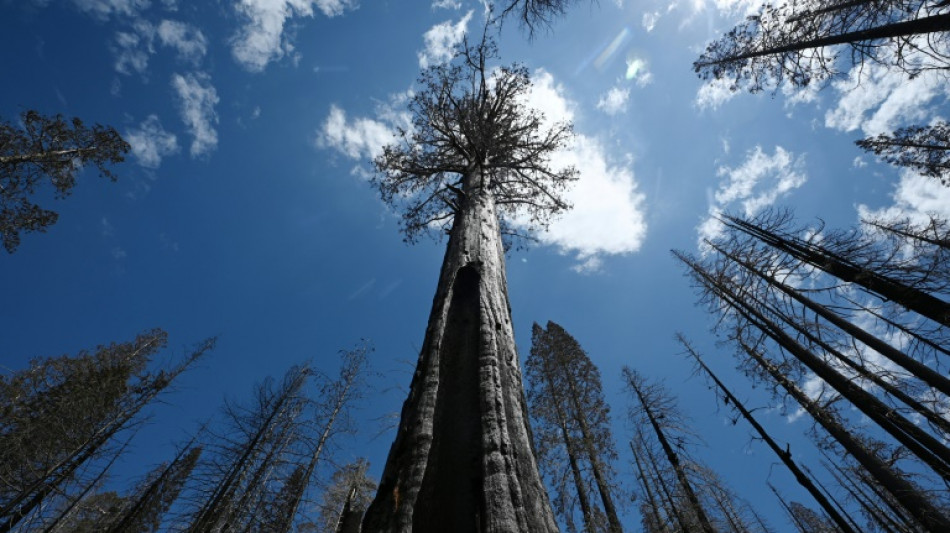
Giant redwoods thriving in the UK: experts / Photo: © AFP

 Dodgers eye three-peat, Red Sox face Yankees as MLB playoffs begin
 Certification of Boeing 737 MAX delayed by software bug

 Celine Dion wows Paris Fashion Week with surprise gig

 AMD buys firm founded by AI 'godmother' Fei-Fei Li

 Italy rebound in Turkey as France win late in Belgium

 Pope says concerns about AI 'should be taken seriously'

 Hurricanes to hoist title banner as NHL season begins

 Justice Alito steps aside from major US climate case

 Willis happy with England exile after retains Top 14 player award

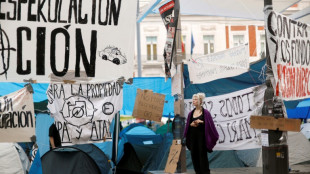 Spain housing protests keep heat on government as PM seeks new law

 Wissa spoils Zimbabwe homecoming as DR Congo win AFCON qualifier

 UK police release on bail five men held over airbase incident

 Ex-All Black Plummer 'sure' New Zealand will find Super Rugby solution

 Shein sees 1% revenue growth in first half of 2026
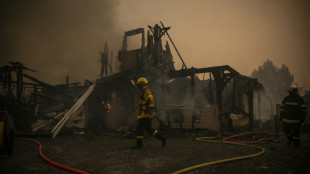
 Netherlands regrets Israel retaliation in settlements row

 Moscow seizes Russian assets of German food retailer Metro

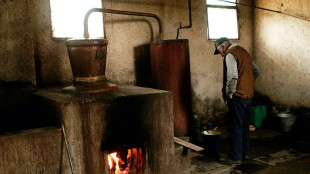 Bulgarian spirits inflamed by new rakia rules

 Documentary turns camera on architect Peter Zumthor

 UK police say releasing on bail five men held over airbase incident
 Trump admin finalizes reversal of US fuel economy standards

 US says no China arms sale plans after envoy cites Trump offer

 Dozens kidnapped in two weekend attacks in northern Nigeria

 Next stop the world: Pathirage wins Asian Games javelin gold

 Aster Launches Perpetual Grid Trading 2.0 with Up to 140,000 $ASTER Liquidity Mining Campaign
 Seoul says North Korean mines 'highly suspected' as cause of DMZ blast

Endangered giant redwood trees are thriving in the UK but could also be significantly contributing to capturing carbon emissions, according to research published on Wednesday.
The towering giant sequoias, which can soar as high as 90 metres (295 feet) and live for up to 3,000 years, were first planted in the UK in the mid-19th century.
There are now some 500,000 across the country -- more than the 80,000 or so in their native California.
Research by University College London (UCL) and published in the Royal Society Open Science journal, found that "the most massive species" of redwood can potentially pull an average of 85 kilograms of carbon from the atmosphere per year.
It is the first time the growth rate and resilience of the trees have been analysed in the UK.
"Giant sequoias are some of the most massive organisms on Earth and in their native range make up some of the most carbon-dense forests in the world due to their great age," said Ross Holland, the lead author of the research.
"We found that UK redwoods are well adapted to the UK and able to capture a large amount of carbon dioxide."
Sequoias, which have wide trunks and can survive blazes that would wipe out forests of other tree species, were first imported to the UK as seeds and seedlings in 1853.
The trees, which were rare at the time, became a symbol of wealth and power in Victorian-era Britain.
Many were planted at the entrance to large houses and estates.
To assess the adaptability of giant sequoias to the UK's milder climates and varied rainfall patterns, the researchers compiled a map, pinpointing the locations of nearly 5,000 individual trees across the country.
They analysed 97 individual trees at Benmore Botanic Gardens in central Scotland, at Kew Garden's Wakehurst Place in the south of England and at a mixed woodland in Havering Country Park east of London.
Terrestrial laser scanners were used to map the trees in 3D, enabling researchers to accurately measure the heights and volumes of the trees without having to cut them down.
The tallest was approximately 54.87m tall -- towering over most native UK species but modest in comparison to its far older American relatives.
Researchers calculated average growth rates of the trees at the three sites, which they said would be important for the analysis of climate changes in the future.
"Currently, these trees are probably more important for their aesthetic and historical interest than they are for solving the climate crisis," said senior author Mat Disney.
"But as more are planted we need to know how they will grow."
M.Odermatt--BTB