'Sowing peace'? Colombia program for war criminals stokes debate / Photo: © AFP

 Dodgers eye three-peat, Red Sox face Yankees as MLB playoffs begin
 Certification of Boeing 737 MAX delayed by software bug

 Celine Dion wows Paris Fashion Week with surprise gig
 AMD buys firm founded by AI 'godmother' Fei-Fei Li
 Italy rebound in Turkey as France win late in Belgium

 Pope says concerns about AI 'should be taken seriously'
 Hurricanes to hoist title banner as NHL season begins
 Justice Alito steps aside from major US climate case

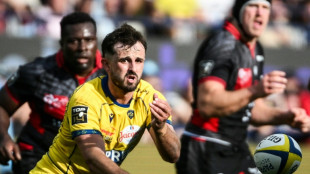
 Willis happy with England exile after retains Top 14 player award
 Spain housing protests keep heat on government as PM seeks new law
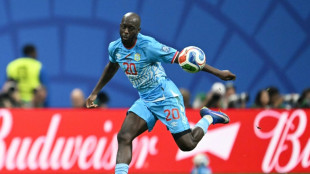 Wissa spoils Zimbabwe homecoming as DR Congo win AFCON qualifier

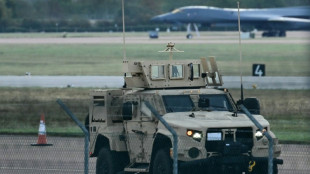 UK police release on bail five men held over airbase incident
 Ex-All Black Plummer 'sure' New Zealand will find Super Rugby solution
 Shein sees 1% revenue growth in first half of 2026
 Netherlands regrets Israel retaliation in settlements row

 Moscow seizes Russian assets of German food retailer Metro
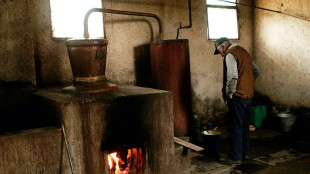 Bulgarian spirits inflamed by new rakia rules

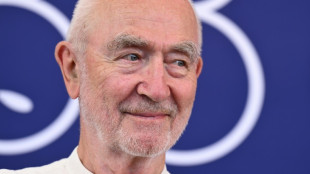 Documentary turns camera on architect Peter Zumthor
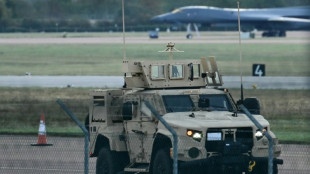 UK police say releasing on bail five men held over airbase incident
 Trump admin finalizes reversal of US fuel economy standards
 US says no China arms sale plans after envoy cites Trump offer
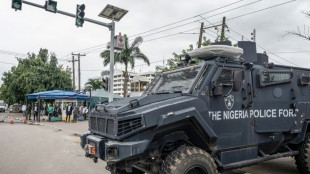 Dozens kidnapped in two weekend attacks in northern Nigeria
 Next stop the world: Pathirage wins Asian Games javelin gold

 Aster Launches Perpetual Grid Trading 2.0 with Up to 140,000 $ASTER Liquidity Mining Campaign

 Seoul says North Korean mines 'highly suspected' as cause of DMZ blast
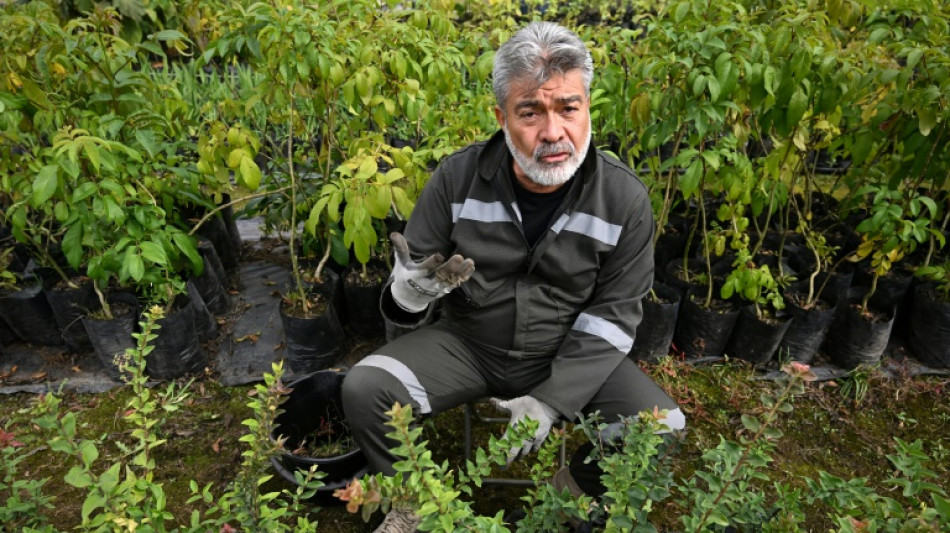
Once confined to jail over the killings of hundreds under his watch, former Colombian general Henry Torres now spends his days planting trees and otherwise free.
Like dozens of other alleged war criminals in the South American country, 61-year-old Torres is participating in an alternative sentencing program that some victims' families decry as a "mockery" of justice.
"We are not only restoring an ecosystem but trying to minimize the damage we caused... it was a way to compensate for damage without being deprived of freedom," he told AFP.
Torres commanded a brigade that was found responsible for hundreds of cold-blooded executions as the army sought to inflate results in its fight against leftist guerrillas.
Between 2002 and 2008, some 6,400 civilians were executed by the military, which presented them as enemy fighters, according to the Special Jurisdiction for Peace (JEP) court.
The JEP was set up after a 2016 peace deal between the government and the once-powerful FARC insurgent group to try the worst crimes committed during the decades-long conflict.
Under the peace deal, the court can offer alternatives to jail time or lesser sentences to people who confess their crimes and make reparations to victims.
"We are trying to reconcile our society after a very serious war. It is very new and very complex," JEP president Roberto Vidal told AFP.
Initiatives like "Sowing Peace," in which 46 soldiers are taking part, are "pilot projects through which we are learning how to set this up."
Victims' families are not happy.
"Come and plant trees... that is absolutely insufficient, a kind of mockery," said Margarita Arteaga, whose brother Kemel was killed by soldiers in 2007.
- Healing wounds -
Under the Bogota sun, a dozen men clear undergrowth with machetes.
The younger ones work the land, while Torres and other older men prepare saplings which will be used to reforest a 15-hectare area of southwestern Bogota that is home to many people displaced by the conflict.
"With this work, we are seeking to heal these wounds... to transform the damage caused," said retired major Gustavo Soto, 52.
As part of the peace process, Soto came face-to-face last year with the relatives of 85 civilians murdered by a unit under his command.
"It was quite difficult," he said of the experience.
In the early 2000s, Soto was part of a counterinsurgency launched under the right-wing government of Alvaro Uribe.
"Unfortunately, proven results were required in the form of combat casualties. It was how the upper command evaluated us," he said.
At the work site, Soto and other former soldiers clear invasive gorse bushes whose large thorns pierce through their thick overalls.
Torres and Soto were both in prison awaiting trial when the JEP granted them freedom in exchange for confessions and taking part in initiatives like "Sowing Peace."
They come voluntarily, under court supervision, with each day worked recognized as "advance" payment on the maximum eight-year penalty the JEP can impose.
The tribunal, which started operating in 2017, has yet to hand down any sentences.
Experts question whether the projects really impose the "effective restrictions on freedoms and rights" called for under the peace deal.
JEP judge Vidal said that participants may also be surveilled, including by "cell phone monitoring."
- Too good a 'deal?' -
Margarita Arteaga believes the military did "the deal of their lives" with the JEP.
Her brother Kemel was a craftsman and punk fan who was trying his hand at selling handmade earrings and necklaces when soldiers kidnapped him in a bar and executed him.
His killer told a JEP hearing that Kemel had been asked to be shot from the front. He didn't die immediately and had to be finished off on the ground, she learned.
"They planted a grenade and a revolver on him," Arteaga recalled through tears.
Soldiers presented him as an extortionist killed in an exchange of gunfire.
"I can understand the symbolic nature of the issue of the trees, but it does not repair" what was done, said Arteaga, a spokeswoman for a victims' association.
There are two other restorative justice initiatives in Colombia. In one, perpetrators are rebuilding an Indigenous civic center, and in the other, they provide education about the dangers of antipersonnel mines.
Arteaga proposes the programs go further, with soldiers like Torres made to visit battalions and "tell soldiers-in-training what they did, and what should not happen" ever again.
O.Krause--BTB