Deadly Bangladesh cyclone one of longest seen / Photo: © AFP

 Dodgers eye three-peat, Red Sox face Yankees as MLB playoffs begin

 Certification of Boeing 737 MAX delayed by software bug

 Celine Dion wows Paris Fashion Week with surprise gig

 AMD buys firm founded by AI 'godmother' Fei-Fei Li

 Italy rebound in Turkey as France win late in Belgium

 Pope says concerns about AI 'should be taken seriously'

 Hurricanes to hoist title banner as NHL season begins

 Justice Alito steps aside from major US climate case

 Willis happy with England exile after retains Top 14 player award

 Spain housing protests keep heat on government as PM seeks new law

 Wissa spoils Zimbabwe homecoming as DR Congo win AFCON qualifier

 UK police release on bail five men held over airbase incident

 Ex-All Black Plummer 'sure' New Zealand will find Super Rugby solution

 Shein sees 1% revenue growth in first half of 2026
 Netherlands regrets Israel retaliation in settlements row

 Moscow seizes Russian assets of German food retailer Metro

 Bulgarian spirits inflamed by new rakia rules

 Documentary turns camera on architect Peter Zumthor

 UK police say releasing on bail five men held over airbase incident

 Trump admin finalizes reversal of US fuel economy standards

 US says no China arms sale plans after envoy cites Trump offer

 Dozens kidnapped in two weekend attacks in northern Nigeria

 Next stop the world: Pathirage wins Asian Games javelin gold

 Aster Launches Perpetual Grid Trading 2.0 with Up to 140,000 $ASTER Liquidity Mining Campaign

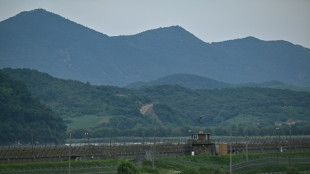 Seoul says North Korean mines 'highly suspected' as cause of DMZ blast

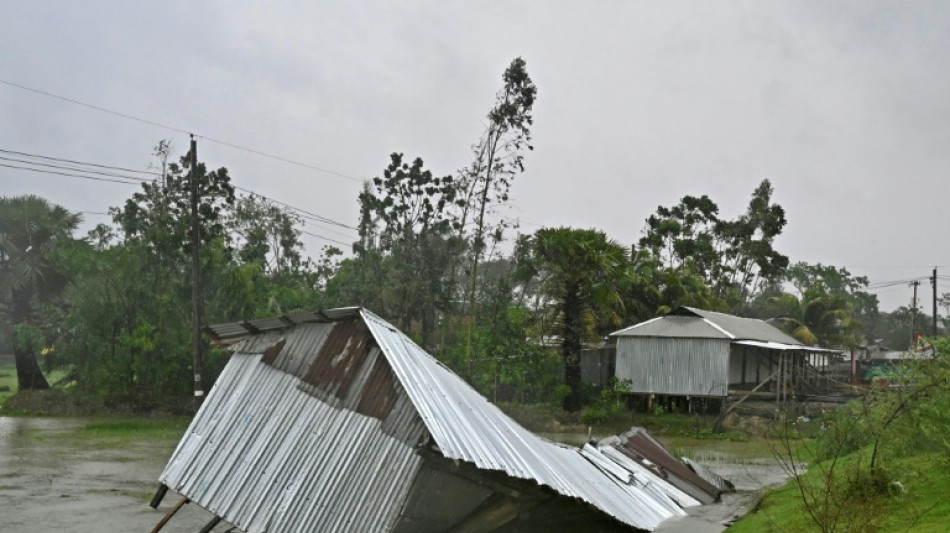
Bangladeshi weather experts said Tuesday that a deadly cyclone that carved a swathe of destruction was one of the quickest-forming and longest-lasting they'd experienced, blaming climate change for the shift.
Cyclone Remal, which made landfall in low-lying Bangladesh and neighbouring India on Sunday evening with fierce gales and crashing waves, left at least 21 people dead, destroyed thousands of homes, smashed seawalls and flooded cities across the two countries.
"In terms of its land duration, it is one of the longest in the country's history," Azizur Rahman, director of the state-run Bangladesh Meteorological Department told AFP, adding it had battered the country for more than 36 hours.
In contrast, Cyclone Aila, which hammered Bangladesh in 2009, lasted around 34 hours.
Cyclones have killed hundreds of thousands of people in Bangladesh in recent decades, and the number of superstorms hitting its densely populated coast has increased sharply, from one a year to as many as three, due to the impact of climate change.
Slow-moving -- and therefore longer-lasting -- storms bring greater destruction.
Rahman said the cyclone triggered massive rains, with some cities receiving at least 200 millimetres (7.9 inches).
- 'Impact of climate change' -
He said the cyclone formed more quickly than almost all the cyclones they have monitored in recent decades.
"Of course, quick cyclone formation and the long duration of cyclones are due to the impact of climate change," Rahman said.
"It took three days for it to turn into a severe cyclone from low pressure in the Bay of Bengal... I've never seen a cyclone formed from a low pressure in such a quick time," he said.
"Usually, a cyclone is formed in the south and southwest of the Bay of Bengal, then takes seven to eight days to turn into a severe cyclone."
But while scientists say climate change is fuelling more storms, better forecasting and more effective evacuation planning have dramatically reduced death tolls.
In Bangladesh, Cyclone Remal killed at least 15 people, including 12 reported by Kamrul Hasan, the country's disaster management secretary.
Some drowned. Others were crushed when their houses collapsed or trees uprooted by the gales landed on them.
On Tuesday, police inspector Bacchu Mia told AFP that three more people had died in Bangladesh's capital Dhaka after "they touched live electricity wires which fell on the roads when the storm hit".
In India, six people died, West Bengal state officials said.
A.Gasser--BTB