EU seeks roadblocks for Chinese EVs without sparking trade war / Photo: © AFP/File

 Dodgers eye three-peat, Red Sox face Yankees as MLB playoffs begin
 Certification of Boeing 737 MAX delayed by software bug

 Celine Dion wows Paris Fashion Week with surprise gig

 AMD buys firm founded by AI 'godmother' Fei-Fei Li
 Italy rebound in Turkey as France win late in Belgium

 Pope says concerns about AI 'should be taken seriously'
 Hurricanes to hoist title banner as NHL season begins
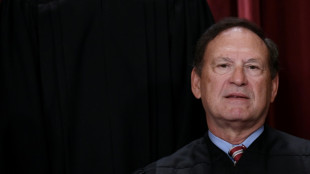 Justice Alito steps aside from major US climate case

 Willis happy with England exile after retains Top 14 player award

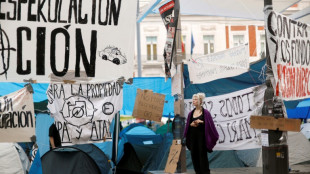 Spain housing protests keep heat on government as PM seeks new law
 Wissa spoils Zimbabwe homecoming as DR Congo win AFCON qualifier

 UK police release on bail five men held over airbase incident

 Ex-All Black Plummer 'sure' New Zealand will find Super Rugby solution

 Shein sees 1% revenue growth in first half of 2026

 Netherlands regrets Israel retaliation in settlements row
 Moscow seizes Russian assets of German food retailer Metro
 Bulgarian spirits inflamed by new rakia rules

 Documentary turns camera on architect Peter Zumthor

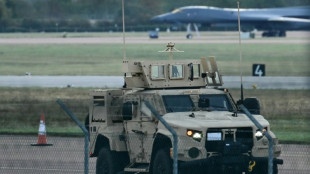 UK police say releasing on bail five men held over airbase incident
 Trump admin finalizes reversal of US fuel economy standards

 US says no China arms sale plans after envoy cites Trump offer

 Dozens kidnapped in two weekend attacks in northern Nigeria
 Next stop the world: Pathirage wins Asian Games javelin gold

 Aster Launches Perpetual Grid Trading 2.0 with Up to 140,000 $ASTER Liquidity Mining Campaign
 Seoul says North Korean mines 'highly suspected' as cause of DMZ blast
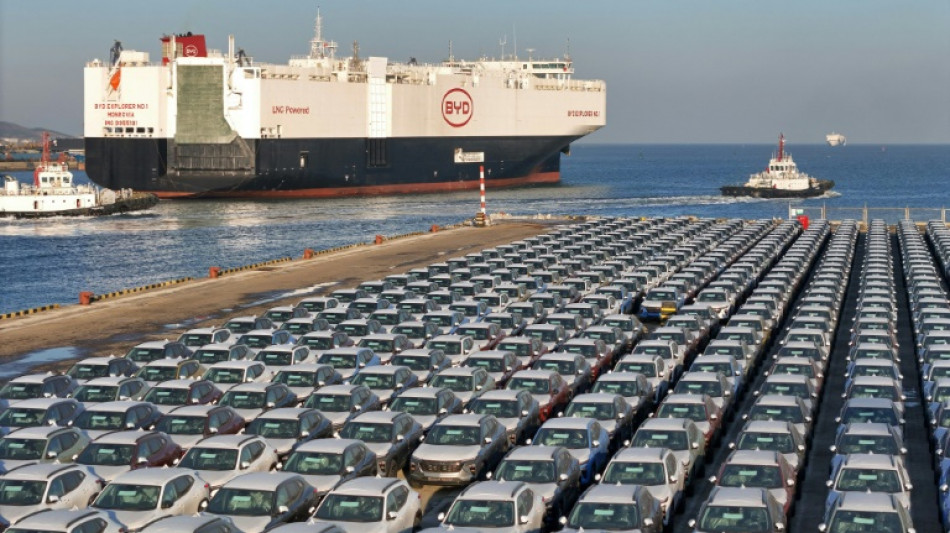
The EU faces a delicate balancing act as it prepares to rev up taxes on Chinese electric cars to protect European industry, while steering clear of a US-style showdown with Beijing that could spark a trade war.
Europe's automotive sector is the jewel in its industrial crown -- behind iconic brands from Mercedes to Ferrari -- but it faces an existential threat from the looming end of combustion engines and China's head start in the switch to electric.
When Brussels launched a probe last year into Chinese electric car subsidies, officials said they wanted to put the brakes on what they claimed were unfair practices undercutting Europe's car manufacturers.
Beijing reacted angrily at the time, crying protectionism.
The EU has until July 4 to order a provisional hike in import duties on Chinese electric vehicles (EVs) -- currently at 10 percent -- with the expectation it could make its move some time in June.
As anticipation builds, China has raised the temperature further with its own threats of duties. Europe's agriculture imports could be in the firing line.
Experts suggest Brussels could hike duties to between 20 and 30 percent -- enough to discourage but not fully deter Chinese exporters, which research firm Rhodium Group estimates would require 40 to 50 percent tariffs.
That is a calculated move by European Commission President Ursula von der Leyen -- who stressed the EU was planning "targeted" action, after the United States quadrupled its own duties on Chinese electric cars to 100 percent.
The EV standoff comes in a context of rising trade tensions between Beijing and Western countries -- which are investing billions in the energy transition and accuse the Asian giant of unfair competition on everything from wind turbines to solar panels.
But the EU is carefully calibrating its steps.
"I don't think anyone in Brussels wants a full-blown trade war or technology war," said Jacob Gunter, senior analyst at China-focused think tank MERICS.
"But there's a growing recognition that something needs to change in the trade and technology relationships between the EU and China."
- Different EU, US approaches -
China is the world's biggest car exporter -- and Europe is a critical market.
EU imports of EVs from China mushroomed from around 57,000 in 2020 to around 437,000 in 2023, the US-based Peterson Institute for International Economics said.
Their value rose over the same period from $1.6 billion to $11.5 billion, according to Rhodium Group.
Whereas the United States appears ready to risk a trade conflict with China, Elvire Fabry of think tank the Jacques Delors Institute sees key differences in Europe's strategy.
Washington's move is "based on a political priority to isolate China and slow down its technological development", she argued.
"The European approach is... based on facts established by an investigation" and aims to restore fair competition, Fabry said.
- Green transition risk -
Crucially, Brussels must also balance concerns about Chinese imports with its targets for slashing carbon emissions.
The EU wants many more Europeans driving electric cars as it prepares to outlaw the sale of new fossil fuel-powered cars from 2035.
China has sought to leverage this point.
"These measures will only harm the interests of their own consumers and affect the global green transformation and efforts to tackle climate change," He Yadong, China's commerce ministry spokesperson, said this month.
At home too, the EU's anti-subsidy probe has fuelled divisions between member states: it is pushed by Paris and backed by French automakers, but Germany and Sweden both expressed reservations.
Not all European manufacturers are on board either, with German carmakers opposing the probe.
- 'Politically driven' -
The EV investigation, one of the bloc's biggest to date against China, provoked Beijing's ire, especially since it came at the initiative of Brussels -- rather than being triggered by a formal complaint.
MERICS' Gunter said he expected a "pretty sharp response".
China gave a taste of what retaliatory moves it could take by launching an anti-dumping probe in January into brandy imported from the EU.
Beijing appeared to up the ante last week with reports in state-owned tabloid Global Times on potential tit-for-tat moves, like targeting pork imports.
And the China Chamber of Commerce to the EU (CCCEU) referred to a legal expert cited in Chinese media saying that European wine and dairy products could find themselves caught in the crossfire.
The trade group told AFP that the probe "appears to have been politically driven, lacking substantial complaints from European industries that adequately represent manufacturers' interests".
The EU will have to decide on any final duties by November.
burs-raz/ec/imm/smw
B.Shevchenko--BTB