Swiss vote on renewable energy plan for 2050 carbon neutrality / Photo: © AFP/File

 Dodgers eye three-peat, Red Sox face Yankees as MLB playoffs begin
 Certification of Boeing 737 MAX delayed by software bug

 Celine Dion wows Paris Fashion Week with surprise gig

 AMD buys firm founded by AI 'godmother' Fei-Fei Li
 Italy rebound in Turkey as France win late in Belgium

 Pope says concerns about AI 'should be taken seriously'
 Hurricanes to hoist title banner as NHL season begins

 Justice Alito steps aside from major US climate case

 Willis happy with England exile after retains Top 14 player award
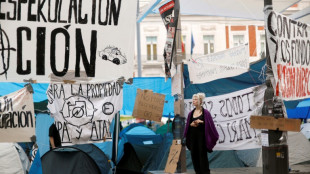 Spain housing protests keep heat on government as PM seeks new law

 Wissa spoils Zimbabwe homecoming as DR Congo win AFCON qualifier

 UK police release on bail five men held over airbase incident

 Ex-All Black Plummer 'sure' New Zealand will find Super Rugby solution

 Shein sees 1% revenue growth in first half of 2026
 Netherlands regrets Israel retaliation in settlements row

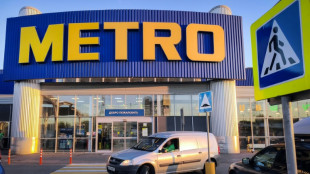 Moscow seizes Russian assets of German food retailer Metro
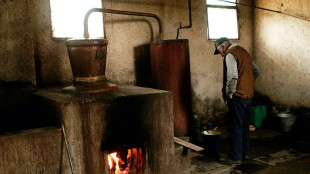 Bulgarian spirits inflamed by new rakia rules

 Documentary turns camera on architect Peter Zumthor

 UK police say releasing on bail five men held over airbase incident
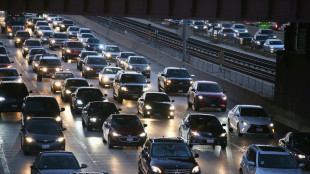 Trump admin finalizes reversal of US fuel economy standards

 US says no China arms sale plans after envoy cites Trump offer
 Dozens kidnapped in two weekend attacks in northern Nigeria
 Next stop the world: Pathirage wins Asian Games javelin gold

 Aster Launches Perpetual Grid Trading 2.0 with Up to 140,000 $ASTER Liquidity Mining Campaign
 Seoul says North Korean mines 'highly suspected' as cause of DMZ blast

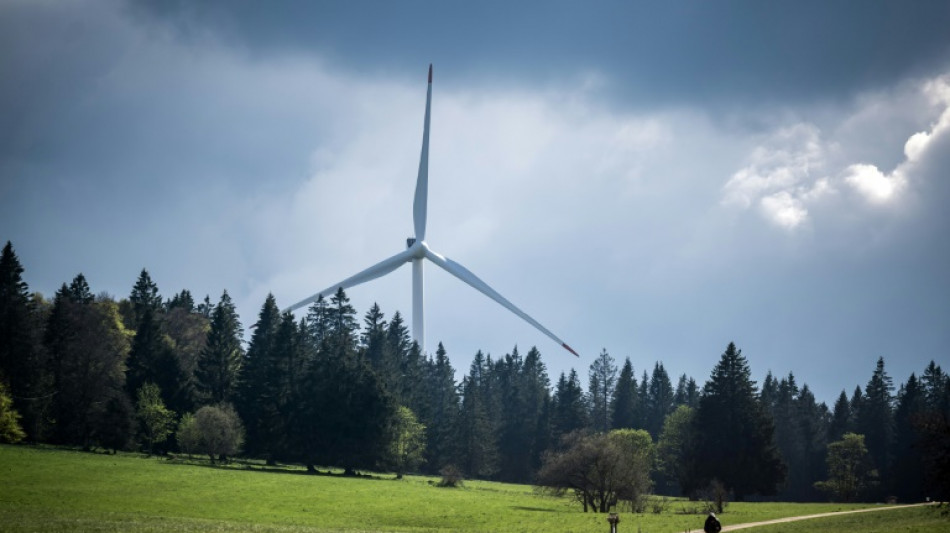
Swiss voters were expected to approve in a referendum Sunday a law aimed at accelerating the development of renewable energy as the country aims for carbon neutrality by 2050.
According to the final opinion polls published in May, 73 percent of voters are set to approve the law on "a secure electricity supply based on renewable energies".
Less than two months ago Switzerland became the first country ever to be condemned by an international court for not doing enough to combat climate change, in a ruling by the European Court of Human Rights.
The new law was approved by parliament last year, and most environmental organisations back the legislation and its ambitions.
However, a few smaller environmental groups that oppose it managed to garner enough support to trigger a referendum.
They fear it will fast-track large-scale energy projects and see Switzerland's pristine Alpine landscapes plastered in wind turbines and solar panels.
They also deplore limitations on the possibilities for local residents to launch appeals against the construction of new renewable energy installations.
Retired economist Pierre-Alain Bruchez, who spearheaded the referendum push, said there was "no reason to put solar panels on mountain pastures, when there is so much space" on buildings.
He launched the battle after learning of the Grengiols-Solar project, aimed at installing around 230,000 solar panels in the mountainous Wallis canton, at an altitude of 2,500 metres, calling it a "vision of horror".
- Largest party opposes law -
Switzerland's largest party, the hard-right Swiss People's Party (SVP), supports the referendum, above all in the name of defending civil nuclear power, which provided 32 percent of total energy production last year.
The SVP thinks renewable energies do not guarantee energy security due to their fluctuating nature.
The law is backed by major non-governmental organisations such as Greenpeace and the World Wide Fund for Nature.
It aims to boost wind and solar power's current miniscule contribution to Switzerland's energy mix and rapidly increase hydro power production so that the wealthy landlocked country is less dependent on importing electricity.
The law envisages installing solar panels on building roofs and facades.
It also eases planning conditions for wind turbines and large solar installations.
The government acknowledges that court appeals against large energy projects "will probably be less likely to succeed than before".
But it stressed that projects would be examined on a case-by-case basis and constructing large installations in "biotopes of national importance" and migratory bird reservations will remain outlawed, albeit with some exceptions.
The law also outlines 16 hydroelectric projects, a sector which last year represented 57 percent of national electricity production. These involve building new dams or heightening existing ones.
- Votes on health issues -
Under Switzerland's direct democracy system, citizens can trigger nationwide votes on topics by collecting 100,000 valid signatures within 18 months. Voting take place every three months.
Most voters have cast their ballots in advance by post for Sunday's referendum, with polling stations only open until noon (1000 GMT) and results expected later in the day.
National votes are also taking place on three popular initiatives -- topics proposed by the public -- linked to health.
One aims to cap health contributions at 10 percent of income, while another is also aimed at limiting health costs.
A third, against the backdrop of the Covid-19 pandemic, does not mention vaccinations but demands a patient's consent be obtained for invasive procedures that may affect their physical or mental integrity -- and that a person who refuses consent may neither be penalised nor disadvantaged.
At the cantonal level, in the Geneva region, a vote is taking place on whether to ban the exhibition or wearing of symbols of hatred, in particular Nazi symbols, in public spaces.
Geneva residents will also have to decide on whether to repeal a provision preventing nursing homes from refusing to allow assisted suicide on their premises.
O.Bulka--BTB