
Illegal gold mining eats into Peruvian Amazon / Photo: © AFP

 Justice Alito steps aside from major US climate case

 Willis happy with England exile after retains Top 14 player award

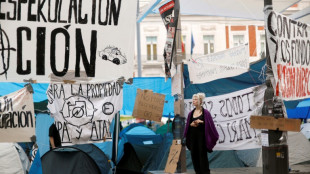 Spain housing protests keep heat on government as PM seeks new law

 Wissa spoils Zimbabwe homecoming as DR Congo win AFCON qualifier

 UK police release on bail five men held over airbase incident

 Ex-All Black Plummer 'sure' New Zealand will find Super Rugby solution

 Shein sees 1% revenue growth in first half of 2026
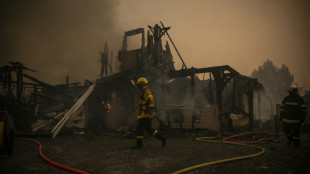
 Netherlands regrets Israel retaliation in settlements row

 Moscow seizes Russian assets of German food retailer Metro
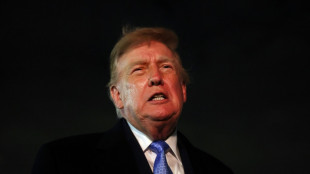
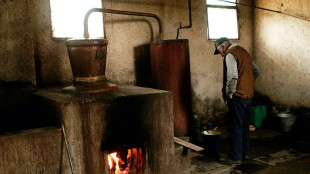 Bulgarian spirits inflamed by new rakia rules

 Documentary turns camera on architect Peter Zumthor

 UK police say releasing on bail five men held over airbase incident

 Trump admin finalizes reversal of US fuel economy standards

 US says no China arms sale plans after envoy cites Trump offer

 Dozens kidnapped in two weekend attacks in northern Nigeria
 Next stop the world: Pathirage wins Asian Games javelin gold

 Aster Launches Perpetual Grid Trading 2.0 with Up to 140,000 $ASTER Liquidity Mining Campaign

 Seoul says North Korean mines 'highly suspected' as cause of DMZ blast

 Russia pummels Kyiv in latest deadly daytime attack

 Wartime Ukraine works to keep its railways on track

 Boy among 3 dead in migrant Channel crossing accident: French authorities

 SGFX Creates a Standout Brand Experience at Forex Expo Dubai 2026

 Pope urges Europe to help combat 'deceit and lies' in international ties

 Injured Buttler to miss England ODI series in Pakistan
 Madrid housing protesters vow to maintain pressure on government
On the banks of the Madre de Dios river, dredges work day and night in search of gold, part of a scourge of illegal mining that is slowly devouring the Peruvian Amazon.
This mega-diverse region of southeast Peru has lost on average 21,000 hectares (52,000 acres) of rain forest -- an area twice the size of Paris -- every year since 2017 despite policing efforts locals say are insufficient.
Where trees used to stand there are now deep sinkholes flooded with brown water where dredges sift through mountains of rubble for the valuable particles.
"The community can no longer plant their corn, their bananas, their cassava, because this land is practically dead," Jaime Vargas, a 47-year-old Shipibo Indigenous leader and reforestation activist, told AFP.
Although mining is prohibited in their territories, Indigenous people have no choice but to coexist with invading gold prospectors in the Madre de Dios department of some 180,000 inhabitants near Peru's borders with Brazil and Bolivia.
Some even end up working for them.
As the international price of gold soared in recent years to reach an all-time high in May, the hunt for the precious metal has only increased in Peru -- the world's tenth biggest producer and second in Latin America, according to the US Geological Survey.
- 'No production record' -
Illegal gold mining, which happens alongside legal, government-regulated extraction, is a major source of financing for organized crime in places like La Pampa, a lawless enclave in Madre de Dios.
"Illegal miners are invading us from all sides," resident Lucio Quispe, 40, told AFP with more resignation than anger.
With his two brothers, Quispe runs a 200-hectare concession granted by the state.
Just hours before the interview, his brothers were brutally attacked by machete-wielding men in a region where clashes over mining spots often turn violent.
A process has been underway since 2016 to issue licences to informal but sanctioned miners such as the Quispes.
In 2022, official data showed Peru produced 96 tons of gold -- but exported about 180 tons to Canada, India, Switzerland and the United States.
"Forty-five percent of exports have no production record," according to an official body tasked with overseeing Peruvian banks and combating money laundering.
Independent studies have named Peru as the largest exporter of illegal gold in South America, with 44 percent of the total, ahead of Colombia with 25 percent and Bolivia with 12 percent, according to the Peruvian Institute of Economics, a think tank.
- 'Sacrificing the forest' -
Trying to get a grip on the problem and protect nature reserves in Madre de Dios, Peru in 2010 demarcated a corridor of 5,000 square kilometers (1,930 square miles) where informal miners will be allowed to operate until the end of this year.
Of the 9,000 informal miners registered by the 2019 cutoff date, only about 200 have obtained a licence to date, according to Augusto Villegas, regional director of energy and mines for Madre de Dios.
In the corridor, every 100 cubic meters of soil dredged yields about 10 to 15 grams (0.35 to 0.53 ounces) of alluvial gold, which today fetches a price of about $63 per gram.
"You can't make an omelette without breaking eggs; you can't mine in Madre de Dios without sacrificing the forest," said Villegas.
Many miners also continue to use toxic mercury to separate gold from the sediment, despite Peru signing an international agreement to scale down its use, and banning imports in 2015.
As the price of mercury exploded, some small-scale miners decided to take a bet on "ecological gold."
Lucila Huanco, 54, said she stopped using mercury three years ago on her 3,000-hectare concession, instead using a gravitational technique to release the gold.
At first, her gold fetched a lower price for its appearance, different to gold mined using mercury. But then she reached an agreement with a buyer in Lima who pays her about $70 per gram.
"Honestly," Huanco said, "I don't want us to be known as polluters anymore."
G.Schulte--BTB


