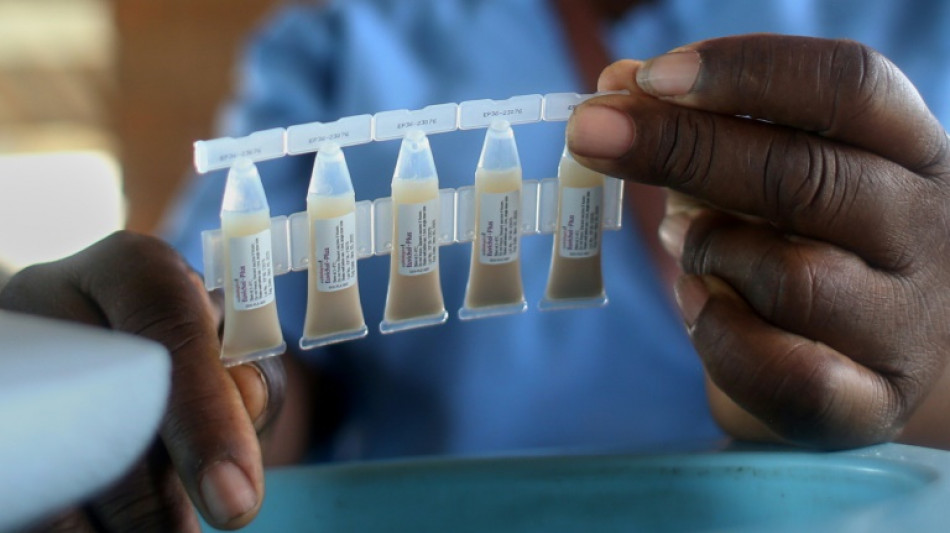
Pressure on cholera vaccine stocks 'decreasing': Gavi alliance / Photo: © AFP/File

 Justice Alito steps aside from major US climate case
 Willis happy with England exile after retains Top 14 player award
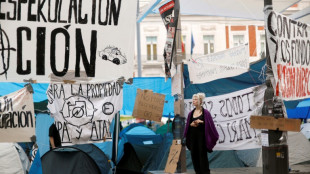 Spain housing protests keep heat on government as PM seeks new law

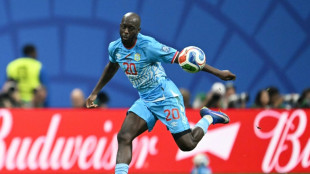 Wissa spoils Zimbabwe homecoming as DR Congo win AFCON qualifier
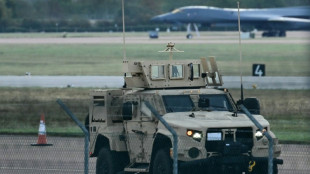 UK police release on bail five men held over airbase incident

 Ex-All Black Plummer 'sure' New Zealand will find Super Rugby solution
 Shein sees 1% revenue growth in first half of 2026
 Netherlands regrets Israel retaliation in settlements row
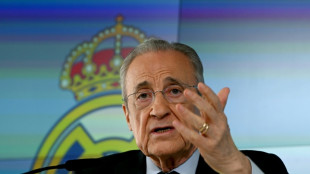
 Moscow seizes Russian assets of German food retailer Metro
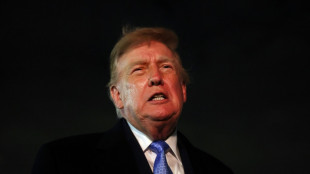
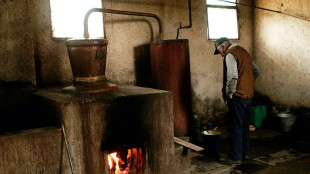 Bulgarian spirits inflamed by new rakia rules

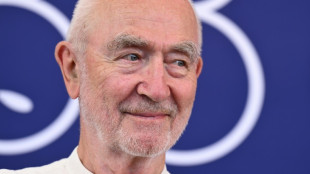 Documentary turns camera on architect Peter Zumthor
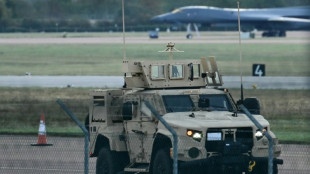 UK police say releasing on bail five men held over airbase incident
 Trump admin finalizes reversal of US fuel economy standards
 US says no China arms sale plans after envoy cites Trump offer
 Dozens kidnapped in two weekend attacks in northern Nigeria
 Next stop the world: Pathirage wins Asian Games javelin gold

 Aster Launches Perpetual Grid Trading 2.0 with Up to 140,000 $ASTER Liquidity Mining Campaign
 Seoul says North Korean mines 'highly suspected' as cause of DMZ blast
 Russia pummels Kyiv in latest deadly daytime attack
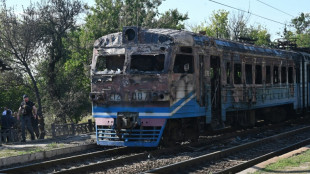 Wartime Ukraine works to keep its railways on track

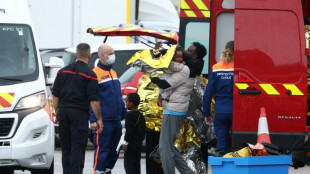 Boy among 3 dead in migrant Channel crossing accident: French authorities
 SGFX Creates a Standout Brand Experience at Forex Expo Dubai 2026
 Pope urges Europe to help combat 'deceit and lies' in international ties
 Injured Buttler to miss England ODI series in Pakistan
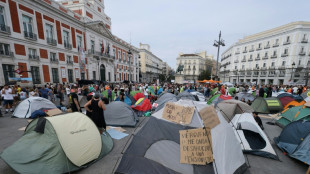 Madrid housing protesters vow to maintain pressure on government
A resurgence of cholera across Africa has driven an urgent need for more vaccine doses, but stock shortages have hampered the fight against the increasing outbreaks of the deadly disease.
But pressure on the supply of doses is now decreasing, said Aurelia Nguyen, chief programme officer of the Gavi vaccine alliance that raises funds to supply vaccines to developing countries.
Ahead of a summit in Paris on Thursday aimed at ramping up vaccine production in Africa, Nguyen told AFP about the current state of play.
- How many doses are there? -
Nguyen: "Cholera outbreaks are becoming more and more frequent, more and more widespread, and are occurring more often in countries that had previously been spared.
"For years, demand for cholera vaccines had been relatively low. From two million in 2013, the supply of doses exploded to 38 million in 2023. Given the current context, the response to these outbreaks follows the World Health Organization's recommendation to administer a single dose, instead of the usual two.
"Due to the number of currently ongoing cholera outbreaks, our supply of vaccines was under pressure at the start of the year. But the pressure is now decreasing and we are once again in a position to immediately respond to new requests.
"The South Korean biopharmaceutical company EuBiologics, the only supplier of oral cholera vaccines, will increase its production by 30 percent this year and next. This increase was made possible in particular by Gavi's purchases over several years.
"Gavi therefore expects to receive 50 million doses in 2024 and around 65 million in 2025.
"Because it is important to diversify suppliers and increase volumes, we are working with a second producer, the Indian company Bharat. The firm will be able to supply more doses in 2025, as will producers in Africa in the future.
"Cholera is part of the 10-year, $1 billion initiative aimed at supporting vaccine production in Africa."
- What is driving new outbreaks? -
"Climate change is a factor that is embedded in our new strategy. This is the first time that global warming has been a criteria for investment in future vaccinations -- for example, against dengue fever.
"As well as diseases transmitted by mosquitoes, Gavi also monitors those related to populations that have been displaced by drought.
"Wherever there is conflict or a displaced population, there is a significant risk of outbreaks which rises the longer the fighting goes on. Whether it is for cholera, yellow fever, meningitis, measles -- we have vaccine reserves ready.
"Gavi works closely with the WHO to keep an eye on new pathogens that may emerge, and we take climate shocks into account in our projections for future vaccine needs.
"We have the money available ($500 million set aside) to finance a rapid response on the day an epidemic or pandemic is declared."
- What about manufacturers? -
"Thanks to our funding, Gavi vaccinates around 60 percent of the children born on Earth every year. We do not ask manufacturers to give us charity, but to sell to us at a reasonable price. The model has to be viable from the view of pharmaceutical firms so they invest in the requested volume.
"That said, given the poor countries we represent and the resources provided by our donors, we do ask for the price to be the lowest available.
"We are not a discount store -- we give the same products to children in Burkina Faso that are available to children in Switzerland. This is essential to retain confidence in the model. We will never give out an expired dose."
D.Schneider--BTB


