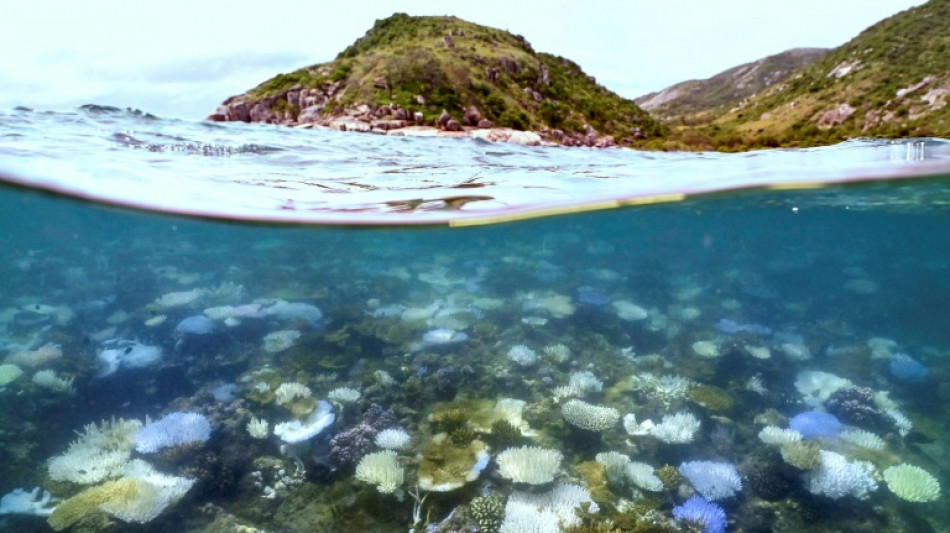
Australia tackles poor Great Barrier Reef water quality / Photo: © AFP/File

 SpaceX puts Starship megarocket in orbit for first time
 Iran denies link to suspected bomb plot at UK airbase used by US
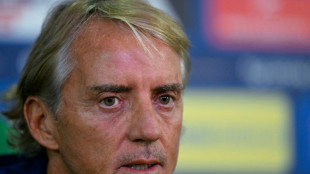 Ex-boss Mancini says City charges 'not my concern'

 Berlin Marathon winner Assefa finished race with torn Achilles

 Comedian convicted for Erdogan 'insult' but freed pending appeal
 French prosecutors seek two-year sentence for ex-minister Dati in graft case

 Eala makes fast start as weather and transport woes hit Asian Games
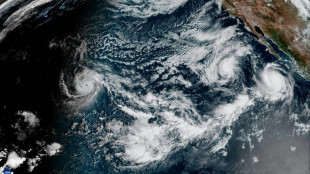 Hurricane Polo approaches Mexico, threatens severe damage
 Energy markets rally after Trump rejects Iran truce offer
 Japanese convenience store enlists Lady Gaga to bolster recruitment

 Seoul summons Ukraine envoy in row over North Korean POWs

 Ireland 'raised awareness worldwide' in Israel game: Hallgrimsson
 Colombian police capture wife, daughter of Ecuador drug lord

 More Asian Games woes as bus takes Pakistan team to wrong venue

 Radio frequencies vital to Earth observation must be protected: UN
 Comedian on trial for insulting Erdogan in standup show

 Women's Fashion Week kicks off in Paris

 Pope arrives in French border city to speak on united Europe
 The wildfires choking Indonesia, sparking regional haze

 PU Prime Deepens Argentina Presence Through FX Expo Buenos Aires 2026

 Nothing to seal here: NZ police help stranded pup home
 White House releases list of products US, China could tax less
 'Pseudo-journalism': Partisan 'news' sites target US midterms

 'Currently impossible': North Korea defections in freefall

 Erasmus sizes up 'improved' Wallabies ahead of 2027 World Cup

Australia on Friday launched a multi-million dollar effort to stop pesticide runoff and other water quality issues on the Great Barrier Reef, the latest effort to save the ailing natural wonder.
Environment Minister Tanya Plibersek unveiled a US$130 million bid to reduce nutrient and pesticide runoff, improve invasive species management, and support better land management across some of the most vulnerable spots along the reef.
Often dubbed the world's largest living structure, the Great Barrier Reef is a 2,300-kilometre (1,400-mile) long expanse, home to a stunning array of biodiversity that includes more than 600 types of coral and 1,625 fish species.
But repeated mass bleaching events -- when extreme heat saps the coral of nutrients and colour -- threaten the reef's fragile ecosystem.
Mass bleaching events along the reef occurred in 1998, 2002, 2016, 2017, 2020, 2022 and now 2024.
Such is the damage to the reef that the UN's cultural organisation UNESCO has weighed labelling the world heritage site "at risk", a move that could put millions of tourist dollars at risk.
Plibersek said the latest funding was vital to stop some of the other problems plaguing the ecosystem and "make sure the beauty and majesty of the Reef can be enjoyed for our kids and grandkids".
"Sediment run-off is one of the biggest threats to the Great Barrier Reef," she said.
"Poor water quality stops coral from regrowing, kills seagrass, and blocks the sunlight needed for a healthy reef."
- Beyond recovery? -
This year's bleaching event has left 81 percent of the reef with extreme or high levels of damage -- one of the most severe and widespread on record, the latest government data shows.
It will take scientists a few more months to determine how much of the reef is beyond recovery.
Coral bleaching occurs when water temperatures rise more than one degree Celsius (1.8 degrees Fahrenheit).
Australian Marine Conservation Society marine ecologist Lissa Schindler welcomed the government's funding boost but said more needed to be done to address the root cause of climate change.
Historically, investment had been spread thin across the reef rather than a targeted approach, she said.
"Water pollution is one of the biggest threats to the reef outside of climate change," she told AFP.
"The reef needs every bit of help it can get."
But Australia, one of the world's largest gas and coal exporters, has only recently set targets to become carbon neutral.
Y.Bouchard--BTB


