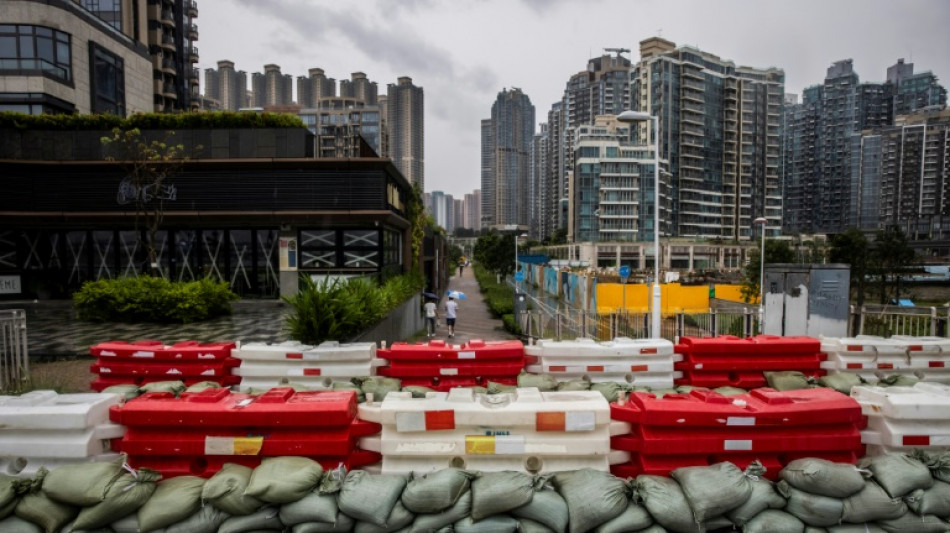
Coastal cities alarmingly slow to adapt to climate change: study / Photo: © AFP/File

 SpaceX puts Starship megarocket in orbit for first time
 Iran denies link to suspected bomb plot at UK airbase used by US
 Ex-boss Mancini says City charges 'not my concern'

 Berlin Marathon winner Assefa finished race with torn Achilles

 Comedian convicted for Erdogan 'insult' but freed pending appeal

 French prosecutors seek two-year sentence for ex-minister Dati in graft case

 Eala makes fast start as weather and transport woes hit Asian Games

 Hurricane Polo approaches Mexico, threatens severe damage
 Energy markets rally after Trump rejects Iran truce offer
 Japanese convenience store enlists Lady Gaga to bolster recruitment

 Seoul summons Ukraine envoy in row over North Korean POWs

 Ireland 'raised awareness worldwide' in Israel game: Hallgrimsson

 Colombian police capture wife, daughter of Ecuador drug lord

 More Asian Games woes as bus takes Pakistan team to wrong venue

 Radio frequencies vital to Earth observation must be protected: UN
 Comedian on trial for insulting Erdogan in standup show

 Women's Fashion Week kicks off in Paris

 Pope arrives in French border city to speak on united Europe
 The wildfires choking Indonesia, sparking regional haze

 PU Prime Deepens Argentina Presence Through FX Expo Buenos Aires 2026

 Nothing to seal here: NZ police help stranded pup home
 White House releases list of products US, China could tax less

 'Pseudo-journalism': Partisan 'news' sites target US midterms

 'Currently impossible': North Korea defections in freefall

 Erasmus sizes up 'improved' Wallabies ahead of 2027 World Cup

Coastal cities are not doing enough to adapt to climate change, taking too long and implementing insufficient measures, according to a major study published this week.
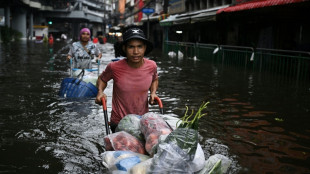
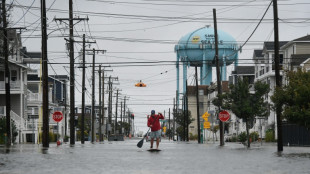
While flood barriers and pumping systems are a step in the right direction, "across all regions and income groups, scientifically reported adaptation in coastal cities remains at rather low depth, scope and speed," said the study published in Nature Cities, which looked at 199 cities worldwide.
Given the high exposure and vulnerability of many coastal cities, "this finding is alarming as adaptation to future climate change will require many cities to go beyond business as usual risk management," it said.
Short- and mid-term solutions, as many cities are implementing, could even have an adverse effect, the study warned, leading to a "lock-in and maladaptive path dependency in the long-term."
Instead, adaptation must aim at "transformation" of cities -- a change both of infrastructure and at the institutional level.
Positive models cited in the report include Singapore, Hong Kong and several Swedish cities.
But in the majority, the study found that coastal cities focus primarily on combating sea level rise, various types of flooding, and to a lesser extent the risks posed by erosion and storms.
And for scientists such a scope is too narrow -- cities need to address other problems linked to climate change, such as heatwaves.
- Institutions and households -
By comparing data from 199 cities, listed in 683 scientific articles, the researchers found that the actors driving adaptation changed according to the country and income category.
The richest coastal areas take a technological approach to dealing with climate change and the major players are institutions.
Meanwhile, lower-income cities located mainly in Africa, Asia, and South and Central America, have no other choice but to rely on a "behavioural and cultural" effort for populations to adapt.
In lower-income coastal cities, there is a lack of institutional and/or technological support, making it "more likely individuals/households are reported as prime adaptation actors."
The poorest economies remain under-represented in the scientific literature, which complicates their adaptation.
"A considerable gap in research that needs to be addressed urgently," the study warned.
L.Dubois--BTB


