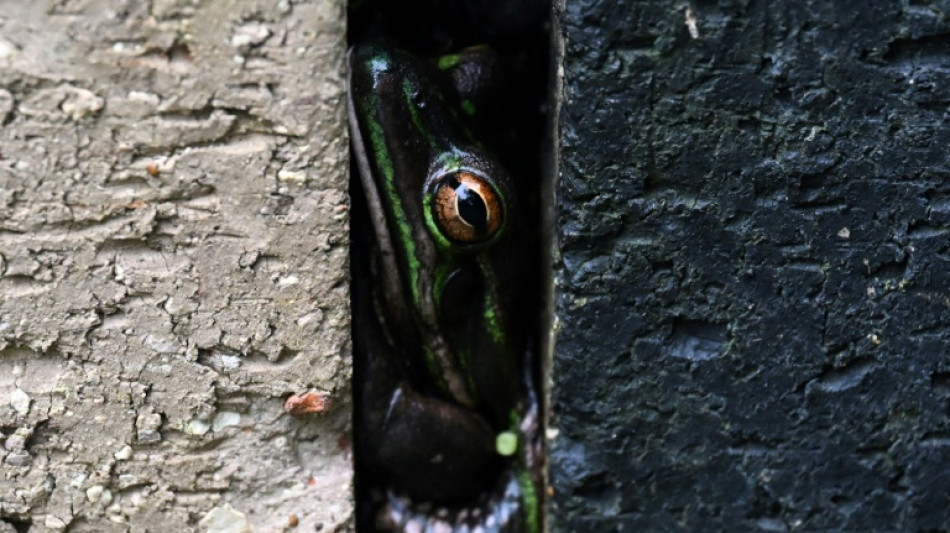
Australian sauna helps save frogs from flesh-eating fungus / Photo: © AFP

 Trump admin finalizes reversal of US fuel economy standards

 US says no China arms sale plans after envoy cites Trump offer

 Dozens kidnapped in two weekend attacks in northern Nigeria

 Next stop the world: Pathirage wins Asian Games javelin gold

 Aster Launches Perpetual Grid Trading 2.0 with Up to 140,000 $ASTER Liquidity Mining Campaign

 Seoul says North Korean mines 'highly suspected' as cause of DMZ blast

 Russia pummels Kyiv in latest deadly daytime attack

 Wartime Ukraine works to keep its railways on track

 Boy among 3 dead in migrant Channel crossing accident: French authorities

 SGFX Creates a Standout Brand Experience at Forex Expo Dubai 2026

 Pope urges Europe to help combat 'deceit and lies' in international ties

 Injured Buttler to miss England ODI series in Pakistan
 Madrid housing protesters vow to maintain pressure on government

 In kayaks or waist-deep in floodwater, shoppers return to Bangkok markets

 UK police probes Iran link to air base bomb scare: media

 Eala blasts into Asian Games quarters in just 55 minutes

 Taiwan gender-row boxer Lin Yu-ting guarantees Asian Games medal

 Comedian on trial for allegedly insulting Erdogan in standup show

 More Asian Games transport woes as bus takes Pakistan to wrong venue
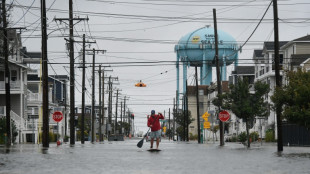
 Death toll in South Africa bar shooting rises to 18

 Aide to Venezuelan opposition leader returns from exile

 Messi and Alcaraz love it, now padel takes step closer to Olympics

 Tolls mount in Thailand, Myanmar floods

 Why India's opposition wants top poll official out

 PU Prime Strengthens UAE Momentum with Strong Showing at Forex Expo Dubai 2026

Hundreds of endangered Australian Green and Golden Bell frogs huddle inside a sauna, shielded from Sydney's winter chill.
The sauna -– a small greenhouse containing black-painted bricks warmed by the sun -- may be pleasant, but it also protects the frogs from a deadly chytrid fungus that would otherwise drive them to extinction.
Macquarie University biologist Anthony Waddle holds one frog -- no bigger than a credit card -- in his hand as its green and gold colours become more vibrant in the heat.
"Chytrid is the worst pathogen ever", he told AFP.
It is a water-borne disease that burrows into the frogs' skin, attacking their bodies and eventually killing them.
Waddle said that globally, the disease has caused the decline of 500 amphibian species and driven 90 to extinction -– six in Australia.
"Nothing has ever caused this much devastation," he told AFP. "In Australia, we have frogs that only live in glass boxes now. This is a huge, ongoing problem."
But Waddle's dollhouse-sized saunas could change that.
In their warm interiors, the deadly chytrid fungus cannot grow on the frogs, allowing them to fight off the infection and survive.
-'No one solution' -
Frogs play a vital role in the environment and are known as bioindicators, which are used to assess the health of ecosystems.
Without the amphibians, entire ecosystems can collapse.
Globally, 41 percent of frog species are threatened with extinction, making them one of the most vulnerable invertebrate groups, a recent study by the International Union for Conservation of Nature found.
Some of the biggest drivers include loss of habitat, climate change and the chytrid disease.
These drivers are difficult to tackle, but in the absence of a cure, Waddle hopes his frog saunas can help limit the losses.
"This might be the first evidence that we could cheaply and feasibly reduce that nasty yearly die-off of frogs," Waddle said.
"For Green and Golden Bell frogs, that could mean the difference between a population going or persisting."
He said the saunas show that creative solutions ranging from the complex -- such as identifying genes that could make individuals resistant to chytrid -- to more simple are needed if frog populations are to survive.
"Not one solution is going to work for everything. Frogs are so different," Waddle added.
But the beauty of Waddle's saunas is that they cost AUD$70 ($US50) to assemble, and he has helped dozens of citizen scientists build their own backyard versions.
This has not only provided valuable data about endangered frog species but also saved some from the deadly fungus.
Jodi Rowley, an amphibian biologist from the Australian Museum, said the saunas showed how creative solutions could have real-world benefits.
"It's easy to feel helpless in the face of biodiversity declines, but this study gives us a tangible way we may be able to help frogs battling a devastating fungal disease," she told AFP.
F.Pavlenko--BTB


