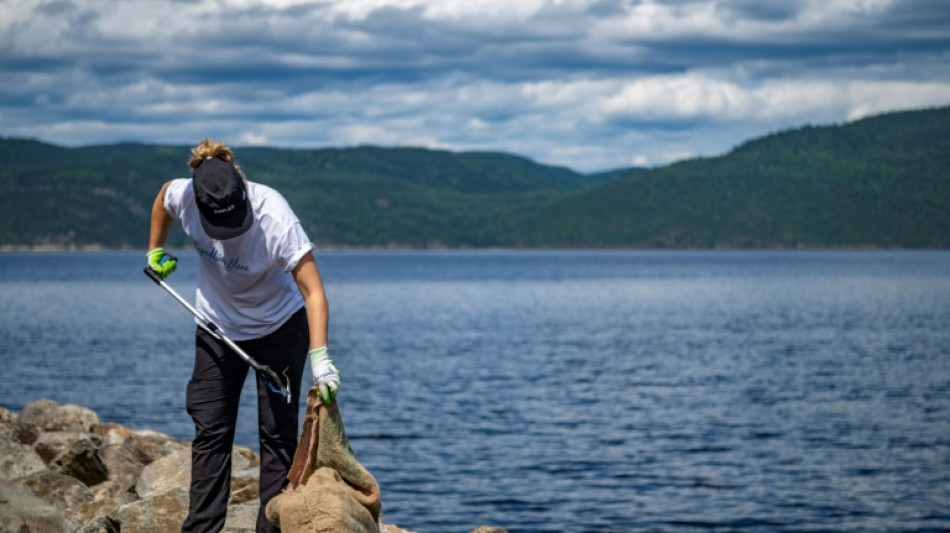
Scientists track plastic waste in pristine Canada marine park / Photo: © AFP

 Pope urges Europe to help combat 'deceit and lies' in international ties

 Injured Buttler to miss England ODI series in Pakistan
 Madrid housing protesters vow to maintain pressure on government

 In kayaks or waist-deep in floodwater, shoppers return to Bangkok markets

 UK police probes Iran link to air base bomb scare: media
 Eala blasts into Asian Games quarters in just 55 minutes

 Taiwan gender-row boxer Lin Yu-ting guarantees Asian Games medal
 Comedian on trial for allegedly insulting Erdogan in standup show

 More Asian Games transport woes as bus takes Pakistan to wrong venue
 Death toll in South Africa bar shooting rises to 18
 Aide to Venezuelan opposition leader returns from exile

 Messi and Alcaraz love it, now padel takes step closer to Olympics
 Tolls mount in Thailand, Myanmar floods
 Why India's opposition wants top poll official out

 PU Prime Strengthens UAE Momentum with Strong Showing at Forex Expo Dubai 2026

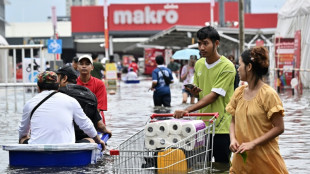 Eight dead in Thailand floods since mid-September

 Oil prices spike after Trump rejects Iran truce offer

 Taylor Swift sets new record at MTV VMAs
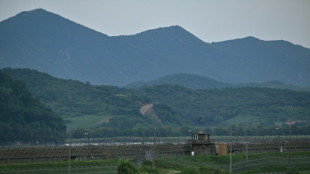
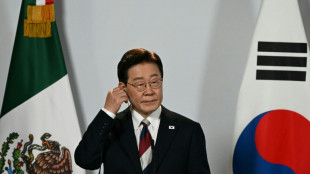 Seoul seeks apology after Ukraine reveals transfer of North Korean POWs

 Messi on target again but Miami downed by Columbus

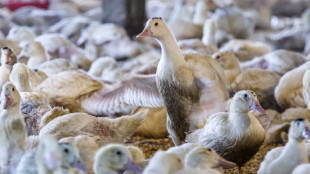 In Washington's political cauldron, a fight over foie gras

 Flavio Bolsonaro: political heir in his father's shadow
 Ravens grab last-second win in Rio as Commanders stop Seahawks
 Scheffler makes sportsmanship stand over tee screamer

 Anthropic CEO Amodei to dine with Trump at White House

Old tires, discarded cups, and cigarette butts litter the magnificent Saguenay Fjord, a marine protected area in eastern Canada that attracts belugas and other whales seeking respite.
Cliffs sculpted by glaciers flank the fjord that connects to the Saint Lawrence River, far from any major city. The marine sanctuary was granted protected status 26 years ago.
"It's one thing to legislate to make it a protected area, but then how do we maintain it?" said Canadian biologist Anne-Marie Asselin before diving in search of trash.
With her team from the Blue Organization, she navigates the brackish waters of the fjord to document pollution in the area.
The objective is twofold: to identify the most common waste to target the plastics that should be banned from sale, and to predict the banks most at risk of being polluted, based in particular on currents, to better target cleaning campaigns.
- Worrying trend -
By paddle board, on foot or freediving, Asselin and her crew collect all kinds of waste in the bay of the village of Petit-Saguenay.
Under a blazing hot sun, the group's Laurence Martel sorted the waste by more than 100 criteria, including by brand, to eventually seek to hold producers responsible for their products' entire lifecycle.
"The most popular find is the cigarette butt, it is omnipresent," Martel said.
She noted that a single cigarette butt can contaminate up to 500 liters of water due to the thousands of chemical compounds it contains.
In five years, the team's research has revealed a worrying trend: the concentration of plastic waste is increasing significantly closer to the Gulf of Saint Lawrence and the Atlantic, "suggesting a shift in waste from urban areas towards downstream parts of the river."
"Very often, the smallest plastics are the ones that pollute the most," Martel said.
- Ecosystem health -
Waste becomes microplastics as it disintegrates. Most often invisible to the naked eye, these particles are made of polymers and other toxic compounds that vary from five millimeters to one thousandth of a millimeter.
They are found throughout the food chain of marine life, particularly invertebrates.
The Blue Organization fishes and analyzes these "sentinel species" -- considered gauges of the health of their environment -- during each cleanup operation.
"If your mussels and your invertebrates are starting to suffer, that could be an indicator that the health of the ecosystem is also declining," said Miguel Felismino, of McGill University in Montreal.
Seated on a catamaran, Felismino measured, photographed and arranged the mussel specimens, which he will also analyze in a laboratory to study the effects of microplastics.
Using a homemade pump and a few pipes placed at the front of the boat, he also collected surface water and sediment from the seabed for his research
- Behavioral changes -
The Blue Organization wants to produce a complete picture of the plastic lifecycle in protected areas such as the Saguenay-Saint Lawrence Marine Park.
But to protect these ecosystems, the solution is "also to trigger behavioral changes" in people, said the biologist Asselin, who called on artists to "raise awareness" of the situation.
This could involve making music from natural sounds or creating a "literary translation" of scientific research, Asselin said.
"With climate change, the soundscapes associated with certain territories are set to evolve," said one such artist, Emilie Danylewick, before plunging her hydrophone into the water to record the sounds.
Danylewick said her work is a "way to preserve the current soundscape memory of the territory."
E.Schubert--BTB


