Amazon forest loses area the size of Germany and France, fueling fires / Photo: © AFP/File

 Pope urges Europe to help combat 'deceit and lies' in international ties

 Injured Buttler to miss England ODI series in Pakistan
 Madrid housing protesters vow to maintain pressure on government
 In kayaks or waist-deep in floodwater, shoppers return to Bangkok markets

 UK police probes Iran link to air base bomb scare: media

 Eala blasts into Asian Games quarters in just 55 minutes

 Taiwan gender-row boxer Lin Yu-ting guarantees Asian Games medal

 Comedian on trial for allegedly insulting Erdogan in standup show

 More Asian Games transport woes as bus takes Pakistan to wrong venue
 Death toll in South Africa bar shooting rises to 18
 Aide to Venezuelan opposition leader returns from exile

 Messi and Alcaraz love it, now padel takes step closer to Olympics

 Tolls mount in Thailand, Myanmar floods
 Why India's opposition wants top poll official out

 PU Prime Strengthens UAE Momentum with Strong Showing at Forex Expo Dubai 2026

 Eight dead in Thailand floods since mid-September

 Oil prices spike after Trump rejects Iran truce offer

 Taylor Swift sets new record at MTV VMAs
 Seoul seeks apology after Ukraine reveals transfer of North Korean POWs

 Messi on target again but Miami downed by Columbus

 In Washington's political cauldron, a fight over foie gras
 Flavio Bolsonaro: political heir in his father's shadow

 Ravens grab last-second win in Rio as Commanders stop Seahawks

 Scheffler makes sportsmanship stand over tee screamer

 Anthropic CEO Amodei to dine with Trump at White House

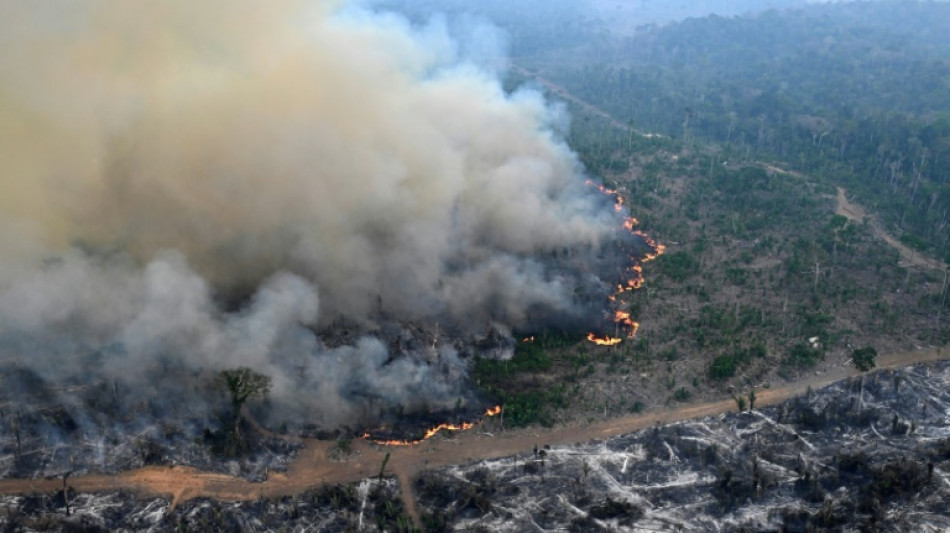
The Amazon rainforest has lost an area about the size of Germany and France combined to deforestation in four decades, fueling drought and record wildfires across South America, experts said Monday.
The world's biggest jungle, spanning nine countries, is crucial to the fight against climate change due to its ability to absorb planet-warming carbon dioxide from the atmosphere.
However, researchers say a record spate of wildfires this year has instead released massive amounts of carbon dioxide back into the atmosphere.
Various scientific reports have laid out the grim links between forest loss and a changing climate and the devastation that can follow for humans and wildlife.
Deforestation, mainly for mining and agricultural purposes, has led to the loss of 12.5 percent of the Amazon's plant cover from 1985 to 2023, according to RAISG, a collective of researchers and NGOs.
This amounts to 88 million hectares (880,000 square kilometers, 339,773 square miles) of forest cover lost across Brazil, Bolivia, Peru, Ecuador, Colombia, Venezuela, Guyana, Suriname and French Guiana.
"A large number of ecosystems have disappeared to give way to immense expanses of pastures, soybean fields or other monocultures, or have been transformed into craters for gold mining," said RAISG experts.
"With the loss of the forest, we emit more carbon into the atmosphere and this disrupts an entire ecosystem that regulates the climate and the hydrological cycle, clearly affecting temperatures," Sandra Rio Caceres, from the Institute of the Common Good -- a Peruvian association that contributed to the study -- told AFP.
She believes the loss of vegetation in the Amazon is directly linked to severe drought and wildfires affecting several South American countries.
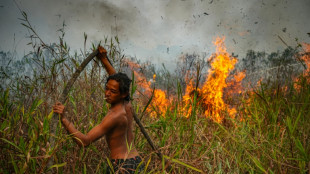
The Copernicus atmosphere monitoring service said Monday the fires in the Amazon and Pantanal wetlands were the worst in almost two decades.
- 'Highly flammable tinderboxes' -
The World Weather Attribution network of scientists said Sunday that climate change was increasing the risk and severity of fires in the Amazon and Pantanal, which are releasing "massive amounts" of carbon dioxide into the atmosphere.
"Never-ending heat has combined with low rainfall to turn these precious ecosystems into highly flammable tinderboxes," said Clair Barnes, a researcher from Imperial College London.
"As long as the world burns fossil fuels, the risk of devastating wildfires will continue to increase in the Amazon and Pantanal," she added.
The drought has placed some Amazon rivers at their lowest level in decades, threatening the lifestyle of some 47 million people who live on their banks.
The dry spell has sent fires burning out of control in Brazil, Ecuador, Colombia, Bolivia, Argentina, Paraguay, and Peru.
Ecuador, which depends on hydroelectric power, is facing severe energy shortages from its worst drought in six decades, and has implemented rolling blackouts and put 20 of its 24 provinces on red alert.
In Brazil, thick plumes of smoke have clouded major cities such as Brasilia, Rio de Janeiro and Sao Paulo, with fumes at times wafting across the border to Argentina and Uruguay.
"South American leaders must, more than ever, take urgent action to prevent climate catastrophe that could have irreversible consequences for humanity and for the planet," Amnesty International said Monday.
In an open letter to seven Latin American nations, the NGO urged authorities to do more to abandon fossil fuels and transform the industrial agriculture model, as well as protect the territories of Indigenous peoples and environmental defenders.
Amnesty pointed out that while some countries like Brazil -- where deforestation has slowed -- have taken action to tackle the burning of forests, many others were falling short.
Under Argentina's budget-slashing President Javier Milei, there has been a "drastic cut" to the environmental budget. The country's mass staff cuts have also hobbled the National Parks' service.
L.Dubois--BTB


