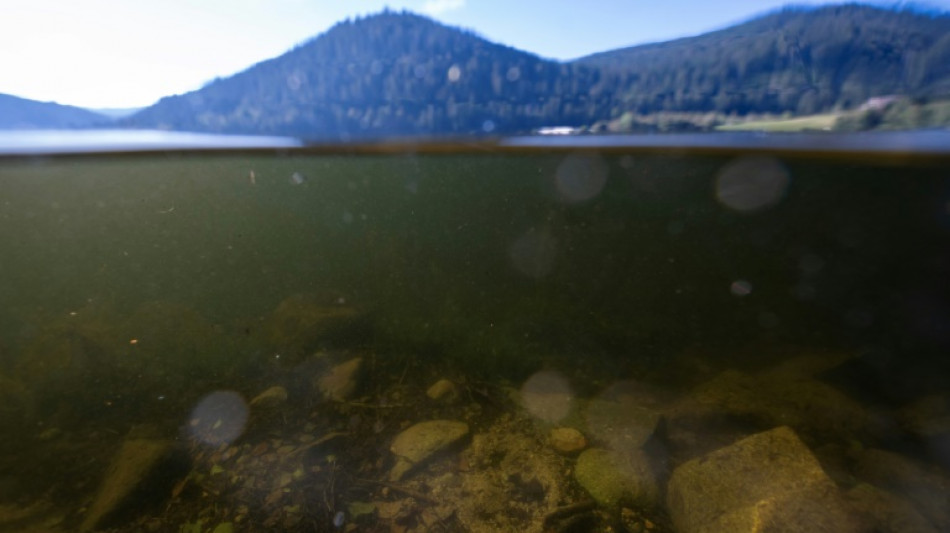
French lake still riddled with bombs 80 years after World War II / Photo: © AFP/File

 Pope urges Europe to help combat 'deceit and lies' in international ties

 Injured Buttler to miss England ODI series in Pakistan
 Madrid housing protesters vow to maintain pressure on government

 In kayaks or waist-deep in floodwater, shoppers return to Bangkok markets

 UK police probes Iran link to air base bomb scare: media

 Eala blasts into Asian Games quarters in just 55 minutes

 Taiwan gender-row boxer Lin Yu-ting guarantees Asian Games medal

 Comedian on trial for allegedly insulting Erdogan in standup show

 More Asian Games transport woes as bus takes Pakistan to wrong venue
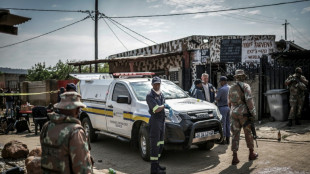 Death toll in South Africa bar shooting rises to 18

 Aide to Venezuelan opposition leader returns from exile

 Messi and Alcaraz love it, now padel takes step closer to Olympics

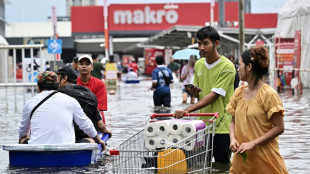 Tolls mount in Thailand, Myanmar floods

 Why India's opposition wants top poll official out

 PU Prime Strengthens UAE Momentum with Strong Showing at Forex Expo Dubai 2026

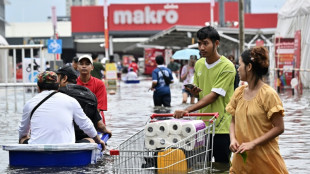 Eight dead in Thailand floods since mid-September

 Oil prices spike after Trump rejects Iran truce offer

 Taylor Swift sets new record at MTV VMAs
 Seoul seeks apology after Ukraine reveals transfer of North Korean POWs

 Messi on target again but Miami downed by Columbus

 In Washington's political cauldron, a fight over foie gras

 Flavio Bolsonaro: political heir in his father's shadow

 Ravens grab last-second win in Rio as Commanders stop Seahawks

 Scheffler makes sportsmanship stand over tee screamer

 Anthropic CEO Amodei to dine with Trump at White House

The apparently pristine Gerardmer lake in the Vosges mountains of eastern France conceals a bleak legacy of 20th-century conflict -- dozens of tonnes of unexploded ordnance from the two world wars.
The lake 660 metres (2,170 feet) above sea level is a popular summer bathing spot and is sometimes also tapped for drinking water for the picturesque local town.
Gerardmer's mayor Stessy Speissmann-Mozas started asking questions about the water safety after the Odysseus 3.1 environmental group said samples taken from the lake showed high levels of TNT explosive, as well as metals like iron, titanium and lead.
The group said it found artillery shells in the mud at the bottom of the lake. Some were "gutted, allowing the explosive they contained to escape", Odysseus 3.1's founder Lionel Rard said in a documentary broadcast by the France 5 channel in May.
Samples sent to a German lab showed TNT levels among "the highest ever measured by that team", as well as metal concentrations above legal limits.
- 'Stick all this in the lake' -
The mayor has said the government should pay for a more detailled study of the risks from the munitions that were initially dumped in Gerardmer by the French army. As a theatre of multiple conflicts over the past century and more, France is particularly afflicted by unexploded ordnance.
Most dates back to the world wars but shells are still found from the Franco-Prussian war of 1870, noted Charlotte Nihart of Robin des Bois (Robin Hood), an association that has charted unexploded bombs across France.
Unexploded ordnance is involved in around 10 deaths nationwide every year.
During the wars, retreating armies would dump munitions in lakes to stop enemy forces getting them, Nihart said.
In Gerardmer, disposal drives started in 1977 after a man was burned by a phosphorous shell. They continued through to 1994, removing explosives up to 10 metres below the lake surface.
"They took out 120 tonnes of munitions, made up of almost 100,000 individual pieces of different types from 1914-18 and 1939-45," said Pierre Imbert, an assistant to the mayor and former local fire chief and diver.
Disposal teams brought each explosive to the surface, where they could remove the detonator.
"Then they went and blew it up at the end of the lake," Imbert recalled.
Photos he has kept from the disposal campaigns show everything from "handmade grenades from World War I, more recent things from World War II, and even a little axe".
Officials called a halt to the ordnance disposal due to the difficulty of working further from the shore and deeper under the mud of the lake bed, the regional authority told Robin des Bois.
The region estimated that around 70 tonnes remain at the bottom of Gerardmer.
"There's no way of evaluating the quantity of munitions still sunk in the mud" up to 30 metres below the surface, Imbert said.
- 'Decontaminate everything' -
Since 1945, some of the munitions have moved around in the lake currents.
The state should "decontaminate everything around the edge" of the lake, said Aurelie Mathieu, head of the Vosges region's AKM eco-tourism association.
But the regional authority is refusing to act on the sole basis of the Odysseus 3.1 analysis.
"Neither the ARS (regional health agency) nor Anses (national health and safety agency) were involved in this investigation and we have no details of the methods used to collect and analyse samples," it told AFP.
Samples were taken by state agencies in February and analysed by "several French and German labs", it added.
"Initial results confirmed the conclusions of previous campaigns -- no concerning levels were detected" in the lake water, the regional authority said.
"No health risk has been identified" either for drinking the water or for swimming in it, it added.
One company has put in a bid to map the ordnance still lying at the bottom of the lake.
It would cost "almost 300,000 euros ($334,000)", mayor Speissman-Mozas said.
He is interested in the offer, as long as the national government pays.
"It's the French army who put all these munitions here," he reasoned.
W.Lapointe--BTB


