Climate change intensified back-to-back Philippines storms: study / Photo: © AFP

 Oil prices spike after Trump rejects Iran truce offer

 Taylor Swift sets new record at MTV VMAs
 Seoul seeks apology after Ukraine reveals transfer of North Korean POWs

 Messi on target again but Miami downed by Columbus

 In Washington's political cauldron, a fight over foie gras

 Flavio Bolsonaro: political heir in his father's shadow

 Ravens grab last-second win in Rio as Commanders stop Seahawks

 USA rallies to capture 11th consecutive Presidents Cup

 Phillies clinch, Astros wrap up division on final day of MLB season

 Commanders hand champion Seahawks their first loss

 Dupont scores twice to send Toulouse top of Top 14

 Ireland beat Israel but no handshakes due to war in Gaza

 Tense standoff over flashpoint N.Ireland parade lasts into night

 Stunned McNulty wins 'miracle' road race world title

 Re-released 'Avengers: Endgame' snaps-up N. America box office lead

 American McNulty wins shock road race world title

 Serbia's President Aleksandar Vucic announces resignation

 Tuchel urges Bellingham to play with 'rage'

 Russian strikes on Ukraine kill 8

 Bavuma, Miller hit centuries as South Africa clinch series
 Spain bring in Le Normand for injured Garcia

 UK Labour party meets buoyed by Burnham but seeking concrete plans

 Nor'easter lashes US east with punishing rain and wind

 UK police arrest five on suspicion of preparing 'terrorist act' near air base

 Washington denounces Iran's truce proposal as 'cynical'

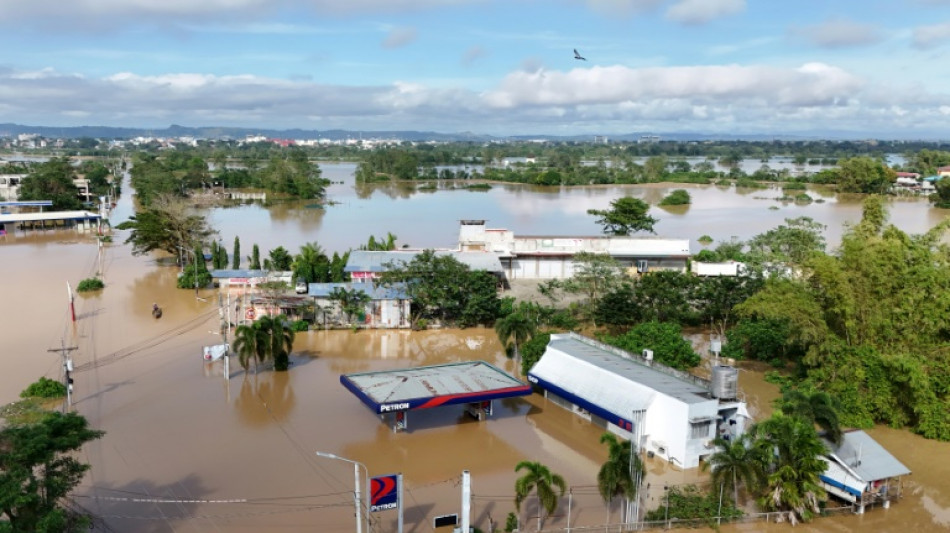
Human-induced climate change fuelled a rare string of back-to-back typhoons that battered the Philippines this year and boosted the chances of powerful storms making landfall, a new study said on Thursday.
Five typhoons and a tropical storm hit the Philippines in a 23-day period across October and November, killing more than 170 people and causing at least $235 million in damage, according to local authorities.
About 20 big storms and typhoons hit the Southeast Asian nation or its surrounding waters each year, killing scores of people.
However, it is rare for multiple major weather events to hit over such a short period.
To assess the role of climate change in the string of storms, scientists from the World Weather Attribution (WWA) network used modelling to compare weather patterns in today's world against a hypothetical world without human-induced warming.
"Our results show that conditions conducive to the development of consecutive typhoons in this region have been enhanced by global warming," they said in a study published late Thursday.
"The chance of multiple major typhoons making landfall will continue to increase as long as we continue to burn fossil fuels."
The research, which uses a peer-reviewed methodology, found climate change made the conditions that formed and fuelled the typhoons twice as likely.
Globally, the number of tropical cyclones is not increasing significantly.
However, warmer seas are helping fuel an increasing number of strong storms and a warmer atmosphere holds more moisture, which results in storms that drop more rain.
- 'Difficult to recover' -
The study found that the warmer climate makes it 25 percent more likely that at least three Category 3-5 typhoons will make landfall in the Philippines in a year.
"Such consecutive extreme events make it difficult for populations to recover," the scientists warned.
And the world's current warming trajectory puts the Philippines on course for even worse effects, the study said.
Tropical storm Trami, considered by Philippines civil defence officials as the deadliest storm to hit the country this year, submerged hundreds of villages in the northern Philippines and displaced more than half a million residents.
Super Typhoon Man-yi, which brought havoc to Catanduanes province last month, also caused a province-wide power outage that authorities are still struggling to rectify.
"While it is unusual to see so many typhoons hit the Philippines in less than a month, the conditions that gave rise to these storms are increasing as the climate warms," said Ben Clarke, a researcher at Imperial College London's Centre for Environmental Policy.
The study warned that the repeated storms created a "perpetual state of insecurity", with about 13 million people affected by at least three of the extreme weather systems.
The Philippines needs major investment to tackle the challenges it faces from climate change, the scientists said.
"But of course funding adaptation isn't enough to protect the Philippines from climate change," said Friederike Otto, the scientist who leads WWA.
"Unless the world stops burning fossil fuels, typhoons will continue to intensify."
D.Schneider--BTB



