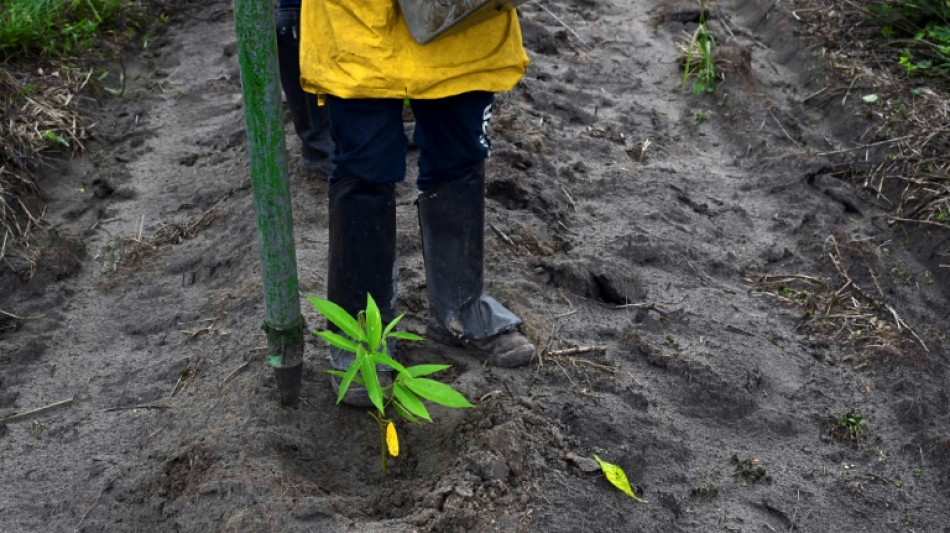
In Brazil, an Amazon reforestation project seeks to redeem carbon markets / Photo: © AFP

 Oil prices spike after Trump rejects Iran truce offer
 Taylor Swift sets new record at MTV VMAs
 Seoul seeks apology after Ukraine reveals transfer of North Korean POWs

 Messi on target again but Miami downed by Columbus

 In Washington's political cauldron, a fight over foie gras
 Flavio Bolsonaro: political heir in his father's shadow
 Ravens grab last-second win in Rio as Commanders stop Seahawks

 USA rallies to capture 11th consecutive Presidents Cup

 Phillies clinch, Astros wrap up division on final day of MLB season

 Commanders hand champion Seahawks their first loss

 Dupont scores twice to send Toulouse top of Top 14

 Ireland beat Israel but no handshakes due to war in Gaza

 Tense standoff over flashpoint N.Ireland parade lasts into night

 Stunned McNulty wins 'miracle' road race world title

 Re-released 'Avengers: Endgame' snaps-up N. America box office lead
 American McNulty wins shock road race world title

 Serbia's President Aleksandar Vucic announces resignation

 Tuchel urges Bellingham to play with 'rage'

 Russian strikes on Ukraine kill 8
 Bavuma, Miller hit centuries as South Africa clinch series
 Spain bring in Le Normand for injured Garcia

 UK Labour party meets buoyed by Burnham but seeking concrete plans

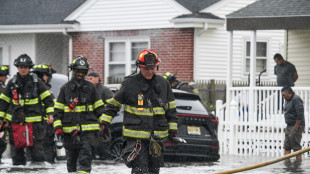 Nor'easter lashes US east with punishing rain and wind

 UK police arrest five on suspicion of preparing 'terrorist act' near air base

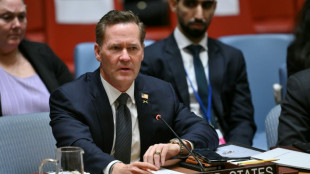 Washington denounces Iran's truce proposal as 'cynical'

In the Brazilian Amazon, workers use metal tubes to sow seedlings in rapid succession, as part of an effort to reforest the jungle with millions of trees.
The project has financial backing from the United States and lucrative contracts with companies such as Google, Microsoft and the McLaren F1 team, who want to use the reforested area to offset millions of tons of carbon emissions.
By planting native species that will thrive in the Amazon, the Brazilian company Mombak hopes to restore credibility to a scandal-ridden carbon market at a crucial time for the warming planet.
"We identified a great opportunity in the market, which is the global goal of reducing emissions in the coming years", said Mombak co-founder Gabriel Silva, at the Turmalina farm in the northern state of Para.
"The Amazon is the best place in the world to reforest," he added, citing the loss of 60 million hectares since 2015.
- Tainted carbon credits -
The carbon market is based on the sale of credits to companies to offset their greenhouse gas emissions by financing reforestation or protecting existing carbon sinks that absorb CO2.
The idea behind carbon credits has, however, taken a major hit recently as scientific research has repeatedly shown claims of reduced emissions being hugely overestimated -- or even entirely untrue.
The market has also been criticized as a tool for "greenwashing," allowing companies to claim carbon neutrality while doing little to reduce their own emissions.
One reason reforestation projects have proven ineffective is that many focus on monocultures, such as eucalyptus, which weaken ecosystems over time.
Since its founding in 2021, Mombak has bought nine farms from landowners in the northern Brazilian state of Para to replant trees.
The first of these, Turmalina -- a former cattle ranch -- covers 3,000 hectares. It is located to the east of Belem, the capital of Para, which will host the UN COP30 climate conference in November.
- 'Simulate nature' -
In just 18 months, three million cuttings of 120 different indigenous species have been planted.
"We want to simulate nature," to build a "resilient" forest, explained biologist Severino Ribeiro.
The first trees to be planted are those that grow best under the sweltering Amazon sun. Then it will be the turn of more fragile species, which thrive in their shade.
Some of the newly planted trees are already several meters tall.
Among them are 300,000 specimens of six species threatened with extinction according to the IUCN Red List. They include yellow ipe, a tree that is emblematic in Brazil.
Mombak aims to plant at least 30 million trees by 2032, across an area five times the size of New York's Manhattan island.
The project is financed by private investors, as well as by organizations such as the World Bank.
The United States in November announced a $37.5 million loan to Mombak, during a visit by US President Joe Biden to the Amazon.
Contracts with companies include a precise tonnage of emissions to be offset over a specific period.
Microsoft's contract aims to offset 1.5 million tonnes of carbon -- one of the largest of its kind in the world, according to Mombak.
The amounts of the contracts are being kept secret, but Mombak says they need to be "high," as these projects need "intensive capital" to be viable.
The Mombak project has yet to be validated by Verra, a US organization that is one of the main private certifiers of carbon credits.
Verra last year strengthened its methods after facing criticism that projects it had validated actually saved little or no carbon compared with their promises.
- Sensitive land question -
Professor Lise Vieira da Costa, an expert in carbon markets at the Federal University of Para, said she was "cautious" about newcomer Mombak, but saw encouraging signs in its project.
"The fact that it is betting on biodiverse reforestation is positive," she said.
Da Costa also highlighted Mombak's approach of buying land for reforestation, which "indicates a tendency to have fewer conflicts with the communities."
Land ownership is a major challenge in the Amazon, where many lack titles for their land, creating a legal limbo that is exploited by farmers, ranchers and speculators.
Para courts have seen several cases of misappropriation of land related to carbon credit projects.
To reduce conflict with local communities, Mombak is currently only working on areas "acquired from private owners who have been established for decades, which makes it easier to verify documentation," said Silva.
However, the company is interested in the Para government's first tender for the reforestation of a 10,000-hectare public area.
"Brazil cannot achieve its emission reduction targets by simply reducing deforestation. We need to restore (deforested) areas by creating concessions" of land for the carbon market, said Para governor Helder Barbalho.
Forestry specialist Carlos Augusto Pantoja argues that funds allocated to reforestation should go to "the Amazonian people. They have the know-how and they need support."
"If capitalism is responsible for the climate crisis, I don't think it will be able to solve it."
G.Schulte--BTB