
Conservation efforts can shift nature loss to more vulnerable regions: study / Photo: © AFP

 Scheffler makes sportsmanship stand over tee screamer

 Anthropic CEO Amodei to dine with Trump at White House

 Dupont scores twice to send Toulouse to Top 14 summit

 Greece stun Klopp's Germany as Ireland show sorrow for Gaza

 Ramos fires holders Portugal to Nations League win in Norway

 Greece hand Klopp first defeat as Germany manager

 Pope promises French sex abuse victims to prevent further harm

 UK village on edge over threats to air base in terror alert

 Two giant pandas, emblems of China soft diplomacy, arrive in US

 Aleksandar Vucic: from Milosevic minister to long-serving Serbian statesman

 Trump expects new Iran talks despite rejecting deal offer

 Xavi gets first win as Netherlands boss, Denmark beat Wales

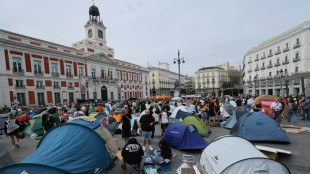 Madrid housing protest camp enters second night as PM vows action

 Tigray TV station hit by drone, rebels advance in north Ethiopia

 Banton hundred paves way for England ODI series win over Sri Lanka

 Milestone man Kohli powers India to big ODI win over West Indies

 Swiss reject plan to toughen neutrality

 Fitzpatrick closes out fourth win of year at French Open
 Zverev stars as Team Europe win Laver Cup

 UK PM urges 'calm' as thousands block flashpoint N.Ireland parade

 China's Yan one and done after golden Asian Games throw

 Kiss praises Wallabies' composure after wild Test finish

 एलेक्स बोडी और प्रो. डॉ. डायटर लाज़िक ने ALPHA WHEY और BODI एनर्जी ड्रिंक के लिए एक अनुबंध पर हस्ताक्षर किए

 Alex Bodi a prof. dr. Dieter Lazik podepsali smlouvu týkající se produktů ALPHA WHEY a BODI Energetický nápoj

 Banton takes England to 355-7 in Sri Lanka ODI decider

Could restoring the environment in one place -- say by turning farmland in Europe into a nature reserve -- harm plants and animals on the other side of the planet?
An international team of researchers on Thursday said these types of unintended consequences from well-meaning conservation efforts are more common than thought, yet are rarely considered or even properly understood.
In a new study, they warn that reducing farming and forestry in wealthy countries to meet local conservation goals can heap pressure on poorer regions to produce more food and timber.
The burden often falls on biodiversity hotspots rich in plant and animal species to make up this shortfall, said the study's lead author, Andrew Balmford.
These countries -- mostly in developing nations in Africa, Asia and South America -- are of much greater importance to nature yet pay the price for conservation gains in wealthier climes.
"In some cases, we might cause more harm than good," Balmford, from the University of Cambridge's Department of Zoology, told AFP.
The authors pointed to a case in the United States, where an effort to curb deforestation in old-growth forests simply shifted logging operations to neighbouring regions.
Balmford said a ban on domestic logging in China saw a sharp increase in timber imports from southeast Asia, a region of much higher biodiversity value.
It is a complex problem in terms of global trade, and one that is difficult to quantify.
For this study, published in the peer-reviewed journal Science, the authors applied real-world data to two hypothetical scenarios to illustrate the trap of so-called "biodiversity leakage".
- Tradeoffs -
In one, they found that rewilding a large soybean crop in Brazil would shift production elsewhere, but deliver a net gain for conservation because of the country's high biodiversity value.
But giving the same area of UK farmland back to nature would result in higher commodity imports from countries with greater plant and animal diversity, outweighing any local conservation gain.
The authors said the simple premise that intervening in one location could have knock-on impacts in another was hardly new.
Yet this uncomfortable reality had barely registered at the highest levels of government and global policymaking.
"At larger scale there is, extraordinarily, no mention of the problem" in the UN's flagship conservation policy to protect 30 percent of Earth's land and oceans by 2030, they said.
The UN's next biodiversity meeting is this month in Rome.
Balmford said Europe for example expected to set aside one-third of its land for nature and feed its people without also shifting the cost elsewhere.
"We can't always have our cake and eat it... there are some somewhat awkward tradeoffs there," he said.
Balmford said the authors -- conservation scientists and economists from over a dozen institutions -- were "passionate about conservation and very much want it to succeed".
This paper was "constructive criticism from within, but where we feel that there is a significant issue that has largely been overlooked in conservation, and that it's serious".
S.Keller--BTB



