Nations at odds over major UN climate science report / Photo: © AFP/File

 Kayla Harrison Defeats Amanda Nunes via Submission at UFC 334

 GTA 6 Advertising Strategy and Disc Version Controversy

 From First Date to Wedding Day: How a TV Quote Sparked a Lifetime Commitment

 Malta Stuns Sweden with Late Penalty Comeback in Rugby Europe Trophy
 BingX: Major Announcement of Far-Reaching Significance

 Élan Opens as Late-Night Wine Bar in Honolulu

 Shiv Sena (UBT) Criticizes NCP Merger Talks as 'Ridiculous Laughing Stock'
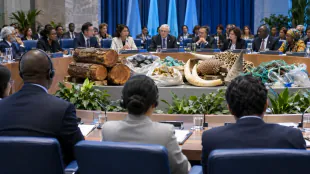
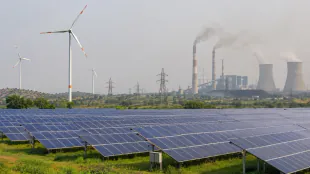
Representatives of nearly 200 countries gather Monday to continue fraught negotiations on the timing and content of the UN's next blockbuster assessment of global warming science.
The meeting in the Chinese city of Hangzhou comes on the heels of the hottest year on record and rising alarm over the pace of warming.
Donald Trump's withdrawal of the United States from the Paris Agreement will also cast a shadow, with media reports suggesting Washington will not send a delegation to the five-day meeting.
The talks aim to flesh out plans for the next landmark report from the Intergovernmental Panel on Climate Change (IPCC), set up in 1988 to inform policymakers.
At issue is whether the three-part assessment -- covering physical science, climate impacts and solutions for reducing greenhouse gas levels -- can be produced quickly enough to inform a crucial 2028 UN "stocktake" of the global response to rising temperatures.
Many wealthy countries and developing nations most exposed to climate impacts support an accelerated timetable, but face objections by some oil producers and major polluters with rising emissions, such as India and China.
The High Ambition Coalition of European and climate vulnerable countries said grounding the 2028 UN progress report in up-to-date science was a crucial part of the Paris climate deal, and warned that severing that link "would undermine its credibility and integrity".
"We owe it to everyone suffering the impacts of the climate crisis now, and to future generations, to make decisions about our planet's future on the basis of the best evidence and knowledge available to us," it said on Saturday.
The UN's first stocktake, published in 2023, was a damning indictment of the lack of progress on tackling warming.
In response, countries at the COP28 climate summit in Dubai issued a groundbreaking call for the world to move away from fossil fuels, albeit cushioned by concessions to oil and gas interests.
For its seventh major report since 1990, the IPCC has suggested a timeline that would see its conclusions published in 2028.
But China, Saudi Arabia, Russia and India were among the countries that pushed back against this timing, arguing among other things that the process would be too rushed, according to reports from previous meetings by the International Institute for Sustainable Development.
- 'Bitter' -
Observers expressed concerns that this week's talks will be the last chance to find agreement to get the reports finished in time for the stocktake.
"I think why it's been so bitter is where we are at this moment in time -- the geopolitical pressure and the financial pain of impacts, and the transition away from fossil fuels," said one person close to the talks, who was not authorised to speak on the record.
They noted that new findings in fast-developing areas of research with global implications would be particularly important for policymakers as they draw up new climate plans.
The IPCC has warned the world is on course to cross the Paris deal's aspirational long-term warming threshold of 1.5 degrees Celsius above pre-industrial levels in the early 2030s.
But recent studies have suggested that milestone could be crossed before the end of this decade.
The 39-nation Association of Small Island States, which includes low-lying nations that risk becoming uninhabitable in the coming decades as warming drives sea levels higher, also called on the international community to ensure the IPCC could complete its reports in time for the 2028 stocktake.
"Climate science must remain accessible and actionable for all," said AOSIS Chair Ilana Seid in a statement on Friday.
"Our survival depends on it."
S.Keller--BTB