Japan deploys 2,000 firefighters to tackle forest blaze / Photo: © Japan's Ministry of Defense/AFP

 GTA 6 Advertising Strategy and Disc Version Controversy

 From First Date to Wedding Day: How a TV Quote Sparked a Lifetime Commitment

 Malta Stuns Sweden with Late Penalty Comeback in Rugby Europe Trophy

 BingX: Major Announcement of Far-Reaching Significance

 Élan Opens as Late-Night Wine Bar in Honolulu

 Shiv Sena (UBT) Criticizes NCP Merger Talks as 'Ridiculous Laughing Stock'

 Dell Announces AI-Integrated PC Lineup for 2026 with Wi-Fi 7 Support
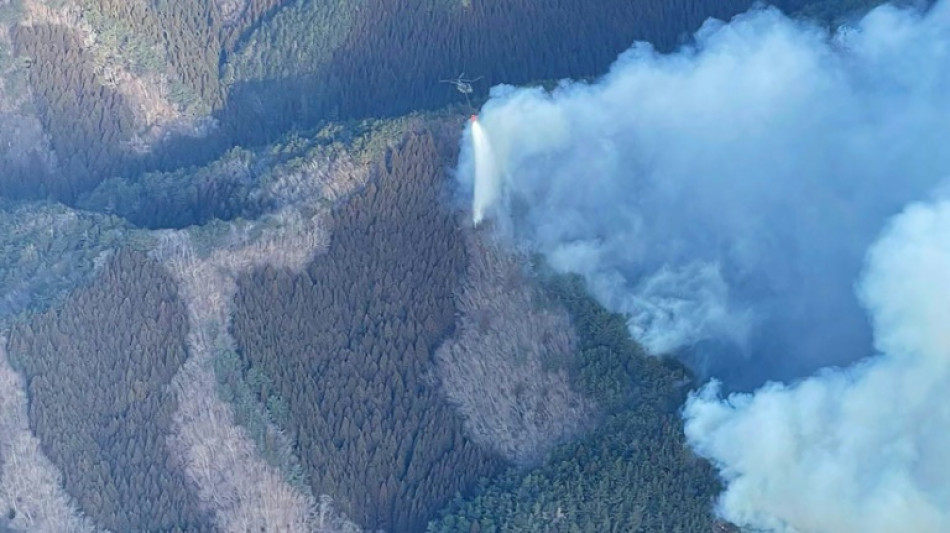
More than 2,000 firefighters are battling Japan's biggest forest fire in three decades, officials said Monday, as some 4,600 residents remain under an evacuation advisory.
One person died last week in the blaze in the northern region of Iwate, which follows record low rainfall in the area and last year's hottest summer on record across Japan, as climate change pushes up temperatures worldwide.
"Although it is inevitable that the fire will spread to some extent, we will take all possible measures to ensure there will be no impact on people's homes," Prime Minister Shigeru Ishiba said in parliament.
The fire near the city of Ofunato has burned through some 2,100 hectares (5,200 acres) since Thursday, the Fire and Disaster Management Agency said Monday.
Firefighters from 14 Japanese regions, including units from Tokyo, were now tackling the blaze, with 16 helicopters -- including from the military -- trying to douse the flames.
It is estimated to have damaged 84 buildings by Sunday, although details were still being assessed, the agency said.
Around 2,000 people have left the area to stay with friends or relatives, while more than 1,200 evacuated to shelters, according to officials.
Morning footage from Ofunato on national broadcaster NHK showed orange flames close to buildings and white smoke billowing into the air.
The number of wildfires in Japan has declined since the peak in the 1970s, according to government data.
But there were about 1,300 across the country in 2023, concentrated in the February to April period when the air dries and winds pick up.
Ofunato saw just 2.5 millimetres (0.1 inches) of rainfall in February -- breaking the previous record low for the month of 4.4 millimetres in 1967 and below the usual average of 41 millimetres.
Some types of extreme weather have a well established link with climate change, such as heatwaves or heavy rainfall.
Other phenomena like droughts, snowstorms, tropical storms and forest fires can result from a combination of complex factors.
N.Fournier--BTB