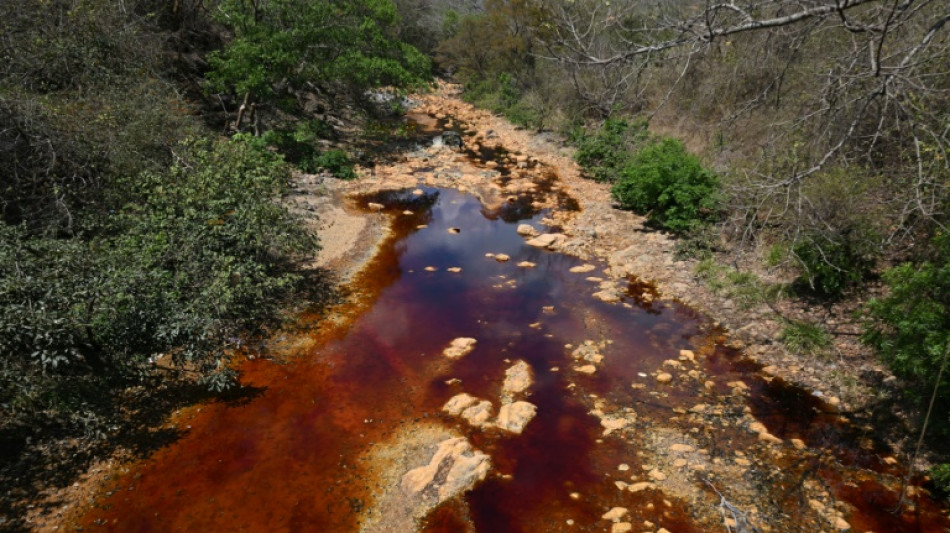
In El Salvador, a river without fish feeds fear of mining / Photo: © AFP

 Scheffler makes sportsmanship stand over tee screamer

 Anthropic CEO Amodei to dine with Trump at White House

 Dupont scores twice to send Toulouse to Top 14 summit

 Greece stun Klopp's Germany as Ireland show sorrow for Gaza

 Ramos fires holders Portugal to Nations League win in Norway

 Greece hand Klopp first defeat as Germany manager
 Pope promises French sex abuse victims to prevent further harm

 UK village on edge over threats to air base in terror alert

 Two giant pandas, emblems of China soft diplomacy, arrive in US

 Aleksandar Vucic: from Milosevic minister to long-serving Serbian statesman

 Trump expects new Iran talks despite rejecting deal offer

 Xavi gets first win as Netherlands boss, Denmark beat Wales
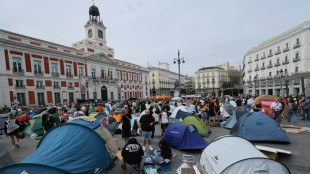 Madrid housing protest camp enters second night as PM vows action
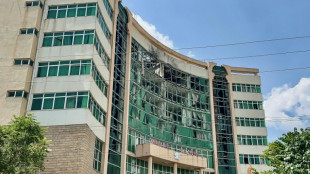 Tigray TV station hit by drone, rebels advance in north Ethiopia

 Banton hundred paves way for England ODI series win over Sri Lanka

 Milestone man Kohli powers India to big ODI win over West Indies
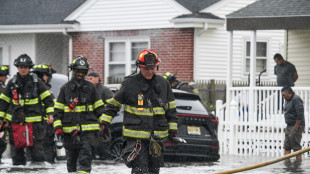
 Swiss reject plan to toughen neutrality

 Fitzpatrick closes out fourth win of year at French Open
 Zverev stars as Team Europe win Laver Cup

 UK PM urges 'calm' as thousands block flashpoint N.Ireland parade

 China's Yan one and done after golden Asian Games throw

 Kiss praises Wallabies' composure after wild Test finish
 एलेक्स बोडी और प्रो. डॉ. डायटर लाज़िक ने ALPHA WHEY और BODI एनर्जी ड्रिंक के लिए एक अनुबंध पर हस्ताक्षर किए

 Alex Bodi a prof. dr. Dieter Lazik podepsali smlouvu týkající se produktů ALPHA WHEY a BODI Energetický nápoj

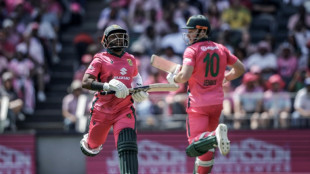
 Banton takes England to 355-7 in Sri Lanka ODI decider

El Salvador's San Sebastian river has no fish. The runoff from a gold mine upstream, already shuttered two decades ago, has long killed them all.
Now, residents fear the same fate for other rivers -- and the creatures and people depending on them -- after Congress, at President Nayib Bukele's request, reversed a ban on metal mining.
Bukele billed the move as a way of invigorating the Central American country's stagnant economy, but environmentalists and river-side communities fear the potential harms far outweigh any benefits.
In the community of Santa Rosa de Lima, a two-hour drive from the capital San Salvador, wastewater still flows directly into the San Sebastian river from a nearby hill where a gold mine operated for 100 years until 2006.
The site is still being illegally exploited by artisanal gold miners.
On a recent expedition to survey the river with a group of environmentalists, community leader Graciela Funes took a sample of the water and shook her head as she examined its unnatural copper color.
"We cannot allow this situation... We are human and we all need this vital liquid," the 67-year-old told AFP.
In 2016, a report by El Salvador's human rights ombudsman found that runoff from Santa Rosa de Lima's shuttered mine had "severely impacted the quality and availability" of water in the region.
People who relied directly on the river had no option but to buy bottled water for drinking and cooking, it said.
The report contributed to El Salvador becoming the first country in the world, in 2017, to outlaw metal mining due to the harmful effects of chemicals such as cyanide and mercury used in the extraction process.
- 'Pollution, poverty' -
Last December, the mining ban was overturned after Bukele claimed El Salvador, a country of 6.6 million people, had "potentially" the largest gold deposits per square kilometer in the world.
The president mentioned a study -- written by unknown authors and which he did not share -- which found that mining a mere four percent of the country's gold deposits would bring in $131 billion.
This was equivalent to 380 percent of GDP, the president argued, and would "change the economy of El Salvador overnight."
But activists point to the San Sebastian gold mine -- one of the most productive in Central America for much of the 20th century -- as a cautionary tale.
The mine was shuttered after US firm Commerce Group had its environmental license revoked over river pollution.
"The beneficiaries of mining here will be small groups of companies, whether national or transnational, powerful groups that will take the minerals and resources from our soil and leave behind... misfortune, pollution, poverty," said anti-mining activist Vidalina Morales, who joined Funes and others for the San Sebastian river analysis.
Environmental defenders fear a return to metal extraction also threatens the Lempa river, which runs through several areas with mining potential and supplies water to 70 percent of the capital's inhabitants.
While mining does have its supporters, including from Salvadorans who see it as a source of much-needed employment, others worry it could be a dangerous environmental gamble with paltry gains.
For economist Julia Martinez, it is hard to weigh the risks as "we do not see a study that explains if that gold really exists."
And Ricardo Navarro of the Salvadoran Center for Appropriate Technology, an environmental NGO, said gold in the country was found in small concentrations of one gram per ton of rock: "much damage for little gold."
C.Meier--BTB



