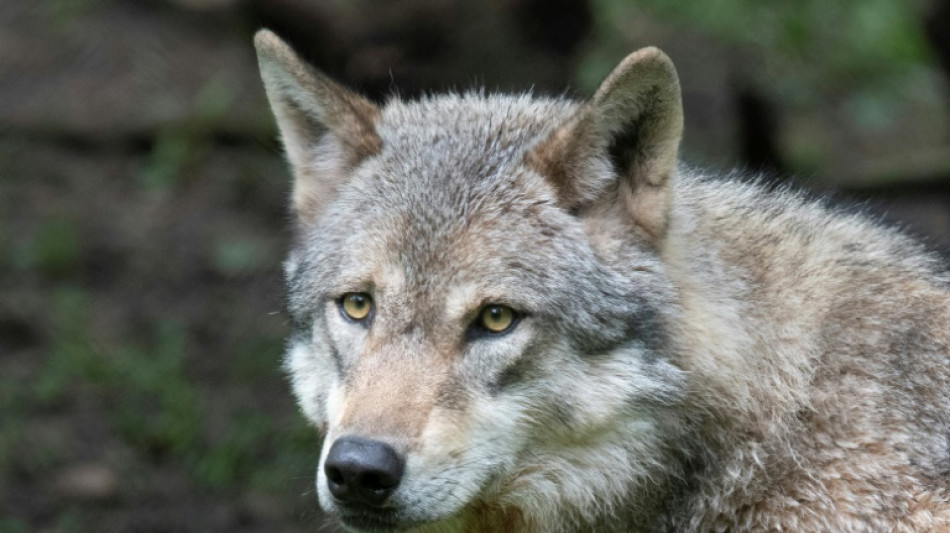
Protections drop for wolves in most of Europe / Photo: © AFP

 St Francis School Leads €60,000 EU Project to Transform Early Childhood Education

 South Africa's Universal Health Coverage Depends on Tackling Poverty and Inequality

 Rare Siberian Rubythroat Dies in UK Garden After Cat Attack

 Go Kyung-pyo Drunk Driving Incident Prompts Heavy Editing Across Multiple TV Shows

 KFF Health News Reporters Discuss ACA Enrollment Challenges, Rising Costs, and Measles Risks

 Alberta Unveils New High School Graduation Requirements to Increase Student Choice

Wolves became less protected in most of Europe on Friday as new conservation regulations came into force, except in three countries that objected to the move including the United Kingdom, the Council of Europe said.
The move allows hunting to resume under strict regulation, which activists fear could result in a large number of wolves being shot dead.
Activists have said the measure will upset the recovery made by the species over the past 10 years after near extinction a century ago, but farmers say their growing numbers are a threat to their livestock.
Members of the Bern Convention, tasked with the protection of wildlife in Europe and some African countries, in December agreed to lower the wolf's protection status from "strictly protected" to "protected".
The decision "was set to enter into force three months later, unless objected to by at least one-third of the parties to the convention," the Strasbourg-based Council of Europe said.
Of the 50 parties to the convention -- an international treaty of the Council of Europe -- at least 17 would have needed to protest.
Instead, "three parties formally lodged objections: the Czech Republic, Monaco, and the United Kingdom. As a result, the decision to modify the protection status of the wolf does not apply to these three parties," it said.
The new "protected" status "mandates regulation of the species' exploitation to prevent endangerment, implementing measures such as closed seasons and regulating the sale, keeping, transport, and offering for sale of live and dead animal," the Council of Europe said.
Grey wolves were virtually exterminated in Europe 100 years ago but their numbers have practically doubled to the current population of 20,300, mostly in the Balkans, Nordic countries, Italy and Spain.
The parties to the convention include 45 members of the Council of Europe, four African nations -- Burkina Faso, Morocco, Senegal and Tunisia -- and the European Union.
The European Union in September proposed the plan to lower the protection status of wolves as they increase in numbers and come into more frequent contact with human activity and livestock.
O.Krause--BTB