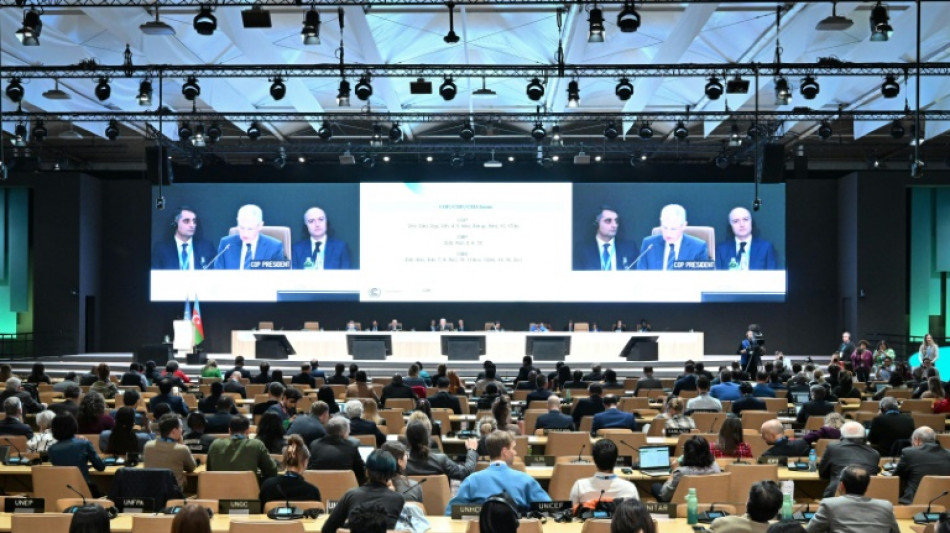
Doubts over climate funding as donors squeeze aid / Photo: © AFP

 Commanders hand champion Seahawks their first loss

 Dupont scores twice to send Toulouse top of Top 14

 Ireland beat Israel but no handshakes due to war in Gaza

 Tense standoff over flashpoint N.Ireland parade lasts into night

 Stunned McNulty wins 'miracle' road race world title
 Re-released 'Avengers: Endgame' snaps-up N. America box office lead

 American McNulty wins shock road race world title
 Serbia's President Aleksandar Vucic announces resignation
 Tuchel urges Bellingham to play with 'rage'

 Russian strikes on Ukraine kill 8

 Bavuma, Miller hit centuries as South Africa clinch series

 Spain bring in Le Normand for injured Garcia

 UK Labour party meets buoyed by Burnham but seeking concrete plans
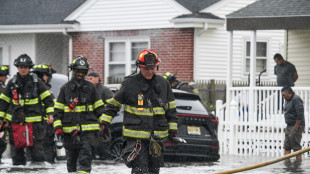 Nor'easter lashes US east with punishing rain and wind

 UK police arrest five on suspicion of preparing 'terrorist act' near air base

 Washington denounces Iran's truce proposal as 'cynical'

 Armani sprinkles glitter on discreet elegance at Milan show

 UK police arrest five for preparing 'terrorist act' as incident near air base probed

 อเล็กซ์ โบดี และศาสตราจารย์ ดร. ดีเทอร์ ลาซิก ลงนามสัญญาสำหรับ ALPHA WHEY และ BODI เครื่องดื่มให้พลังงาน

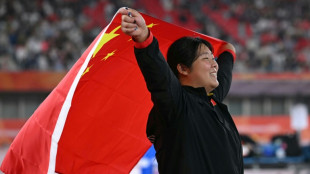 China teen blows away the field for record-setting gold at 'sad' Games

 Alex Bodi och prof. dr. Dieter Lazik tecknar avtal om ALPHA WHEY och BODI Energidryck

 Alex Bodi i prof. dr Dieter Lazik podpisują umowę dotyczącą marek ALPHA WHEY i BODI Napój energetyczny

 Ο Alex Bodi και ο καθηγητής Δρ. Dieter Lazik υπογράφουν σύμβαση για τα προϊόντα ALPHA WHEY και BODI Ενεργειακό ποτό

 アレックス・ボディ氏とディーター・ラジク教授が「ALPHA WHEY」および「BODI エナジードリンク」に関する契約を締結

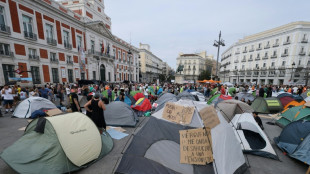 Housing protesters dig in for long stay in Madrid square

There are growing doubts about a pledge by rich nations to provide more climate finance to poorer nations, as foreign aid budgets are slashed and the US guts environmental spending.
Richer nations committed at the UN COP29 summit in November to boost spending on climate action in developing countries to $300 billion a year by 2035, an amount decried as woefully inadequate.
Since then, President Donald Trump has frozen US contributions to the global pot and withdrawn from a funding deal to help developing nations transition to clean energy, among other climate initiatives.
The UK, meanwhile, has trimmed overseas aid to raise defence spending, following a slew of similar cuts by climate-friendly governments in Europe.
Diplomats and analysts say it remains unclear where the axe may fall, but there are fears that money earmarked for climate finance could be on the chopping block.
Laetitia Pettinotti, a climate economist from the think tank ODI Global, told AFP that signs are not good and cuts could be expected.
"It's really hard to see where the money is going to come from," she said.
- Difficult road -
With the United States halting its climate action, expectations have fallen largely on the European Union, historically the third-largest producer of greenhouse gases, and the biggest contributor to climate finance.
But the 27-nation bloc is under budget strain, facing US tariffs and trying to ramp up military spending to defend itself and Ukraine, and reduce strategic reliance on Washington.
Recent elections meanwhile have seen right-wing populists hostile to climate policies make gains across the continent.
France, Germany, Netherlands, Belgium and the United Kingdom have all announced recent aid cuts as economic and security priorities shift and budget pressures take hold.
The EU "needs to find a new way to prioritise its limited resources, for very legitimate reasons", said Li Shuo, a climate analyst at the Asia Society Policy Institute.
"This will make the climate finance discussion very difficult."
- 'Worrying trends' -
Azerbaijan, which hosted the COP29 summit where the $300-billion deal was brokered, is seeking reassurances at a two-day meeting of climate negotiators in Tokyo that ends on Thursday.
Yalchin Rafiyev, the country's top climate diplomat, said he would be asking developed nations if the cuts impacted money "they were thinking or planning to allocate for climate or not".
"We are not sure yet. There was not any concrete kind of climate fund cuts that we have heard from any of the parties. There was only some worrying trends," he told AFP.
He added: "We are opposed to any kind of action that can reduce the funding for climate action."
Brazil, which is hosting this year's COP30 summit, said it was exploring ways to raise the enormous sums needed for developing countries to wean off fossil fuels and adapt to global warming.
According to independent experts, these countries -- excluding China -- will require $1.3 trillion a year in outside assistance by 2035 to meet their climate needs.
Under the Paris Agreement, developed countries -- those most responsible for global warming to date -- are obligated to pay climate finance, but other countries do make their own voluntary contributions.
"Climate finance for developing countries was already insufficient, but the recent cuts to foreign aid budgets represent a renewed challenge," the COP30 presidency said in a written statement to AFP.
- 'Not looking good' -
Donors have struggled to meet their climate finance pledges at the best of times, even for commitments well below the $300 billion pledged last year.
Developed nations provided about $116 billion in 2022, the latest year for which official OECD climate finance figures are available.
The US provided about 10 percent of that money. Trump's spending freeze means other contributors will have to make up the difference.
Other ways to possibly plug the shortfall -- such as greater lending from multilateral development banks like the World Bank -- are also in doubt.
"You're going to hear more and more that there simply isn't money out there to fill up such a big pot... it's not looking good," Avantika Goswami, climate change lead at the Centre for Science and Environment in India, told AFP.
G.Schulte--BTB



