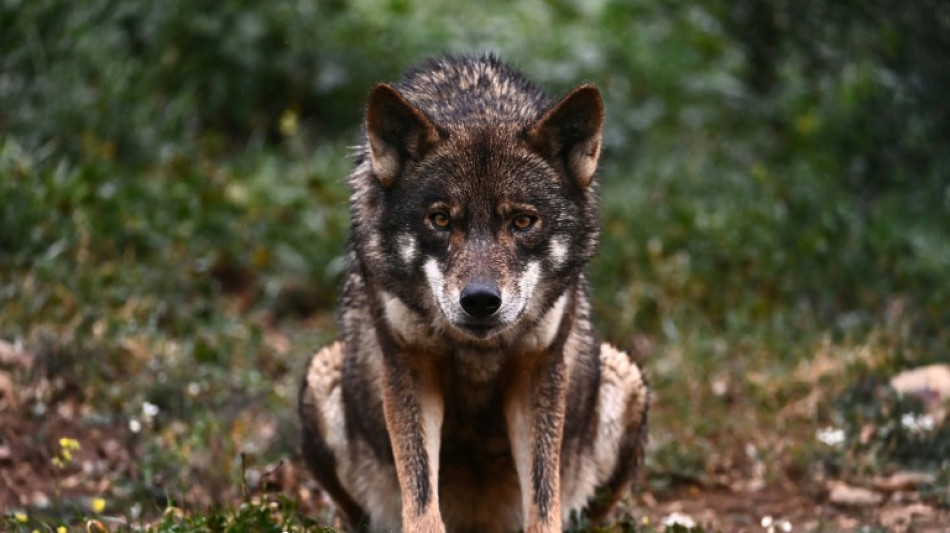
Spain reverses ban on hunting wolves in north / Photo: © AFP/File

 Malta Stuns Sweden with Late Penalty Comeback in Rugby Europe Trophy

 BingX: Major Announcement of Far-Reaching Significance

 Élan Opens as Late-Night Wine Bar in Honolulu

 Shiv Sena (UBT) Criticizes NCP Merger Talks as 'Ridiculous Laughing Stock'

 Dell Announces AI-Integrated PC Lineup for 2026 with Wi-Fi 7 Support

 Rocky Fans Break Guinness World Record at Philadelphia Museum Steps

 FAA Grounds All US Flights Amid Nationwide Air Traffic Control Communication Failure

 Argentina vs Uruguay Kick-off Time, TV Channels & Free Streaming Guide

Spanish lawmakers on Thursday voted to end a ban on hunting wolves in the north of the country, three years after its introduction by Prime Minister Pedro Sanchez's minority leftist government.
Spain declared Iberian wolves living north of the Douro river a protected species in 2021, extending an existing hunting ban that was in place in the south over the objections of farmers who argued that it would lead to more attacks on their livestock.
Controlled hunting of the species had been allowed until then in the region which includes Asturias, Cantabria, Castile and Leon, and Galicia where the vast majority of the country's Iberian wolves live.
The reversal of the hunting ban was introduced via an amendment to a law on food waste and approved with the votes of lawmakers from the conservative main opposition Popular Party (PP), far-right Vox, Basque regional party PNV and Catalan separatists JxCat.
The amendment introduced by the PP stipulates that the capture and killing of wolves may be "justified" in the event of a threat to the Spanish "productive system", namely agricultural production.
It removes the wolf from a list of wild species under "special protection" north of the Douro.
Conservation group Ecologists in Action called the reversal of the hunting ban "irresponsible" while animal rights party PACMA described it as "the biggest step backwards in wildlife conservation in years".
Members of the Bern Convention, tasked with the protection of wildlife in Europe and some African countries, in December agreed to lower the wolf's protection status from "strictly protected" to "protected".
Grey wolves were virtually exterminated in Europe 100 years ago but their numbers have rebounded since then to the current population of 20,300, mostly in the Balkans, Nordic countries, Italy and Spain.
J.Bergmann--BTB