Wildlife rebounds in divided Cyprus 'dead zone' / Photo: ©

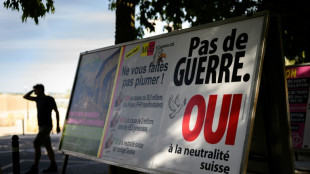 Swiss voters expected to shun stricter neutrality
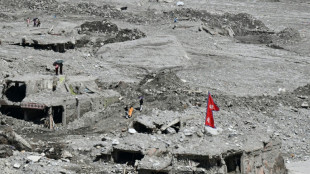
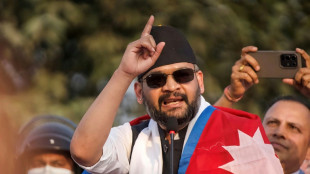 Rapper-turned-PM faces first big test after Nepal disaster
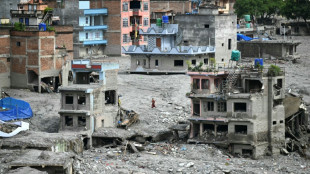
 Tuchel seeks tonic to England World Cup 'scar' in Spain showdown

 'Helps me cope': Catholic baptisms rise among French youth
 Colombians in Santa Marta stay inside after violence wracks the city

 Iran airlines cancel flights as US sanctions hit
 Meta launches camera-free AI glasses amid privacy pushback
 Australian PM says OpenAI hacked government health website

 Xi arrives in US to personal Trump welcome
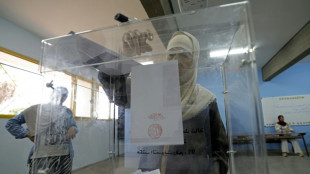 Morocco elects new parliament amid social frustration, youth discontent
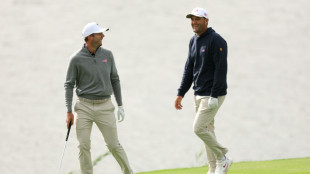 Scheffler and Burns to face Im and Lee in Presidents Cup opener
 Crushing wins for Lyon and Barca in women's Champions League
 Rio breaks record for rainiest September amid powerful El Nino
 At UN, tech chiefs urge caution in AI development
 Russian strikes kill seven in Ukraine, Zelensky vows winter campaign
 Venezuelan shot by ICE needs urgent medical care, mother tells AFP
 Zelensky says Putin using fighters from 47 countries in Ukraine war
 Klopp calls on Germany to 'rise above ourselves' as new era begins

 Russian strikes kill seven in Ukraine as Russia vows no 'pause' to war

 ArcPoint Expands Globally with Institutional Intelligence Platform for Modern Investors
 Ronaldo focussing on 'present' ahead of Wales test

 Outgoing UN chief makes final climate push at New York summit
 Grief and pain flow at hearing for Canadian suicide poison vendor

 Ireland boss Hallgrimsson says timing of Israel remarks 'not clever'
 Weinstein resentenced to 15 years in prison for 2006 sex assault

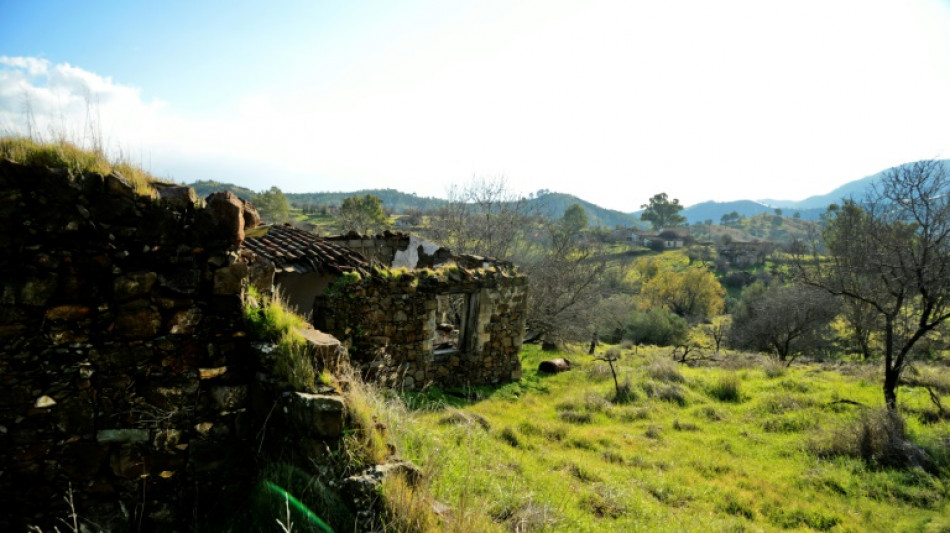
In a long-abandoned village in the UN buffer zone that divides Cyprus, an endangered curly-horned wild sheep offers hope not only for wildlife but that bitter ethnic divisions might slowly be healed.
The mouflon, a majestic breed endemic to the Mediterranean island, is one of many species flourishing in the no-man's-land created when inter-communal strife sliced Cyprus in two in the 1960s.
"Without human influence, the wildlife and plant life have flourished," said Salih Gucel, director of the Institute of Environmental Sciences at Near East University in the breakaway Turkish Cypriot north.
"It is like stepping back in time to what our grandparents would have seen 100 years ago," Gucel said, after spotting an orchid growing amid the tumbled ruins of a farmhouse in the village of Varisha, some 55 kilometres (35 miles) west of the capital Nicosia.
Cyprus has been split since 1974 when Turkish forces occupied the northern part of the island in response to a Greek-sponsored military coup.
The buffer zone covers some three percent of the island, is 180 kilometres (112 miles) long and up to eight kilometres (five miles) wide.
- Rare species 'haven' -
Many call it the "dead zone", a tragic reminder of a frozen conflict where bullet-riddled buildings crumble back into the dust.
Yet it is far from empty.
Farmers with permits can enter, while United Nations peacekeepers patrol the line, monitoring soldiers, watching for smugglers or for refugees hoping to cross.
But it has also become a "haven" for rare plants and animals, a "wildlife corridor" linking otherwise fragmented environments right across the island, said ecologist Iris Charalambidou, from the University of Nicosia.
"It's an area where species can escape intensive human activity," Charalambidou said, noting that there were some 200-300 mouflon in the Variseia area alone, a tenth of the estimated 3,000 population.
"These are areas where biodiversity flourishes... core populations of species that, when populations become larger, disperse to other areas."
Warily watching the rare human visitors, a pair of mouflon peer through an overgrown olive grove, turning tail long before wildlife experts -- accompanied by Argentinian troops of the United Nations peacekeeping force -- come close.
The mouflon, a national symbol once hunted to the brink of extinction, is not the only species thriving here.
Charalambidou said there were also threatened plants including orchids as well as rare reptiles and endangered mammals such as the Cyprus spiny mouse.
The experts said it shows how an embattled environment can recover if given a chance.
"When human activity is not so intense in a certain area, you see that nature recovers," said Charalambidou, a Greek Cypriot from the government-controlled south of the island.
Gucel echoes her comments. "Outside the buffer zone, herbicides have been used... and orchids are picked or the bulbs dug up," he said.
While the respective political leaders remain at loggerheads, the shared wildlife of the island has helped plant the seed of cooperation between the two sides.
"The political situation on the island remains really difficult," said Aleem Siddique, spokesman for the UN peacekeeping force in Cyprus.
"But there is still a lot of peace building work that can be done at the grassroots level."
- 'Common goal' -
That has included a UN-backed project identifying "biodiversity hotspots" inside the buffer zone, bringing scientists from the two communities together.
"One of the aims of our project was to get people who are interested in the environment in both communities to collaborate with each other," Gucel said.
"We have a common goal and a common interest," said Charalambidou, peering at yellow flowers poking through coils of rusting barbed wire.
For many islanders, there is little contact with those from the other side, the two communities apparently increasingly set on different paths and separate futures.
"The more that we can get the two communities working together, the more that we can get them to meet on common issues of concern, and that will benefit not only the environment but also the peace process," Siddique said.
In Cyprus, the history of division is impossible to ignore. On the hilltops above Variseia, soldiers in fortified watchtowers eye each other across the valley.
Below, Gucel and Charalambidou trace a mouflon track through a tangled almond orchard.
"People who work in environmental issues are usually so passionate about it that when they meet, they talk about that, and don't bother talking about other issues," Charalambidou said. "It unites people."
F.Müller--BTB