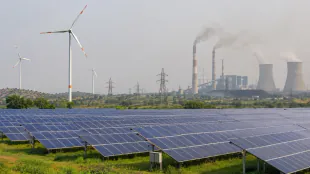
India steel plans threaten global emissions goals: report / Photo: © AFP

 Info Edge’s Naukri Hits Rs 240 Crore Annualized AI Revenue Run Rate

 Honda Recalls 635,000 Vehicles Over Software-Induced Power Steering Failure

 Digi Power X Reports Q3 2026 Revenue Up 85% and AI Revenue Up Over 400% Compared to Q2

 Below Deck alumnus João Franco and brother arrested after fatal Turkey fight

 Ole Miss inquiry expands after video and monkey-noise allegations

 Senators Push for Sports Betting Ad Ban as Bill S-211 Advances

 London museum removes Russell Brand hair exhibit after rape conviction

 RBI Gold Loan Rules 2026: Key Changes for Auctions, Renewals, and Valuation

 Kylie Jenner employee describes closet ordeal and pepper-spray incident
India's plans to massively expand coal-based steel and iron production threaten global efforts to reduce the sector's carbon emissions, a key contributor to climate change, a report said Tuesday.
The sector accounts for 11 percent of global carbon dioxide emissions, and India aims to double production by 2030.
Switching from coal-dependent blast furnaces to electric arc furnaces (EAFs), which produce significantly fewer emissions, could reduce that figure.
EAF production is projected to make up 36 percent of the sector by 2030, but that falls short of the 37 percent the International Energy Agency (IEA) says is needed to stay on track for net-zero by 2050.
"The only realistic way to meet that 37 percent goal is with a change of plans from India," said Astrid Grigsby-Schulte from the Global Energy Monitor (GEM) think tank.
That seemingly marginal one-percent difference "represents tens of millions of tonnes of CO2 generation", Grigsby-Schulte told AFP.
EAFs generally rely on melting scrap steel, a process that does not use coal. They produce significantly fewer emissions, even when they rely on electricity from coal-dependent grids.
Meeting the 2030 target is "critical", she said, "not only because of emissions immediately avoided, but also because it means we are laying the necessary groundwork for broader decarbonisation by 2050."
China currently dominates global steel production, but its sector is stagnant. Meanwhile India, which targets carbon neutrality only by 2070, plans to massively expand domestic capacity.
And the majority of India's announced steel development plans involve higher-emissions blast furnace production, in a country whose steel industry is already the world's most carbon intensive.
However, there is a growing gap between India's steel capacity plans and actual developments on the ground, GEM said.
Just 12 percent of its announced new capacity has come online since the country released its 2017 National Steel Policy. The comparable figure for China is 80 percent, GEM said.
That suggests India's "ambitious growth plans are more talk than action thus far," the group added.
And it "leaves a huge percentage of their development plans that could still shift to lower-emissions technologies," added Grigsby-Schulte.
Demand for steel is continuing to grow, and the iron and steel industry is expected to be one of the last to continue using coal in the IEA's 2050 net-zero pathway.
The organisation has warned that the sector needs to "accelerate significantly" to meet 2050 targets, including with innovative production methods that are currently in their infancy.
M.Odermatt--BTB