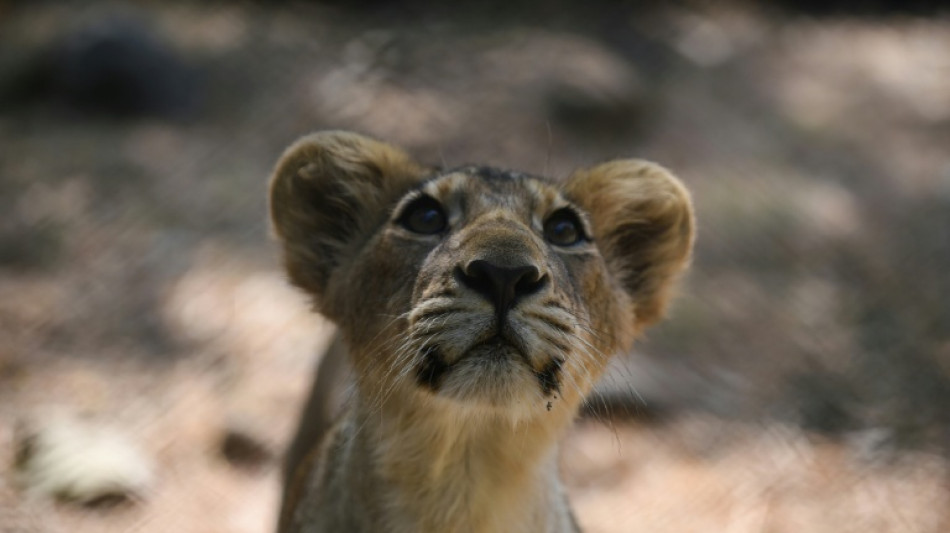
India's lion population rises by a third / Photo: © AFP

 Info Edge’s Naukri Hits Rs 240 Crore Annualized AI Revenue Run Rate

 Honda Recalls 635,000 Vehicles Over Software-Induced Power Steering Failure

 Digi Power X Reports Q3 2026 Revenue Up 85% and AI Revenue Up Over 400% Compared to Q2

 Below Deck alumnus João Franco and brother arrested after fatal Turkey fight

 Ole Miss inquiry expands after video and monkey-noise allegations

 Senators Push for Sports Betting Ad Ban as Bill S-211 Advances

 London museum removes Russell Brand hair exhibit after rape conviction

 RBI Gold Loan Rules 2026: Key Changes for Auctions, Renewals, and Valuation

 Kylie Jenner employee describes closet ordeal and pepper-spray incident

India's Asiatic lion population has increased by over a third to 891, according to a five-yearly census released on Wednesday, boosting efforts to conserve the vulnerable species.
The Asiatic lion -- which historically once roamed from the Middle East to India -- is now reduced to an isolated population in a wildlife sanctuary in India's western state of Gujarat.
"The Asiatic lion population, which was 304 in 1995, has increased steadily over the past three decades," Gujarat Chief Minister Bhupendra Patel told reporters. "In 2020 it was 674, which has now increased to 891."
The majestic big cats are slightly smaller than their African cousins, and have a fold of skin along their bellies.
Hunting and human encroachment caused the population to plunge to just 20 by 1913, and the lions are now found only in Gujarat's sprawling Gir wildlife sanctuary, where they roam dry deciduous forests and open grasslands.
Following years of concerted government efforts, the lion population is steadily rising.
The latest counting exercise, spread over four days, covered over 35,000 square kilometres (13,513 square miles) across 11 districts in the state.
Priyavrat Gadhvi, a former member of the state wildlife board, said the increase indicated a successful conservation programme.
"Another important factor here is the political will and support of the local people living near the forest areas," Gadhvi said. "They together have helped in conservation of the species."
But while numbers are rising, the conservation organisation WWF warns that the Asiatic lion faces a "threat of genetic inbreeding arising from a single population in one place".
Lions are a source of pride for India, particularly in Gujarat's Saurashtra region, where man and beast coexist.
A cattle-rearing tribe lives among the animals in the sanctuary, and it is not uncommon to see a pride of lions crossing a highway in the region as motorists wait and watch.
Lions are also a major tourist attraction, along with leopards, panthers and other big cats found in the sanctuary.
Around 550,000 people visit the wildlife park each year, riding in open-top jeeps as they try to spot the predators prowling.
Since the Asiatic lion currently exists as a single subpopulation, it is vulnerable to extinction from events such as an epidemic or a large forest fire.
A.Gasser--BTB