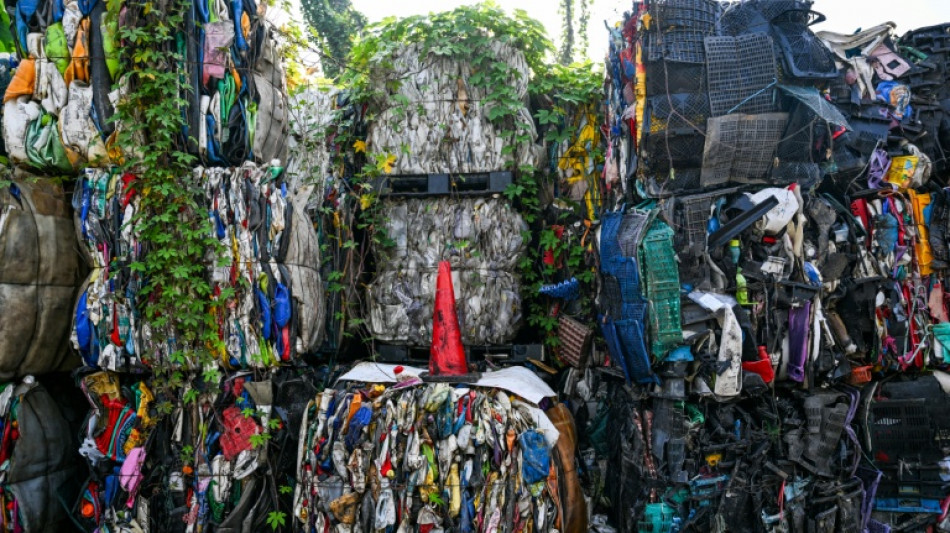
NGOs laud tougher Malaysia plastic trash import laws / Photo: © AFP/File

 Armani sprinkles glitter on discreet elegance at Milan show

 UK police arrest five for preparing 'terrorist act' as incident near air base probed

 อเล็กซ์ โบดี และศาสตราจารย์ ดร. ดีเทอร์ ลาซิก ลงนามสัญญาสำหรับ ALPHA WHEY และ BODI เครื่องดื่มให้พลังงาน

 China teen blows away the field for record-setting gold at 'sad' Games

 Alex Bodi och prof. dr. Dieter Lazik tecknar avtal om ALPHA WHEY och BODI Energidryck

 Alex Bodi i prof. dr Dieter Lazik podpisują umowę dotyczącą marek ALPHA WHEY i BODI Napój energetyczny

 Ο Alex Bodi και ο καθηγητής Δρ. Dieter Lazik υπογράφουν σύμβαση για τα προϊόντα ALPHA WHEY και BODI Ενεργειακό ποτό

 アレックス・ボディ氏とディーター・ラジク教授が「ALPHA WHEY」および「BODI エナジードリンク」に関する契約を締結

 Housing protesters dig in for long stay in Madrid square

 Alex Bodi și prof. dr. Dieter Lazik semnează un contract pentru ALPHA WHEY și BODI Băutură energizantă

 Former Stoke boss Pulis 'cheated' over FA Cup final loss to Man City

 Czech Republic beat Ukraine to win BJK Cup

 Isak returns to Liverpool after injury scare

 Gunmen kill 27 in two shootings in South Africa

 Spain PM vows action as housing protest sparked by eviction grows

 Fernandez downs Gibson to claim Singapore Open crown

 Three talking points from the Azerbaijan Grand Prix

 Turkey ex-minister resigns as investment fund crisis grows

 Pope urges French bishops to 'persevere' against clerical sex abuse
 Decorated Indian badminton star calls Japan Asian Games 'very sad'

 Asian Games chiefs say lessons learned over accommodation

 UK's PM urges 'calm' as thousands seek to thwart flashpoint N.Ireland parade

 Thousands seek to thwart disputed N.Ireland flashpoint parade

 Swiss vote on what it means to be neutral

 Pope to meet with victims of clerical sex abuse during France trip
Environmental groups welcomed on Monday Malaysia's decision to tighten regulations on plastic waste imports, but urged stricter enforcement of the laws in a country that recycles tonnes of trash from the United States, Europe, and elsewhere each year.
An amended law went into force in the Southeast Asian nation last week, effectively banning imports of plastic waste unless approval is given by the country's standards watchdog.
One key change is that approval will only be given for waste imported from countries that have ratified the Basel Convention, set up in 1989 to reduce the cross-border movement of hazardous waste, particularly between developed and non-developed nations.
That effectively bars imports from the United States, the fifth biggest supplier of plastic waste to Malaysia.
Malaysia is one of the world's biggest importers of plastic waste, accounting for over 433,000 metric tonnes worth $167 million in 2024, the Department of Statistics Malaysia said -- enough to fill around 173 Olympic-sized swimming pools.
The plastic is recycled into pellets which are then exported -- mainly to China -- for use in production of various items including carpets.
Southeast Asia has been flooded with plastic waste from more developed economies such as the United States and Britain since 2018, especially since China -- which previously boasted a massive recycling industry -- ordered a halt to most imports.
Many Chinese recycling businesses moved to Malaysia after the ban took effect, leading to huge quantities of plastic being shipped in without permits.
"We welcome the stricter control... (but) we are concerned as there are some key enforcement gaps that have to be addressed," Friends of the Earth Malaysia president Meenakshi Raman told AFP Monday.
Gaps included illegal imports, with smugglers concealing consignments to bypass regulations Meenakshi said, exacerbated by "bribery and collusion among enforcement officers" allowing illicit shipments to slip through customs.
- No US plastic -
The tightened law effectively bans the United States from any further shipments as Washington has not ratified the UN treaty.
The US accounted for over 35,000 tonnes of plastic waste to Malaysia last year, according to data from the Basel Action Network, behind signatories Japan, Spain, Germany and Britain.
Environmental watchdogs said Malaysian plastic recyclers preferred overseas imports because domestic waste did not meet demand.
"Plastic recyclers also mention that domestic waste is 'dirtier', hence they source imported plastic waste that is cleaner," Meenakshi said.
Both Friends of the Earth's Meenakshi and Greenpeace Malaysia Zero Waste Campaigner Weng Dun Xin called on the US and other developed nations to stop using poorer nations to dump their trash.
"Recycling alone cannot fix our global plastic pollution problem fast enough," said Weng.
"Developed countries should stop putting their responsibility onto other countries for their own plastics problem."
After passing the law, Malaysian authorities said they would "not hesitate to act firmly against any individual or company that attempts to circumvent waste import controls or engage in illicit waste import activities".
W.Lapointe--BTB



