Hanoi scooter riders baulk at petrol-powered bikes ban / Photo: © AFP

 Armani sprinkles glitter on discreet elegance at Milan show
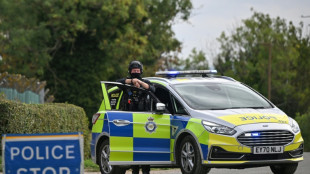 UK police arrest five for preparing 'terrorist act' as incident near air base probed

 อเล็กซ์ โบดี และศาสตราจารย์ ดร. ดีเทอร์ ลาซิก ลงนามสัญญาสำหรับ ALPHA WHEY และ BODI เครื่องดื่มให้พลังงาน

 China teen blows away the field for record-setting gold at 'sad' Games

 Alex Bodi och prof. dr. Dieter Lazik tecknar avtal om ALPHA WHEY och BODI Energidryck

 Alex Bodi i prof. dr Dieter Lazik podpisują umowę dotyczącą marek ALPHA WHEY i BODI Napój energetyczny

 Ο Alex Bodi και ο καθηγητής Δρ. Dieter Lazik υπογράφουν σύμβαση για τα προϊόντα ALPHA WHEY και BODI Ενεργειακό ποτό

 アレックス・ボディ氏とディーター・ラジク教授が「ALPHA WHEY」および「BODI エナジードリンク」に関する契約を締結

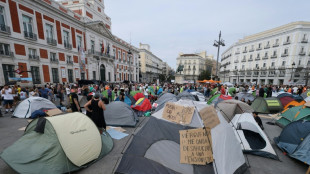 Housing protesters dig in for long stay in Madrid square

 Alex Bodi și prof. dr. Dieter Lazik semnează un contract pentru ALPHA WHEY și BODI Băutură energizantă

 Former Stoke boss Pulis 'cheated' over FA Cup final loss to Man City

 Czech Republic beat Ukraine to win BJK Cup

 Isak returns to Liverpool after injury scare

 Gunmen kill 27 in two shootings in South Africa

 Spain PM vows action as housing protest sparked by eviction grows

 Fernandez downs Gibson to claim Singapore Open crown

 Three talking points from the Azerbaijan Grand Prix

 Turkey ex-minister resigns as investment fund crisis grows

 Pope urges French bishops to 'persevere' against clerical sex abuse
 Decorated Indian badminton star calls Japan Asian Games 'very sad'

 Asian Games chiefs say lessons learned over accommodation

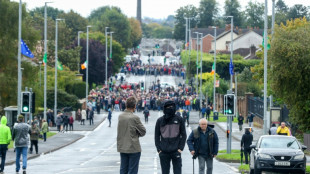
 UK's PM urges 'calm' as thousands seek to thwart flashpoint N.Ireland parade

 Thousands seek to thwart disputed N.Ireland flashpoint parade

 Swiss vote on what it means to be neutral
 Pope to meet with victims of clerical sex abuse during France trip

Vietnam's plan to bar gas-guzzling motorbikes from central Hanoi may clear the air of the smog-smothered capital, but riders fear paying a high toll for the capital's green transition.
"Of course everyone wants a better environment," said housewife Dang Thuy Hanh, baulking at the 80 million dong ($3,000) her family would spend replacing their four scooters with electric alternatives.
"But why give us the first burden without any proper preparation?" grumbled the 52-year-old.
Hanoi's scooter traffic is a fixture of the city's urban buzz. The northern hub of nine million people has nearly seven million two-wheelers, hurtling around at rush hour in a morass of congestion.
Their exhausts splutter emissions regularly spurring the city to the top of worldwide smog rankings in a country where pollution claims at least 70,000 lives a year, according to the World Health Organization.
The government last weekend announced plans to block fossil-fuelled bikes from Hanoi's 31 square kilometre (12 square mile) centre by next July.
It will expand in stages to forbid all gas-fuelled vehicles in urban areas of the city in the next five years.
Hanh -- one of the 600,000 people living in the central embargo zone -- said the looming cost of e-bikes has left her fretting over the loss of "a huge amount of savings".
While she conceded e-bikes may help relieve pollution, she bemoaned the lack of public charging points near her home down a tiny alley in the heart of the city.
"Why force residents to change while the city's infrastructure is not yet able to adapt to the new situation?" she asked.
Many families in communist-run Vietnam own at least two motorcycles for daily commutes, school runs, work and leisure.
Proposals to reform transport for environmental reasons often sparks allegations the burden of change is felt highest by the working class.
London has since 2023 charged a toll for older, higher pollution-emitting vehicles.
France's populist "Yellow Vest" protests starting in 2018 were in part sparked by allegations President Emmanuel Macron's "green tax" on fuel was unfair for the masses.
- 'Cost too high' -
Hanoi authorities say they are considering alleviating the financial burden by offering subsidies of at least three million dong ($114) per switch to an e-bike, and also increasing public bus services.
Food delivery driver Tran Van Tan, who rides his bike 40 kilometres (25 miles) every day from neighbouring Hung Yen province to downtown Hanoi, says he makes his living "on the road".
"The cost of changing to an e-bike is simply too high," said the 45-year-old, employed through the delivery app Grab. "Those with a low income like us just cannot suddenly replace our bikes."
Compared with a traditional two-wheeler, he also fears the battery life of e-bikes "won't meet the needs for long-distance travel".
But citing air pollution as a major threat to human health, the environment and quality of life, deputy mayor Duong Duc Tuan earlier this week said "drastic measures are needed".
In a recent report, Hanoi's environment and agriculture ministry said over half of the poisonous smog that blankets the city for much of the year comes from petrol and diesel vehicles.
The World Bank puts the figure at 30 percent, with factories and waste incineration also major culprits.
Several European cities, such as Barcelona, Paris and Amsterdam have also limited the use of internal combustion engines on their streets -- and other major Vietnamese cities are looking to follow suit.
The southern business hub Ho Chi Minh City aims to gradually transition delivery and service motorbikes to electric over the next few years.
But with the high costs, office worker Nguyen My Hoa thinks the capital's ban will not be enforceable.
"Authorities will not be able to stop the huge amount of gasoline bikes from entering the inner districts," 42-year-old Hoa said.
"It simply does not work."
L.Janezki--BTB