
New vines bring hope to Israeli monastery scorched by wildfire / Photo: © AFP

 Armani sprinkles glitter on discreet elegance at Milan show

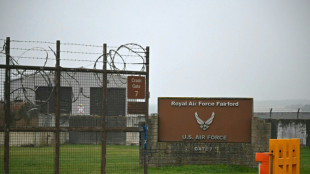
 UK police arrest five for preparing 'terrorist act' as incident near air base probed

 อเล็กซ์ โบดี และศาสตราจารย์ ดร. ดีเทอร์ ลาซิก ลงนามสัญญาสำหรับ ALPHA WHEY และ BODI เครื่องดื่มให้พลังงาน

 China teen blows away the field for record-setting gold at 'sad' Games

 Alex Bodi och prof. dr. Dieter Lazik tecknar avtal om ALPHA WHEY och BODI Energidryck

 Alex Bodi i prof. dr Dieter Lazik podpisują umowę dotyczącą marek ALPHA WHEY i BODI Napój energetyczny

 Ο Alex Bodi και ο καθηγητής Δρ. Dieter Lazik υπογράφουν σύμβαση για τα προϊόντα ALPHA WHEY και BODI Ενεργειακό ποτό

 アレックス・ボディ氏とディーター・ラジク教授が「ALPHA WHEY」および「BODI エナジードリンク」に関する契約を締結

 Housing protesters dig in for long stay in Madrid square

 Alex Bodi și prof. dr. Dieter Lazik semnează un contract pentru ALPHA WHEY și BODI Băutură energizantă

 Former Stoke boss Pulis 'cheated' over FA Cup final loss to Man City

 Czech Republic beat Ukraine to win BJK Cup

 Isak returns to Liverpool after injury scare

 Gunmen kill 27 in two shootings in South Africa

 Spain PM vows action as housing protest sparked by eviction grows

 Fernandez downs Gibson to claim Singapore Open crown

 Three talking points from the Azerbaijan Grand Prix

 Turkey ex-minister resigns as investment fund crisis grows
 Pope urges French bishops to 'persevere' against clerical sex abuse

 Decorated Indian badminton star calls Japan Asian Games 'very sad'

 Asian Games chiefs say lessons learned over accommodation

 UK's PM urges 'calm' as thousands seek to thwart flashpoint N.Ireland parade

 Thousands seek to thwart disputed N.Ireland flashpoint parade

 Swiss vote on what it means to be neutral

 Pope to meet with victims of clerical sex abuse during France trip

Swapping his monk's habit for overalls and a sun hat, Father Christian-Marie knelt alongside volunteers in the freshly dug earth, planting grape vines to replace those damaged by wildfires that swept through central Israel earlier this year.
Wine production at Latrun monastery dates back 135 years, when the French monks first arrived. Cultivating fruit is central to both their spiritual practice and livelihood.
The monks say the wildfires that broke out in late April damaged about five hectares (12 acres) of vineyard -- roughly a third of their crop.
Undeterred, the monks called for help, drawing dozens of volunteers who busied themselves digging holes and planting stakes under the blazing sun.
Father Christian-Marie, who has spent almost 28 years at the monastery, said planting fresh vines symbolised optimism for the future.
"For me, it's quite important when I live here in this monastery to pray for peace," he told AFP.
"To plant a vineyard is a sign of hope, because if we thought that tomorrow the land will be bombed and will not exist, we wouldn't do this work," he added.
Working in a pensive hush, volunteers carried trays of sapling vines to be planted in long rows in a patch of the monastery's land untouched by the flames.
Robed monks handed out stakes and delicately pressed the plants into the earth.
"Planting is something exciting, you plant and it will grow. It will give fruit, and the fruit will give wine. And wine will make the heart of the human happy," said Noga Eshed, 74, a volunteer from Tel Aviv.
For her, the exercise signified a reconnection with nature.
"I see people touching the ground, the earth. And it's not very common. We are very disconnected these days," she added, trowel in hand.
Eshed, who has volunteered at the monastery on previous occasions, said the brothers there were "good friends".
Latrun's monks are Trappists, a Roman Catholic order centred on contemplation and simplicity.
- 'In God's hands' -
Fanned by high temperatures and strong winds, wildfires spread rapidly through wooded areas along the main Jerusalem–Tel Aviv highway on April 30.
The flames travelled right up to the edge of Latrun monastery, prompting the evacuation of the 20 or so brothers who live there.
"It was very hard because we are not used to getting out of our monastery and we have some very old brothers," Brother Athanase told AFP.
The monks initially feared it had burned down, he added, but the monastery was spared although swathes of its agricultural land were destroyed.
As well as vineyards, Latrun has around 5,000 olive trees, of which roughly 1,000 were entirely burnt down to the root in the blaze.
Brother Athanase estimated that around 70 percent of the olive trees were in some way damaged and would take around four years to recover.
Last year the monastery produced three tonnes of olive oil, but "there'll be no production this year", he said.
"It's difficult for us because we are living off our production... but we are not afraid because life is always growing up," he added with a slight smile, surrounded by scorched earth.
He was grateful for the assistance provided by the volunteers and said it was important "to know that people like monks in the Holy Land".
Climate change is driving up temperatures, decreasing precipitation and increasing the frequency of extreme weather events in Israel.
Standing in the newly planted vineyard, Father Alois said he hoped the monastery would not face a blaze as devastating in the future but that the monks were now better prepared after installing a new water system.
Ultimately, he said, "we are in God's hands".
O.Krause--BTB



