
Turkmenistan's methane-spewing 'Gateway to Hell' loses its anger / Photo: © AFP

 Alex Bodi och prof. dr. Dieter Lazik tecknar avtal om ALPHA WHEY och BODI Energidryck

 Alex Bodi i prof. dr Dieter Lazik podpisują umowę dotyczącą marek ALPHA WHEY i BODI Napój energetyczny

 Ο Alex Bodi και ο καθηγητής Δρ. Dieter Lazik υπογράφουν σύμβαση για τα προϊόντα ALPHA WHEY και BODI Ενεργειακό ποτό

 アレックス・ボディ氏とディーター・ラジク教授が「ALPHA WHEY」および「BODI エナジードリンク」に関する契約を締結

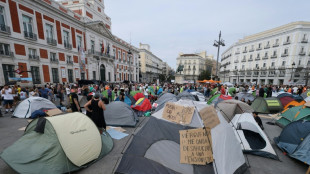 Housing protesters dig in for long stay in Madrid square

 Alex Bodi și prof. dr. Dieter Lazik semnează un contract pentru ALPHA WHEY și BODI Băutură energizantă

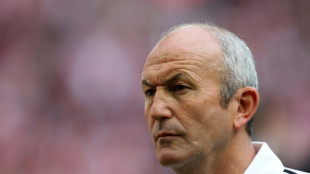 Former Stoke boss Pulis 'cheated' over FA Cup final loss to Man City

 Czech Republic beat Ukraine to win BJK Cup

 Isak returns to Liverpool after injury scare

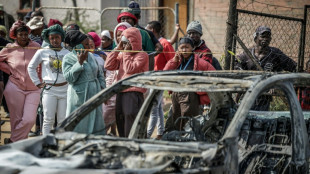 Gunmen kill 27 in two shootings in South Africa

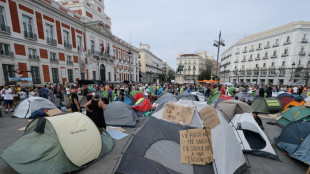 Spain PM vows action as housing protest sparked by eviction grows

 Fernandez downs Gibson to claim Singapore Open crown

 Three talking points from the Azerbaijan Grand Prix
 Turkey ex-minister resigns as investment fund crisis grows
 Pope urges French bishops to 'persevere' against clerical sex abuse
 Decorated Indian badminton star calls Japan Asian Games 'very sad'

 Asian Games chiefs say lessons learned over accommodation

 UK's PM urges 'calm' as thousands seek to thwart flashpoint N.Ireland parade

 Thousands seek to thwart disputed N.Ireland flashpoint parade

 Swiss vote on what it means to be neutral
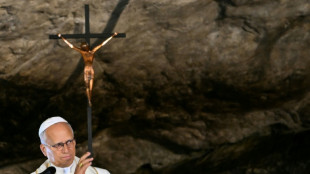 Pope to meet with victims of clerical sex abuse during France trip
 Iran stands firm on Hormuz plan after US rejection

 Madrid protest camp grows after eviction outrage

 Italy winemakers hail bumper harvest but cut output

 Kyiv shoppers feel the pinch from Russian strikes
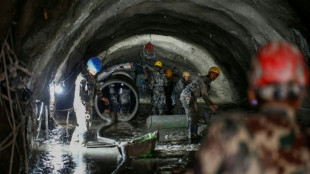
People go to the "Gateway to Hell" gas crater in the middle of the Turkmenistan desert expecting an angry cauldron but are now coming away unimpressed.
Once a giant uncontrollable pit of red flames and glowing red embers, the 70-metre (230 feet) wide hole is now just a charred cauldron with only a few pockets of small fires.
After letting it burn for 50 years, authorities in the reclusive Central Asian state have finally moved to put out the fire, which spews huge quantities of methane into the atmosphere.
"I'm a little disappointed," said Irina, 35, who travelled five hours north from the capital Ashgabat to get to see what she thought would be an inferno in the Karakum desert.
"On the internet we saw impressive pictures of burning flames. Now we realise they were old photos and videos. The reality is different," she told AFP.
Reducing the fire is an important step for Turkmenistan's climate ambitions.
The world's biggest methane emitter through gas leaks, according to the International Energy Agency, it has committed to cutting greenhouse gas emissions.
But putting out the fire means killing off the Darvaza gas crater as the country's top tourist attraction.
Several nearby wells have been drilled to reduce the flow of gas.
"Whereas before a huge glow from the blaze was visible from several kilometres away, hence the name 'Gateway to Hell', today only a faint source of combustion remains," Irina Luryeva, a director at state-owned energy company Turkmengaz, told a conference in June.
- 'Risking your life' -
The road from Ashgabat to the crater is covered with cracks and potholes, making the journey for would-be tourists treacherous.
"You have to swerve round the potholes and sand dunes, risking your life," driver Aman, 28, told AFP at a gas station on the way.
The desert covers some 80 percent of the country and sees temperatures soar to more than 50C in summer and plunge to minus 20C in the winter.
It is also home to vast natural resources, with Turkmenistan estimated to have the world's fourth largest gas reserves.
It was Soviet scientists, exploring the region's potential, who set the crater on fire after they accidentally drilled into an underground pocket of gas in 1971.
"There was a danger of poisoning the local population and farm animals, so the geologists decided to set it on fire, hoping that it would soon burn out," said Turkmen geologist Anatoly Bushmakin.
"However, the crater is still burning," he added.
Under long-time president, now 'father-of-the-nation', Gurbanguly Berdymukhamedov, Turkmenistan had flipped between wanting to tame the crater or use it to boost tourism to the isolated country.
In 2022, Berdymukhamedov finally ordered it be extinguished completely -- citing both environmental and economic concerns.
It "has a negative impact on both the environment and the health of people living nearby," he said.
"Valuable natural resources are being lost, the export of which could generate significant profits and be used to improve the well-being of our people," he added.
- 'Lost income' -
Turkmenistan has also signed up to the Global Methane Pledge, which aims for a 30-percent global reduction in methane emissions by 2030.
But not everybody is on board with the plan.
Locals that relied on the the draw of the pit's spectacular appearance for their income are worried.
"If Darvaza stops burning completely, many tourist companies will lose income," said Ovez Muradov, 43, who works in a tour agency in Ashgabat.
The Gateway to Hell was one of the only tourist attractions in Turkmenistan, one of the most closed and repressive countries in the world, according to rights groups.
The country sees hardly any foreign visitors, though leaders have talked up the prospects of boosting numbers.
Muradov said extinguishing the fire would douse those ambitions.
"I'm no expert, but I don't think the extinguished crater will have much impact on the environment, but the tourism industry will lose a significant chunk of income."
W.Lapointe--BTB



