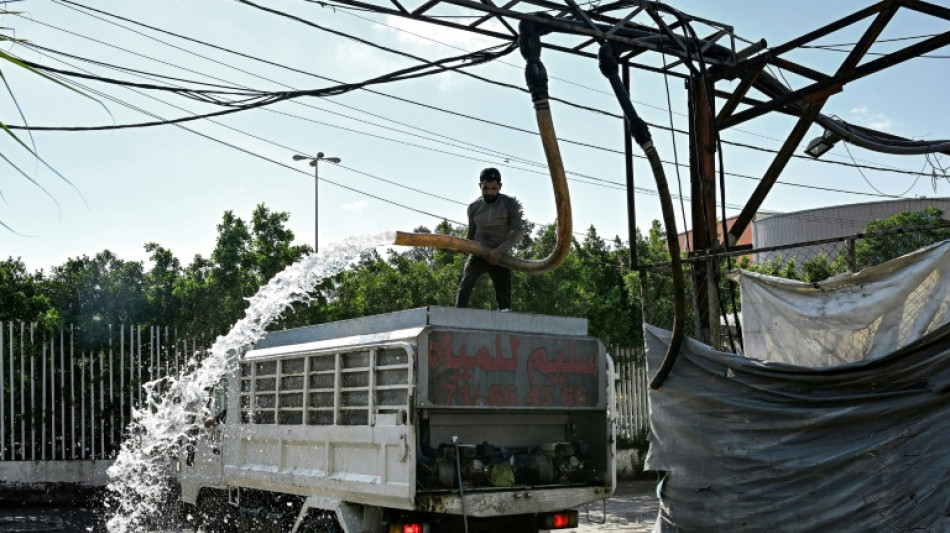
Water shortages plague Beirut as low rainfall compounds woes / Photo: © AFP/File

 Alex Bodi och prof. dr. Dieter Lazik tecknar avtal om ALPHA WHEY och BODI Energidryck

 Alex Bodi i prof. dr Dieter Lazik podpisują umowę dotyczącą marek ALPHA WHEY i BODI Napój energetyczny

 Ο Alex Bodi και ο καθηγητής Δρ. Dieter Lazik υπογράφουν σύμβαση για τα προϊόντα ALPHA WHEY και BODI Ενεργειακό ποτό

 アレックス・ボディ氏とディーター・ラジク教授が「ALPHA WHEY」および「BODI エナジードリンク」に関する契約を締結

 Housing protesters dig in for long stay in Madrid square

 Alex Bodi și prof. dr. Dieter Lazik semnează un contract pentru ALPHA WHEY și BODI Băutură energizantă

 Former Stoke boss Pulis 'cheated' over FA Cup final loss to Man City

 Czech Republic beat Ukraine to win BJK Cup

 Isak returns to Liverpool after injury scare

 Gunmen kill 27 in two shootings in South Africa

 Spain PM vows action as housing protest sparked by eviction grows

 Fernandez downs Gibson to claim Singapore Open crown

 Three talking points from the Azerbaijan Grand Prix

 Turkey ex-minister resigns as investment fund crisis grows
 Pope urges French bishops to 'persevere' against clerical sex abuse
 Decorated Indian badminton star calls Japan Asian Games 'very sad'

 Asian Games chiefs say lessons learned over accommodation

 UK's PM urges 'calm' as thousands seek to thwart flashpoint N.Ireland parade

 Thousands seek to thwart disputed N.Ireland flashpoint parade

 Swiss vote on what it means to be neutral

 Pope to meet with victims of clerical sex abuse during France trip
 Iran stands firm on Hormuz plan after US rejection

 Madrid protest camp grows after eviction outrage

 Italy winemakers hail bumper harvest but cut output

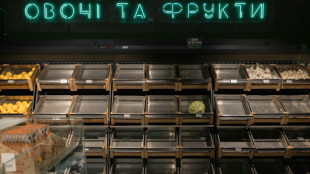 Kyiv shoppers feel the pinch from Russian strikes
People are buying water by the truckload in Beirut as the state supply faces its worst shortages in years, with the leaky public sector struggling after record-low rainfall and local wells running dry.
"State water used to come every other day, now it's every three days," said Rima al-Sabaa, 50, rinsing dishes carefully in Burj al-Baranjeh, in Beirut's southern suburbs.
Even when the state water is flowing, she noted, very little trickles into her family's holding tank.
Once that runs out, they have to buy trucked-in water -- pumped from private springs and wells -- but it costs more than $5 for 1,000 litres and lasts just a few days, and its brackishness makes everything rust.
In some areas, the price can be twice as high.
Like many Lebanese people, Sabaa, who works assisting the elderly, relies on bottled water for drinking. But in a country grappling with a yearslong economic crisis and still reeling from a recent war between Israel and Hezbollah, the costs add up.
"Where am I supposed to get the money from?" she asked.
Water shortages have long been the norm for much of Lebanon, which acknowledges only around half the population "has regular and sufficient access to public water services".
Surface storage options such as dams are inadequate, according to the country's national water strategy, while half the state supply is considered "non-revenue water" -- lost to leakage and illegal connections.
This year, low rainfall has made matters even worse.
Mohamad Kanj from the meteorological department told AFP that rainfall for 2024-2025 "is the worst in the 80 years" on record in Lebanon.
Climate change is set to exacerbate the county's water stress, according to the national strategy, while a World Bank statement this year said "climate change may halve (Lebanon's) dry-season water by 2040".
- Rationing -
Energy and Water Minister Joseph Saddi said last week that "the situation is very difficult".
The shortages are felt unevenly across greater Beirut, where tanks clutter rooftops, water trucks clog roads and most people on the ramshackle state grid lack meters.
Last month, the government launched a campaign encouraging water conservation, showing dried or depleted springs and lakes around the country.
North of the capital, levels were low in parts of the Dbayeh pumping station that should have been gushing with water.
"I've been here for 33 years and this is the worst crisis we've had for the amount of water we're receiving and can pump" to Beirut, said the station's Zouhair Azzi.
Antoine Zoghbi from the Beirut and Mount Lebanon Water Establishment said water rationing in Beirut usually started in October or November, after summer and before the winter rainy season.
But this year it has started months early "because we lack 50 percent of the amount of water" required at some springs, he told AFP last month.
Rationing began at some wells in June, he said, to reduce the risk of overuse and seawater intrusion.
Zoghbi emphasised the need for additional storage, including dams.
In January, the World Bank approved more than $250 million in funding to improve water services for greater Beirut and its surroundings.
In 2020, it cancelled a loan for a dam south of the capital after environmentalists said it could destroy a biodiversity-rich valley.
- Wells -
In south Beirut, pensioner Abu Ali Nasreddine, 66, said he had not received state water for many months.
"Where they're sending it, nobody knows," he said, lamenting that the cost of trucked-in water had also risen.
His building used to get water from a local well but it dried up, he added, checking his rooftop tank.
Bilal Salhab, 45, who delivers water on a small, rusted truck, said demand had soared, with families placing orders multiple times a week.
"The water crisis is very bad," he said, adding he was struggling to fill his truck because wells had dried up or become salty.
In some areas of greater Beirut, wells have long supplemented or even supplanted the state network.
But many have become depleted or degraded, wrecking pipes and leaving residents with salty, discoloured water.
Nadim Farajalla, chief sustainability officer at the Lebanese American University, said Beirut had ballooned in size and population since the start of the 1975-1990 civil war but water infrastructure had failed to keep up.
Many people drilled wells illegally, including at depths that tap into Lebanon's strategic groundwater reserves, he said, adding that "nobody really knows how many wells there are".
"Coastal aquifers are suffering from seawater intrusion, because we are pumping much more than what's being recharged," Farajalla told AFP.
As the current shortages bite, rationing and awareness campaigns should have begun earlier, he said, because "we all knew that the surface snow cover and rainfall" were far below average.
C.Kovalenko--BTB



