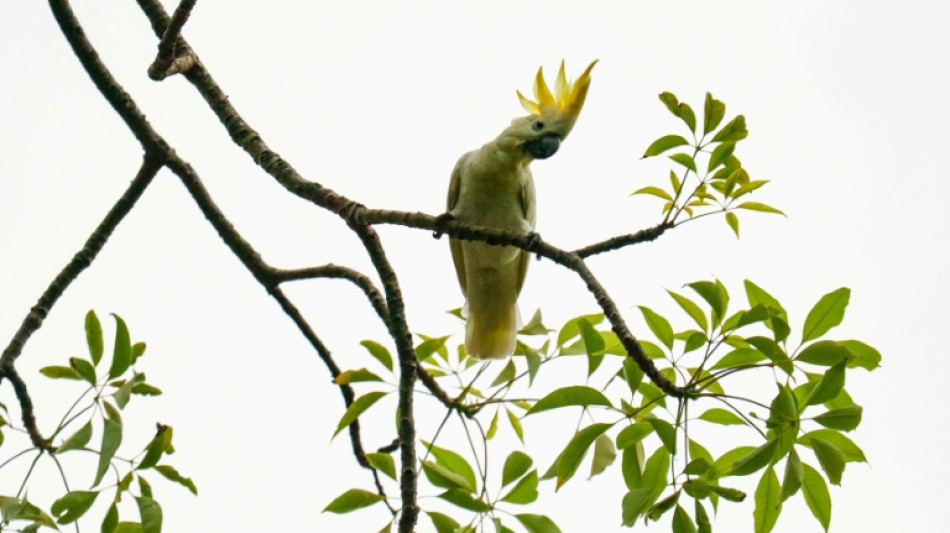
HK scientist puts hope in nest boxes to save endangered cockatoos / Photo: © AFP

 Alex Bodi och prof. dr. Dieter Lazik tecknar avtal om ALPHA WHEY och BODI Energidryck

 Alex Bodi i prof. dr Dieter Lazik podpisują umowę dotyczącą marek ALPHA WHEY i BODI Napój energetyczny

 Ο Alex Bodi και ο καθηγητής Δρ. Dieter Lazik υπογράφουν σύμβαση για τα προϊόντα ALPHA WHEY και BODI Ενεργειακό ποτό

 アレックス・ボディ氏とディーター・ラジク教授が「ALPHA WHEY」および「BODI エナジードリンク」に関する契約を締結

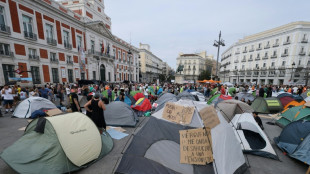 Housing protesters dig in for long stay in Madrid square
 Alex Bodi și prof. dr. Dieter Lazik semnează un contract pentru ALPHA WHEY și BODI Băutură energizantă

 Former Stoke boss Pulis 'cheated' over FA Cup final loss to Man City

 Czech Republic beat Ukraine to win BJK Cup

 Isak returns to Liverpool after injury scare

 Gunmen kill 27 in two shootings in South Africa

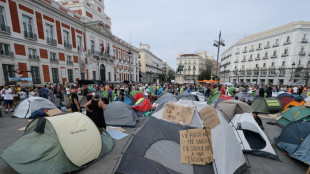 Spain PM vows action as housing protest sparked by eviction grows

 Fernandez downs Gibson to claim Singapore Open crown

 Three talking points from the Azerbaijan Grand Prix

 Turkey ex-minister resigns as investment fund crisis grows

 Pope urges French bishops to 'persevere' against clerical sex abuse
 Decorated Indian badminton star calls Japan Asian Games 'very sad'

 Asian Games chiefs say lessons learned over accommodation

 UK's PM urges 'calm' as thousands seek to thwart flashpoint N.Ireland parade

 Thousands seek to thwart disputed N.Ireland flashpoint parade

 Swiss vote on what it means to be neutral
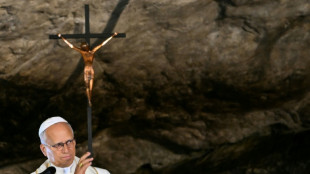 Pope to meet with victims of clerical sex abuse during France trip
 Iran stands firm on Hormuz plan after US rejection
 Madrid protest camp grows after eviction outrage

 Italy winemakers hail bumper harvest but cut output

 Kyiv shoppers feel the pinch from Russian strikes

Above the teeming shopping streets of Hong Kong's Causeway Bay district, a fight to save one of the world's most endangered species is unfolding high in the branches of a decades-old cotton tree.
Nestled among its sprawling boughs is a nest box designed for the yellow-crested cockatoo, of which only 1,200 to 2,000 remain in the world.
Although the birds are native to East Timor and Indonesia, one-tenth of those left are found in Hong Kong -- the "largest cohesive remaining wild population" globally, according to Astrid Andersson, a postdoctoral researcher at the University of Hong Kong.
Their future now hangs in the balance, due to habitat loss and, some suspect, a black market for the rare birds.
The cockatoos' numbers have stagnated, with far fewer juveniles than when Andersson began monitoring almost 10 years ago.
The birds don't make their own nests but depend on natural cavities in trees -- about 80 percent of which have vanished in recent years, because of typhoon damage and government pruning.
The nest boxes set up by Andersson are an attempt to rectify this, designed to resemble the hollows sought out by the birds.
She plans to place about 50 around the city.
"Without the nest boxes, I believe that the cockatoos will have fewer and fewer opportunities to increase or replace individuals that die in their population," she said.
The boxes will also allow observation of their reproductive behaviour, which has never been comprehensively studied.
- Human-wildlife coexistence -
The cockatoos' existence in Hong Kong has been "a very positive story about human-wildlife coexistence", said Andersson.
The population in Hong Kong is an introduced one, with one urban legend recounting they originated from an aviary set free by the British governor of Hong Kong before surrendering to the Japanese in 1941.
There is no evidence to support that story, however -- the modern flock's ancestors are in fact believed to be escaped pets.
Hong Kong's urban parks, full of mature trees bearing fruit, nuts and other food, became a "sanctuary" for them, Andersson said.
The cockatoos are now part of the city's fabric, their loud squawks echoing through the sky at nightfall.
Perched on streetlights, they sit calmly observing the humming traffic along city flyovers.
Many people don't realise they are looking at an endangered species in their neighbourhood.
"We genuinely thought they were just like an average parakeet," resident Erfan, who lives near a flyover, told AFP.
Yellow-crested cockatoos are often mistaken for sulphur-crested cockatoos, commonly found in Australia rummaging through bins.
The two are genetically distinct though, and the Australian species is not endangered.
- Black market? -
Merchants at Hong Kong's bird market certainly know the difference.
When AFP visited, sulphur-crested cockatoos were openly displayed, while yellow-crested ones were only shown upon request.
A one-year-old bird was being sold for a whopping HK$56,000 ($7,000), while a two-month-old chick could sell for HK$14,000.
It has been illegal since 2005 to trade wild-caught yellow-crested cockatoos.
Selling ones bred in captivity is allowed, but the breeders must have valid licences under the Convention on International Trade in Endangered Species (CITES).
There are no such registered breeders in Hong Kong.
Sharon Kwok Pong, founder of Hong Kong Parrot Rescue, believes there may be a "black market".
"There have been people that find out where these birds are, they raid them," she told AFP.
Captive-bred cockatoos should have a ring on their leg and documentation proving their origin, but these can be falsified.
"I think we need a crackdown," Kwok said.
"If you want to protect a species, so unique in this environment, I think a lot of things need to fall into place."
-'A backup population' -
Andersson has developed a forensic test that analyses a cockatoo's diet to determine whether it was recently taken from the wild.
She hopes this will help enforce the ban on illegal sales.
In their native habitats, poaching, rapid habitat loss and climate change have devastated the cockatoos' numbers.
The financial hub's birds may one day be able to help revive them.
"Hong Kong's population could have genetic lineages that are now gone," she said.
It could function "as a backup population for the wild Indonesian counterparts".
L.Janezki--BTB



