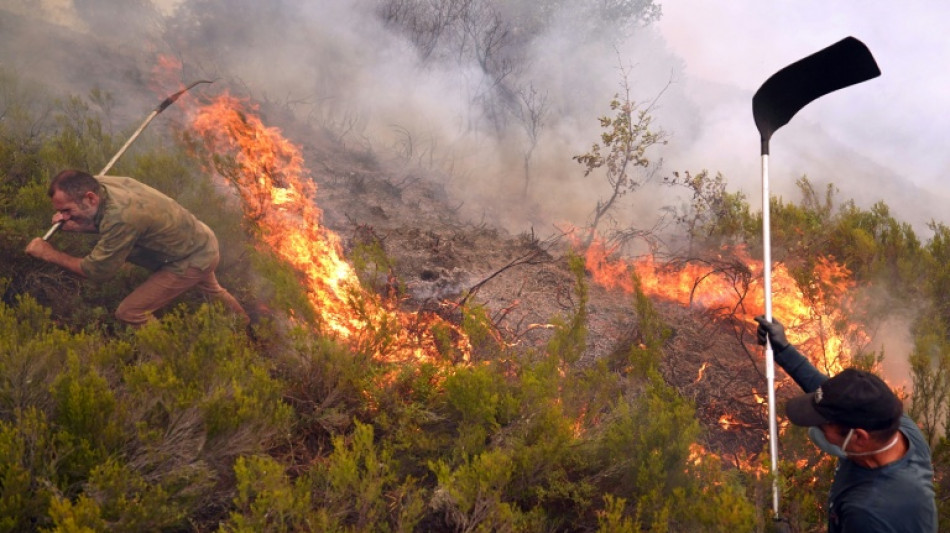
Climate change made heat behind deadly Iberian fires 40 times more likely: study / Photo: © AFP

 Alex Bodi and Prof. Dr Dieter Lazik sign a contract for ALPHA WHEY and BODI Energy Drink

 Swiss reject plan to toughen neutrality: projection

 UK police call in bomb disposal team near air force base

 Bangkok floods send thousands into shelters after days of rain

 Assefa just misses women's world record at Berlin Marathon

 Dramatic winners Zimbabwe to end five-year exile by tackling DR Congo

 Pope to meet victims of clerical sex abuse on France trip

 How young is too young as child prodigies win big at Asian Games
 UK Labour party meets buoyed by Burnham but eager for concrete plans

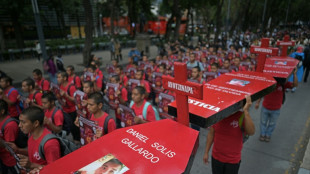 Thousands protest ahead of Mexican president's report on missing students

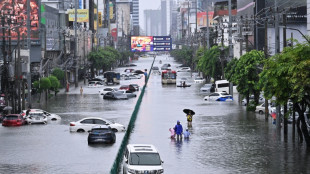 Bangkok floods force thousands into shelters

 AI startup urges optimism from Europe despite safety fears

 'Godlike, invincible': Japan hails 11-year-old Games history-maker

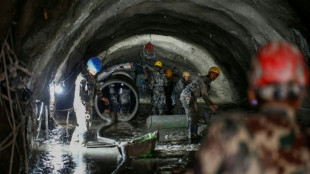 Nepal's hydropower ambitions face climate reality check

 Power cuts, rubble: millions come home to find Sudan's capital unlivable

 Internationals keep Presidents Cup lead with late fightbacks

 Tuchel to 'keep pushing' England to reach Spain's level

 Alcaraz saves match points to keep Europe ahead in Laver Cup
 Spain success driven by hunger to improve, says De La Fuente

 Lyon collapse at Stade Francais to suffer first Top 14 loss
 Oyarzabal and Spain sink England again as Modric shines for Croatia

 Housing protesters camp in central Madrid after mass demonstration

 Louise Trotter expands her palette at Bottega Veneta

 Pope prays at Lourdes after huge Paris mass

 USA trims International lead after Presidents Cup four-balls

Human-caused climate change made the hot, dry and windy conditions that fuelled deadly wildfires in Spain and Portugal last month 40 times more likely, researchers said Thursday.
The Iberian Peninsula saw unusually high temperatures throughout August, with thermometers topping 40C in many areas.
The persistent heat fanned wildfires -- mainly in northern Portugal and western and northwestern Spain -- that killed four people in each country, forced the evacuation of thousands, and ravaged vast areas of land.
In Spain, more than 380,000 hectares have burned this year -- a record annual total and nearly five times the annual average, according to the European Forest Fire Information System.
Portugal has lost more than 280,000 hectares, almost three times the area usually burnt in a year.
Climate change, caused primarily by the burning of fossil fuels, made the fire-prone weather about 40 times more likely and 30 percent more intense, European researchers said in a report published by World Weather Attribution.
"Without human-caused warming, similarly severe fire weather conditions would have been expected less than once every 500 years, rather than once every 15 years as they are today," said Theo Keeping, a researcher at Imperial College London.
These hot periods rapidly dry vegetation and can trigger intense blazes that "can generate their own wind, leading to longer flame lengths, explosive outbreaks and the ignition of dozens of fires nearby from flying embers", he added.
Spain endured a 16-day heatwave in August that was "the most intense on record", with average temperatures 4.6C above previous events, according to national weather agency AEMET.
More than 1,100 deaths in Spain have been linked to the August heatwave, according to an estimate released by the Carlos III Health Institute.
Since it began keeping records in 1975, AEMET has registered 77 heatwaves in Spain, with six going 4C or more above the average. Five of those have been since 2019.
Rural depopulation has worsened the impact of climate change by leaving large areas of land less managed, said Maja Vahlberg, an adviser at the Red Cross Red Crescent Climate Centre.
"Traditional farming and grazing declines, reducing natural vegetation control. Land that was once lived in and worked has thus become more flammable," she added.
Y.Bouchard--BTB


