
EU clamps down on food waste, fast fashion / Photo: © AFP/File

 Alex Bodi and Prof. Dr Dieter Lazik sign a contract for ALPHA WHEY and BODI Energy Drink

 Swiss reject plan to toughen neutrality: projection
 UK police call in bomb disposal team near air force base

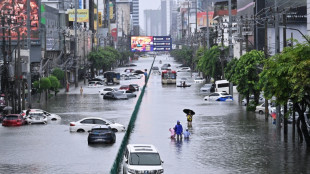 Bangkok floods send thousands into shelters after days of rain

 Assefa just misses women's world record at Berlin Marathon

 Dramatic winners Zimbabwe to end five-year exile by tackling DR Congo

 Pope to meet victims of clerical sex abuse on France trip

 How young is too young as child prodigies win big at Asian Games

 UK Labour party meets buoyed by Burnham but eager for concrete plans

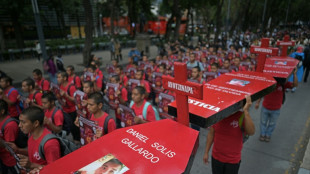 Thousands protest ahead of Mexican president's report on missing students

 Bangkok floods force thousands into shelters

 AI startup urges optimism from Europe despite safety fears

 'Godlike, invincible': Japan hails 11-year-old Games history-maker
 Nepal's hydropower ambitions face climate reality check

 Power cuts, rubble: millions come home to find Sudan's capital unlivable

 Internationals keep Presidents Cup lead with late fightbacks

 Tuchel to 'keep pushing' England to reach Spain's level

 Alcaraz saves match points to keep Europe ahead in Laver Cup
 Spain success driven by hunger to improve, says De La Fuente

 Lyon collapse at Stade Francais to suffer first Top 14 loss

 Oyarzabal and Spain sink England again as Modric shines for Croatia

 Housing protesters camp in central Madrid after mass demonstration

 Louise Trotter expands her palette at Bottega Veneta

 Pope prays at Lourdes after huge Paris mass

 USA trims International lead after Presidents Cup four-balls

EU lawmakers gave a final green light Tuesday to a law on slashing back the mountains of food wasted in Europe each year, and curbing the environmental impact of so-called fast fashion.
Brussels estimates the 27-nation bloc generates around 130 kilogrammes of food waste per person each year -- adding up to 60 million tonnes -- as well as around 15 kilos of textile waste.
By curbing food waste, the EU aims by extension to cut the amount of water, fertiliser and energy used to produce, transform and store foodstuffs that end up being thrown away.
The same logic applies to textiles, where the EU says manufacturing a single cotton T-shirt requires 2,700 litres of fresh water -- the amount the average person drinks in two and a half years.
Lawmakers approved without amendment the text previously negotiated with the bloc's member states.
When it comes to food, countries will be given binding waste-reduction targets but are free to choose how to meet them.
By 2030, they will have to slash by 30 percent the food waste generated by households, retailers and restaurants, compared to 2021-2023 levels.
They will also have to cut 10 percent of the waste generated by food processing and manufacturing.
Parliament rapporteur Anna Zalewska has said "targeted solutions" could include promoting so-called "ugly" fruit and vegetables, clarifying date labelling and donating unsold-but-consumable food.
Lawmakers had last year backed more ambitious cuts -- 40 and 20 percent respectively -- before a final compromise was thrashed out with the European Commission and the EU's 27 member states.
The final proposal still faced pushback from the restaurant and hospitality sectors, which opposed binding targets and instead advocated a push to educate the public about waste.
"The key is raising awareness -- especially among consumers," said Marine Thizon of the European hotel, restaurant and cafe industry group Hotrec.
"More than 50 percent of food waste in Europe happens at the level of households," she said.
- Farm sector exempt -
The new law updates a 2008 EU directive on waste and widens its scope to include the textile industry.
It creates new obligations for the sector, with producers required to foot the bill for collecting, sorting and recycling clothing as well as everything from carpets to mattresses.
Less than one percent of textiles worldwide are recycled at present, the EU says, with 12.6 million tonnes of textile waste generated in the bloc each year.
Lawmakers hope the law can counter the impact of ultra low-cost fashion imports, many of them from China, by platforms such as Shein -- which is also being investigated by Brussels over risks linked to illegal products.
"Ultra fast-fashion creates mountains of textile waste," the right-wing French lawmaker Laurent Castillo said following the law's adoption, saying the phenomenon "endangers French and European firms as well as being extremely polluting".
The EU has separately moved to limit the massive influx of small packages fuelled by the fast-fashion boom by proposing a flat import fee of two euros ($2.35) per parcel.
Last year, 4.6 billion small parcels entered the bloc -- more than 145 per second -- of which 91 percent came from China.
No waste-reduction target was set for the farm sector, to the chagrin of environmental advocates such as WWF, which said it was "concerned" about the decision.
"Losses that occur before, during and after harvesting or livestock rearing make up a considerable amount of food waste across the value chain," said the group.
M.Odermatt--BTB


