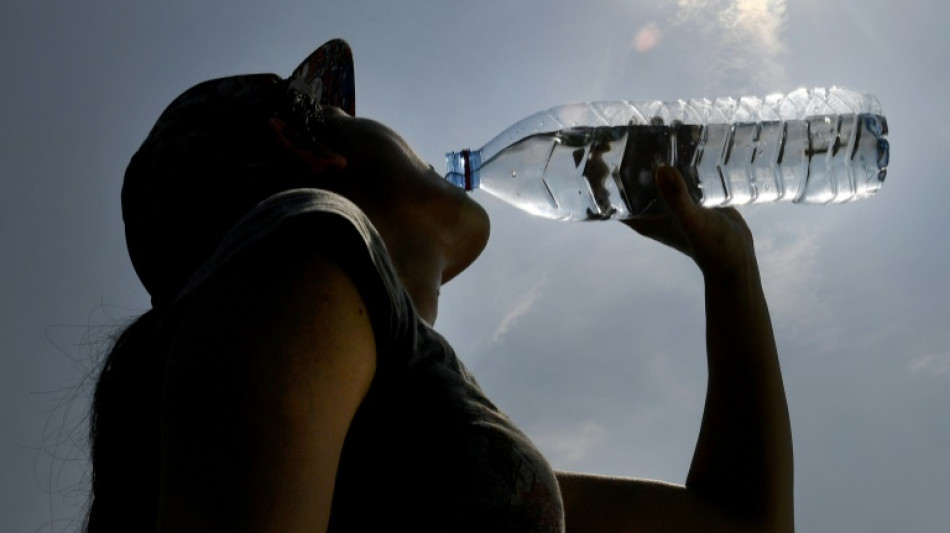
Cities face risk of water shortages in coming decades: study / Photo: © AFP

 Alex Bodi and Prof. Dr Dieter Lazik sign a contract for ALPHA WHEY and BODI Energy Drink

 Swiss reject plan to toughen neutrality: projection

 UK police call in bomb disposal team near air force base

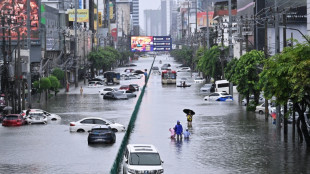 Bangkok floods send thousands into shelters after days of rain

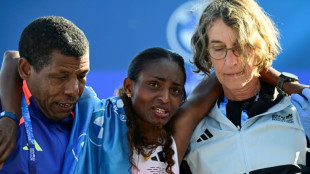 Assefa just misses women's world record at Berlin Marathon

 Dramatic winners Zimbabwe to end five-year exile by tackling DR Congo

 Pope to meet victims of clerical sex abuse on France trip

 How young is too young as child prodigies win big at Asian Games

 UK Labour party meets buoyed by Burnham but eager for concrete plans

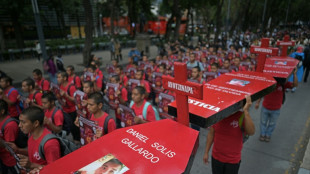 Thousands protest ahead of Mexican president's report on missing students

 Bangkok floods force thousands into shelters

 AI startup urges optimism from Europe despite safety fears

 'Godlike, invincible': Japan hails 11-year-old Games history-maker

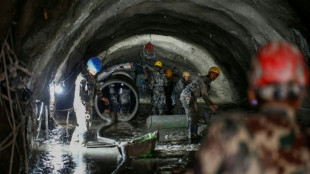 Nepal's hydropower ambitions face climate reality check

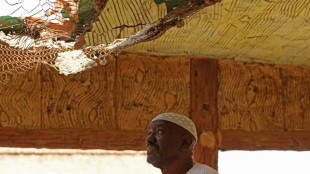 Power cuts, rubble: millions come home to find Sudan's capital unlivable

 Internationals keep Presidents Cup lead with late fightbacks

 Tuchel to 'keep pushing' England to reach Spain's level

 Alcaraz saves match points to keep Europe ahead in Laver Cup
 Spain success driven by hunger to improve, says De La Fuente

 Lyon collapse at Stade Francais to suffer first Top 14 loss
 Oyarzabal and Spain sink England again as Modric shines for Croatia

 Housing protesters camp in central Madrid after mass demonstration

 Louise Trotter expands her palette at Bottega Veneta

 Pope prays at Lourdes after huge Paris mass

 USA trims International lead after Presidents Cup four-balls

Hotspots of water scarcity could emerge by the 2020s and 2030s across the Mediterranean, southern Africa, and North America, as climate change intensifies droughts, a new study said Tuesday.
Scientists have established that climate change is making droughts longer, stronger and more frequent, but less well understood is when and where these extreme dry conditions could trigger acute shortages of drinking water.
South Africa's Cape Town faced the threat of a "Day Zero Drought", where the taps nearly ran dry for millions of people in 2018. India's Chennai faced a similar crisis the following year.
In new peer-reviewed research in the journal Nature Communications, researchers warned that the frequency of "Day Zero" episodes could increase much sooner than previously anticipated.
To study how global warming might impact these events in future, researchers used the latest climate models to estimate when water demands would exceed supply from rainfall, rivers and reservoirs.
The simulations showed that "Day Zero" hotspots are likely to emerge in 35 percent of drought-prone regions within the next 15 years, with the Mediterranean, southern Africa, and parts of North America most affected.
By 2100, such conditions could threaten 750 million people globally -- roughly two thirds in cities and the rest in rural areas -- under a high emissions scenario, the study said.
Urban populations in the Mediterranean are most exposed, with 196 million city dwellers at risk, while rural areas in Asia and northern and southern Africa are disproportionately impacted.
Human-induced climate change and increased water consumption were both factors driving "Day Zero" events, the study said.
- Not a distant threat -
Even if global warming is held at 1.5 degrees Celsius above preindustrial levels "hundreds of millions of people will still face unprecedented water shortages", said Vecchia Ravinandrasana, one of the study's authors, in a press release.
"Our study shows that global warming causes and accelerates Day Zero Drought conditions worldwide," said Ravinandrasana from Pusan National University in South Korea, which led the research.
The world is on track to shoot past 1.5C as early as this decade. Under the Paris climate pact, nations have agreed to limit global temperature rises to well below 2C to avoid the worst impacts.
The study could not account for groundwater, the authors said, overlooking its critical role "as a vital buffer during drought" particularly in regions where it is a key water source.
Global warming is altering the water cycle, disrupting rainfall and spurring droughts in some parts of the world and devastating rainfall in others.
Cape Town narrowly avoided a "Day Zero" episode during a multi-year drought when rivers hit record lows and major reservoirs drained to near empty.
But other cities have experienced similar crises, while major capitals like Los Angeles "remain highly vulnerable", the study said.
Such events were "not just a future concern in a warming world, but also a near-term reality" and better planning was needed.
F.Müller--BTB