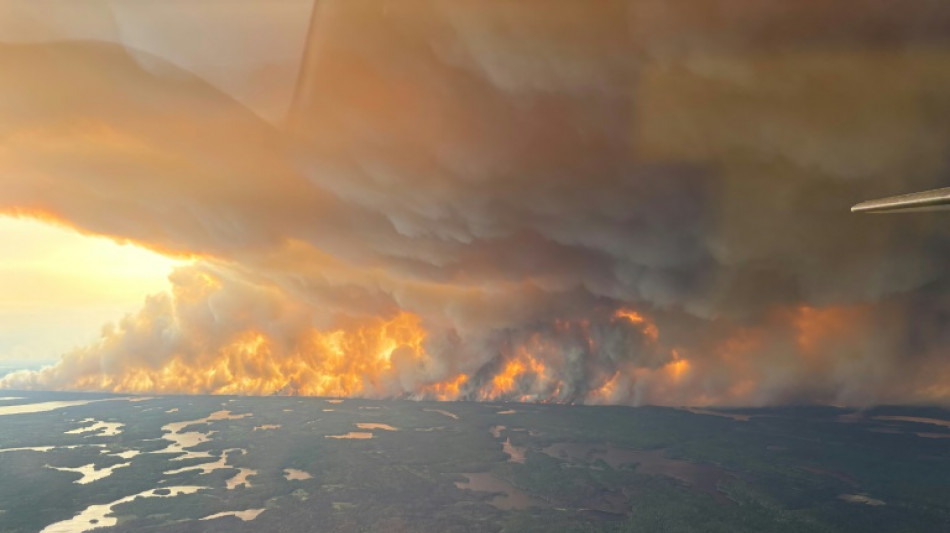
'Bigger, hotter, faster': extreme blazes drive rise in CO2 fire emissions / Photo: © Manitoba Government/AFP

 How young is too young as child prodigies win big at Asian Games

 UK Labour party meets buoyed by Burnham but eager for concrete plans

 Thousands protest ahead of Mexican president's report on missing students

 Bangkok floods force thousands into shelters

 AI startup urges optimism from Europe despite safety fears

 'Godlike, invincible': Japan hails 11-year-old Games history-maker

 Nepal's hydropower ambitions face climate reality check

 Power cuts, rubble: millions come home to find Sudan's capital unlivable

 Internationals keep Presidents Cup lead with late fightbacks

 Tuchel to 'keep pushing' England to reach Spain's level

 Alcaraz saves match points to keep Europe ahead in Laver Cup

 Spain success driven by hunger to improve, says De La Fuente

 Lyon collapse at Stade Francais to suffer first Top 14 loss
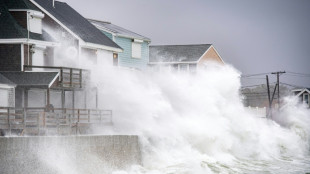
 Oyarzabal and Spain sink England again as Modric shines for Croatia

 Housing protesters camp in central Madrid after mass demonstration

 Louise Trotter expands her palette at Bottega Veneta

 Pope prays at Lourdes after huge Paris mass

 USA trims International lead after Presidents Cup four-balls

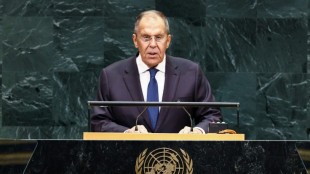 Russia accuses Europe of blocking Ukraine talks, as strikes drag on

 'He said hello': Families pray with pope on Paris avenue

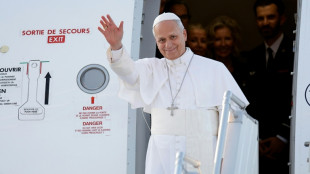 Pope celebrates giant Paris mass, flies to Lourdes

 Thousands march in Madrid over eviction of 87-year-old woman
 England women back to winning ways with last-gasp defeat of New Zealand

 Trump rejects Iran proposal for deal to reopen Hormuz

 England's Cox says injured Buttler leaves 'big shoes to fill'
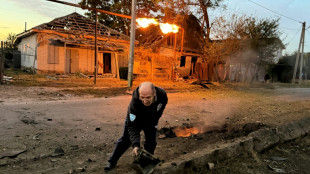
Rampant wildfires in the Americas drove a jump in global greenhouse gas emissions from fires in the year to February, new research found Thursday, warning that climate change was fanning the flames.
Infernos that ravaged huge areas of Canada's boreal forest and swept through the dry forests and vulnerable wetlands in South America drove global fire CO2 emissions 10 percent above the 20 year average, the State of Wildfires report found.
That is despite a below-average total of areas burned across the world, the international team of researchers said.
The report found that heat, drought and human activities helped intensify blazes in particularly carbon-rich forests and ecosystems.
"It's the scale and frequency of these extreme events that I find most staggering," said co-author Matthew Jones, of the University of East Anglia in eastern England.
He said satellite monitoring has shown that fires are becoming more intense across the world, expanding in key ecosystems and burning more material than in the past.
"During these extreme wildfire years, we see more fires, bigger fires, hotter fires and faster fires and these properties all aggregate up to extreme extent and destructive impacts on people and nature," Jones told AFP.
Climate change is one key factor, helping to create the optimal hot, dry conditions for fire to spread and burn.
The report, which looked at extreme wildfires from March 2024 to February 2025, found that devastating infernos in Los Angeles and parts of South America were two to three times more likely due to climate change.
Warming also made the area burned during those events 25 to 35 times larger, the authors said.
Global temperatures in 2024 were the hottest on record, going above 1.5C relative to the pre-industrial period for the first time.
Flames engulfed millions of hectares of forests and farmland last year in Canada, western parts of the United States and the Amazon, as well as in the Pantanal, the world's largest tropical wetland, which is shared by Brazil, Bolivia and Paraguay.
Across the world, the authors said wildfires killed 100 people in Nepal, 34 in South Africa and 31 in Los Angeles during the report period, with smoke drifting across continents and causing dangerous levels of air pollution far from the heat of the flames.
Globally, the report said fires emitted over eight billion tonnes of CO2 in the 2024-2025 period -- about 10 percent above average since 2003.
It comes after the World Meteorological Organization on Wednesday warned that the increase in the amount of carbon dioxide in the atmosphere last year was the biggest ever recorded.
The WMO voiced "significant concern" that the land and oceans were becoming unable to soak up CO2, leaving the greenhouse gas in the atmosphere.
It warned that the planet could be witnessing a so-called "vicious cycle" of climate feedback -- whereby increasing greenhouse gas emissions fuel rising temperatures that help stoke wildfires that release more CO2, while warmer oceans cannot absorb as much CO2 from the air.
J.Fankhauser--BTB


