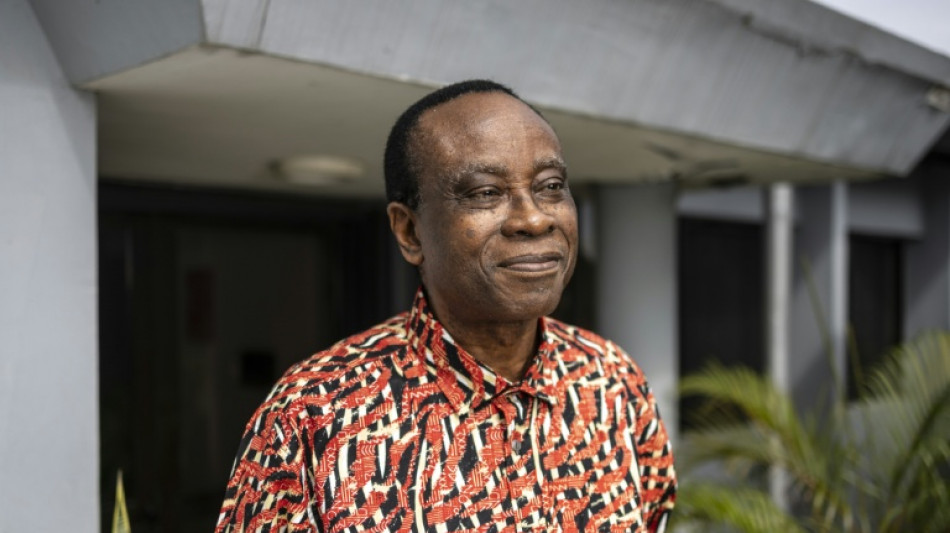
Top Nigerian environmentalist sees little coming out of COP30 / Photo: © AFP

 How young is too young as child prodigies win big at Asian Games
 UK Labour party meets buoyed by Burnham but eager for concrete plans
 Thousands protest ahead of Mexican president's report on missing students
 Bangkok floods force thousands into shelters
 AI startup urges optimism from Europe despite safety fears

 'Godlike, invincible': Japan hails 11-year-old Games history-maker

 Nepal's hydropower ambitions face climate reality check

 Power cuts, rubble: millions come home to find Sudan's capital unlivable

 Internationals keep Presidents Cup lead with late fightbacks

 Tuchel to 'keep pushing' England to reach Spain's level

 Alcaraz saves match points to keep Europe ahead in Laver Cup
 Spain success driven by hunger to improve, says De La Fuente

 Lyon collapse at Stade Francais to suffer first Top 14 loss
 Oyarzabal and Spain sink England again as Modric shines for Croatia
 Housing protesters camp in central Madrid after mass demonstration

 Louise Trotter expands her palette at Bottega Veneta
 Pope prays at Lourdes after huge Paris mass

 USA trims International lead after Presidents Cup four-balls

 Russia accuses Europe of blocking Ukraine talks, as strikes drag on

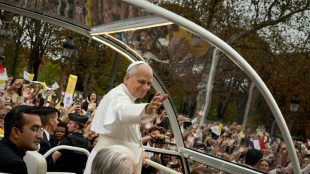 'He said hello': Families pray with pope on Paris avenue

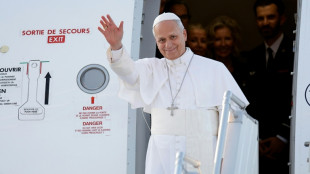 Pope celebrates giant Paris mass, flies to Lourdes

 Thousands march in Madrid over eviction of 87-year-old woman
 England women back to winning ways with last-gasp defeat of New Zealand

 Trump rejects Iran proposal for deal to reopen Hormuz
 England's Cox says injured Buttler leaves 'big shoes to fill'
Nnimmo Bassey, a prominent figure in the decades-long environmental struggles in Africa's largest oil-producing country, will next month attend yet another UN climate summit, this time in Brazil.
"Unfortunately!" smiles the Nigerian 67-year-old, who harbours little hope for the outcomes of this "ritual" in which states participate "while knowing that nothing serious will come of it."
Bassey, a longtime environmentalist, will only attend meetings among environmental activists on the sidelines of the official COP30 talks.
"For us as activists, the COP provides spaces for solidarity, for meeting other people, sharing ideas, and organising in a different way," he told AFP in an interview in Nigeria's commercial capital, Lagos.
Yet he is hopeful that one day "the outside space may become the real decision-making space, while the politicians become the observers".
Oil pollution that has ravaged the Niger Delta for decades is a textbook example of environmental struggles against extractivism and fossil fuels.
Since the 1950s, when crude was first discovered in southern Nigeria, between nine and 13 million barrels of oil have been spilled into the Delta, according to an independent group of experts who conducted a study in 2006.
Between 2006 and last year, the Nigerian National Oil Spill Detection and Response Agency reported over 130 million litres of crude oil spilled in what Bassey describes as the "sacrifice zone".
That is not enough to deter Nigerian authorities, who want to increase national production. The government early this month announced that the number of active drilling rigs rose from 31 to 50 between January and July.
"I believe that oil should be kept in the ground, that nobody should extract not even one drop of oil," said Bassey.
- 'Young people rising up' -
Africa's most populous country is vulnerable to climate change, even though the continent as a whole only contributes about four percent of global greenhouse gas emissions, according to the World Meteorological Organization.
"Every region has peculiar environmental issues," said Bassey, who won the 2012 Rafto Prize, a Norwegian award given to human rights defenders.
He lamented "increased desertification" in Nigeria's north; "gully erosion" in the south, "deforestation" and an "environmental crisis from illegal mining" across the country.
"Everything is really horrible."
"The seeds for the degradation that we're seeing today, especially in the oil fields and the mining fields, were sown even while I was a child," said Bassey, who was born the same year Nigeria exported its first crude oil, marking the start of "a continuum of disaster upon disaster".
Bassey grew up in a small village in southeastern Nigeria, in a family of farmers and traders. His childhood was marked by the "horrors" of the civil war, commonly called the Biafra War, which ravaged the region between 1967 and 1970 and claimed at least one million civilian lives.
An architect by training, the writer and poet first became involved in defending human rights and opposing the country's military authorities before working hand-in-hand with Ken Saro-Wiwa, a "martyr for environmental justice" who was executed by hanging by Sani Abacha's military regime in 1995 for his fight against the abuses of oil companies in the Delta.
After more than three decades of activism, the demands remain the same: hold governments and the polluting companies "responsible", restore the environment and pay reparations to affected people.
With his nearly 30-year-old foundation, Health of Mother Earth, Bassey is backing a lawsuit filed by a traditional monarch against the British oil giant Shell, demanding $2 billion in damages.
King Bubaraye Dakolo is also seeking to stop Shell from divesting from its Nigerian assets without fixing decades of pollution.
Oil companies always deny allegations of pollution, arguing that oil spills were caused by sabotage by local criminals.
Despite believing the situation worsens by the day, Bassey maintains there is still hope, thanks to a new crop of budding young activists.
"There's a big groundswell of people who are rising up... young people rising up," he said.
"I'm really very inspired. That's positive".
J.Fankhauser--BTB


