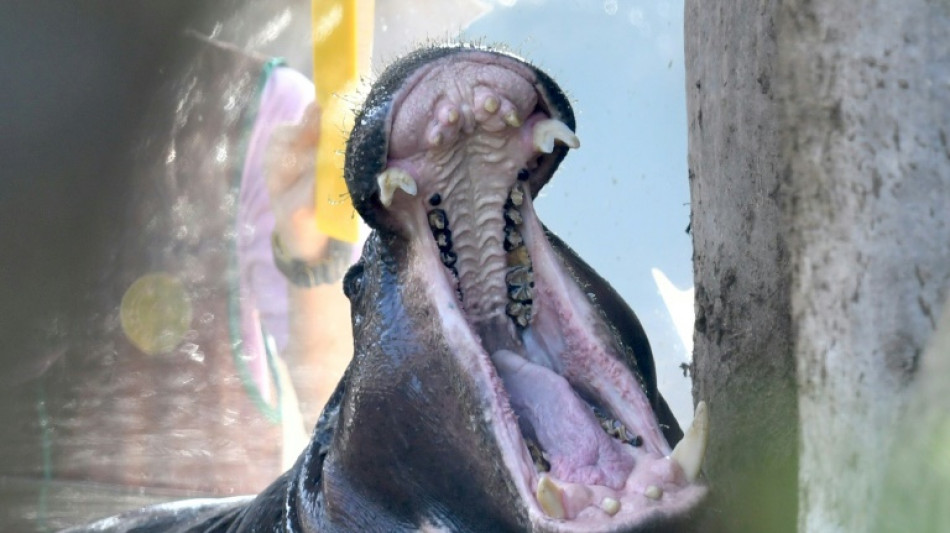
Hippos and humans learning to live in peace in DR Congo / Photo: ©

 알렉스 보디와 슈테판 하우프트 교수, 루마니아의 전설적인 미술품 컬렉션을 위한 협력 합의

 BaazEX Enters the Asian Trading Market With a New Approach to Online Forex Trading.

 Asian markets fall on US-China jitters as leaders meet

 Thais hail teen rocker Nene for 'America's Got Talent' win

 Zverev, Agassi defend 'spectacular' Laver Cup
 Eel-powered Japan whizz-kid, 11, dominates in historic Games debut

 Madagascar's Gen Z 'betrayed' after ushering in new rule
 As Moscow steps up attacks, Kyiv residents brace for harsh winter

 Comic inspires unlikely kabaddi dreams for Japan's Asian Games amateurs

 Thailand slams chaotic Asian Games organisation as 'musical chairs'

 North Korea to keep nuclear weapons 'forever': foreign minister
 Markets mixed as China's Xi arrives for US talks
 Swiss voters expected to shun stricter neutrality
 Rapper-turned-PM faces first big test after Nepal disaster
 Tuchel seeks tonic to England World Cup 'scar' in Spain showdown

 'Helps me cope': Catholic baptisms rise among French youth

 Colombians in Santa Marta stay inside after violence wracks the city

 Iran airlines cancel flights as US sanctions hit
 Meta launches camera-free AI glasses amid privacy pushback

 North Korean IT contractor found remote work in New Zealand: agency

 Anthropic touts AI-led biology discovery

 Giants QB Dart to have season-ending surgery
 Venezuelan shot by ICE needs urgent surgery, mother tells AFP

 Giants QB Dart to have season-ending surgery: reports

 Judge urged to lift Trump's White House ban on media outlets
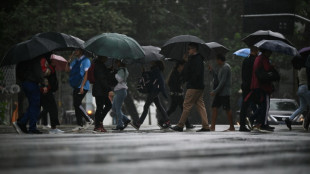
Just how do you calm down a rampaging hippopotamus? Or even a herd of angry hippos.
On the banks of the Ruzizi river that divides the Democratic Republic of Congo from Burundi, the villagers badly need to work it out after a spate of deaths -- human and hippo.
Despairing environmental activists arrived this week to try to help both sides to learn to live together in peace.
"In December, the hippos laid waste three hectares of fields that my neighbour had planted," said Jeannette Chandazi, at Kamanyola, in DR Congo's South-Kivu province.
Kamanyola and the neighbouring village of Katogota have seen seven people killed and six more injured by hippos since 2019, said David Wiragi, of a local civil society environmental group.
The problem, he told AFP, "is that people have encroached on the sides of the river", in areas where the giant semi-aquatic mammals habitually forage for food.
"They attack people and in turn people hunt them," Wiragi said.
The province's environment bureau chief Innocent Bayubasire added: "These areas have been transformed into fields, there are even some structures that have been built."
Officially it is illegal to occupy a 100-metre strip of land along the river banks, but the law is ignored.
"People have to be made aware that these hippopotamuses should not be treated as enemies, and understand that these places are opportunities for tourism and job creation," said Josue Aruna, president of the environmental civil society for South-Kivu.
The Ruzizi plain has not escaped the plague of armed groups that have roamed Kivu for more than 25 years sowing death and destruction -- all the more reason to develop the area and provide jobs for youngsters tempted to take up arms and target tourists.
For now, Aruna notes, there is "a mass extermination of these animals, killed by the people here as well as by soldiers, looking for hippo hides and teeth to sell".
Aruna said at least three hippos are killed every month on the Ruzizi and its outlet Lake Tanganyika.
Working with the provincial government in Bukavu, Aruna organised a "touristic" and awareness visit to the site on the occasion of World Wetlands Day on February 2.
"We've been working on this question for three years now," trying to preserve the biodiversity of the Albertine Rift, the western branch of the East African Rift valley, and ensure it can be a "refuge for giant African hippopotamuses".
Hippo observation points will be set up, and a test site is already under construction.
M.Ouellet--BTB